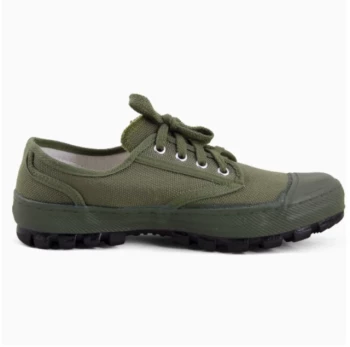
The primary advantages of rubber outsoles in work shoes are superior grip, high durability, and strong resistance to liquids and corrosive substances. This unique combination of features makes rubber a highly reliable and safe foundation for footwear in a wide range of demanding professional environments.
The core value of a rubber outsole lies in its versatility. It uniquely balances critical safety features like slip and chemical resistance with essential comfort attributes like flexibility and shock absorption, making it the default choice for many high-stakes industries.
The Critical Role of Safety and Grip
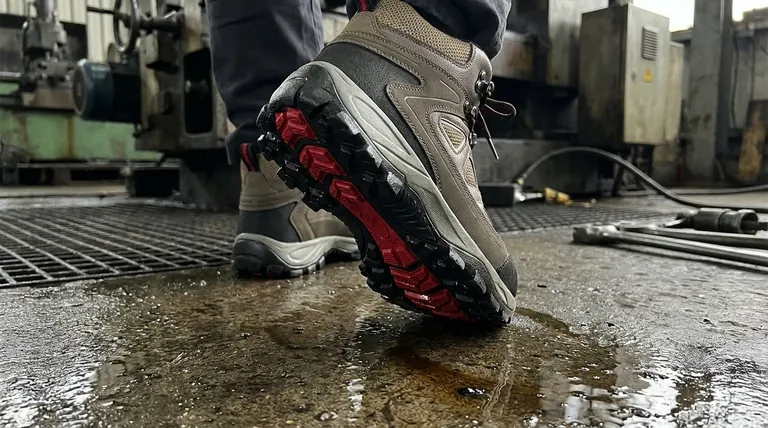
In any hazardous workplace, the connection between your shoe and the ground is your first line of defense. Rubber excels in creating a secure, stable footing.
Superior Traction on Varied Surfaces
Rubber naturally possesses a high coefficient of friction, which translates directly to a better grip. This is especially critical on smooth, wet, or oily surfaces where the risk of slipping is highest.
Its pliable nature allows the outsole to conform to microscopic irregularities in the ground, maximizing surface contact and enhancing traction.
Resistance to Corrosive Substances
Unlike many synthetic materials that can degrade when exposed to certain chemicals, oils, or acids, rubber maintains its structural integrity. This makes it an ideal choice for automotive, manufacturing, and industrial settings where such exposures are common.
This resistance also prevents liquids from penetrating the sole, keeping the foot dry and protected from hazardous materials.
Durability and All-Day Performance
Work shoes are subjected to constant stress, from abrasion to impact. The material composition of a rubber outsole is engineered to withstand this daily punishment.
Built for High-Wear Conditions
Rubber is inherently tough and abrasion-resistant, significantly extending the life of the footwear. It resists cuts and punctures better than many lighter foam-based materials, protecting both the shoe and the wearer.
Specialized Formulations for Extreme Demands
High-performance rubber compounds, such as those made by Vibram, offer even greater durability and enhanced traction patterns. These specialized outsoles are engineered for specific challenges, from rock-strewn construction sites to slippery factory floors.
Comfort and Wearability
Safety and durability are meaningless if a shoe is too uncomfortable for an eight-hour shift. Rubber provides a foundation for all-day comfort through its natural physical properties.
Natural Flexibility and Softness
Rubber allows the shoe to bend and flex naturally with the foot’s movement. This is crucial for jobs that require frequent kneeling, crouching, or walking, reducing foot fatigue and strain over long periods.
Excellent Shock Absorption
The inherent elasticity of rubber helps to dissipate the force of impact with each step. This shock absorption reduces stress on the feet, ankles, and knees, which is vital for workers who spend most of their day standing on hard surfaces like concrete.
Enhanced Breathability
Natural rubber possesses a porous structure that allows for better air circulation within the shoe. This breathability helps manage moisture and heat, keeping the foot drier and reducing the risk of odor or fungal issues.
Understanding the Trade-offs
While highly effective, rubber is not the ideal solution for every single application. Objectivity requires acknowledging its limitations.
Weight vs. Durability
A durable, solid rubber outsole is often heavier than alternatives like EVA foam or polyurethane (PU). For jobs requiring constant, rapid movement over long distances, this added weight can contribute to fatigue.
Thermal Conductivity
Standard rubber can conduct heat and cold more readily than some insulated materials. In environments with extreme temperatures, specialized or insulated footwear may be a more appropriate choice.
Cost and Specialization
High-performance or specialized rubber compounds are more expensive to produce. This often translates to a higher retail price for the work shoe compared to those with more basic outsole materials.
Making the Right Choice for Your Job
Selecting the right outsole depends entirely on the primary demands of your work environment.
- If your primary focus is safety in wet or oily conditions: Choose a rubber outsole with a high-traction, siped tread pattern for maximum slip resistance.
- If your primary focus is all-day comfort while standing or walking: Prioritize a shoe with a flexible, shock-absorbing natural rubber outsole.
- If your primary focus is durability in abrasive environments: Invest in a work shoe with a high-density, specialized rubber outsole like Vibram.
Ultimately, choosing a rubber outsole is an investment in a proven foundation of safety, durability, and comfort.
Summary Table:
| Advantage | Key Benefit | Ideal For |
|---|---|---|
| Safety & Grip | Superior traction on wet/oily surfaces; chemical resistance | Manufacturing, automotive, industrial settings |
| Durability | High abrasion and puncture resistance; long-lasting performance | Construction, warehousing, high-wear environments |
| Comfort | Natural flexibility, shock absorption, and breathability | Jobs requiring long hours of standing or walking |
| Versatility | Balances safety, durability, and comfort in one material | A wide range of professional and industrial applications |
Ready to equip your workforce with the safest and most durable work shoes?
As a large-scale manufacturer, 3515 produces a comprehensive range of footwear with high-performance rubber outsoles for distributors, brand owners, and bulk clients. Our production capabilities encompass all types of safety shoes and boots designed to meet the specific demands of your industry.
Contact us today to discuss your needs and discover how we can provide reliable, high-quality footwear solutions for your business.
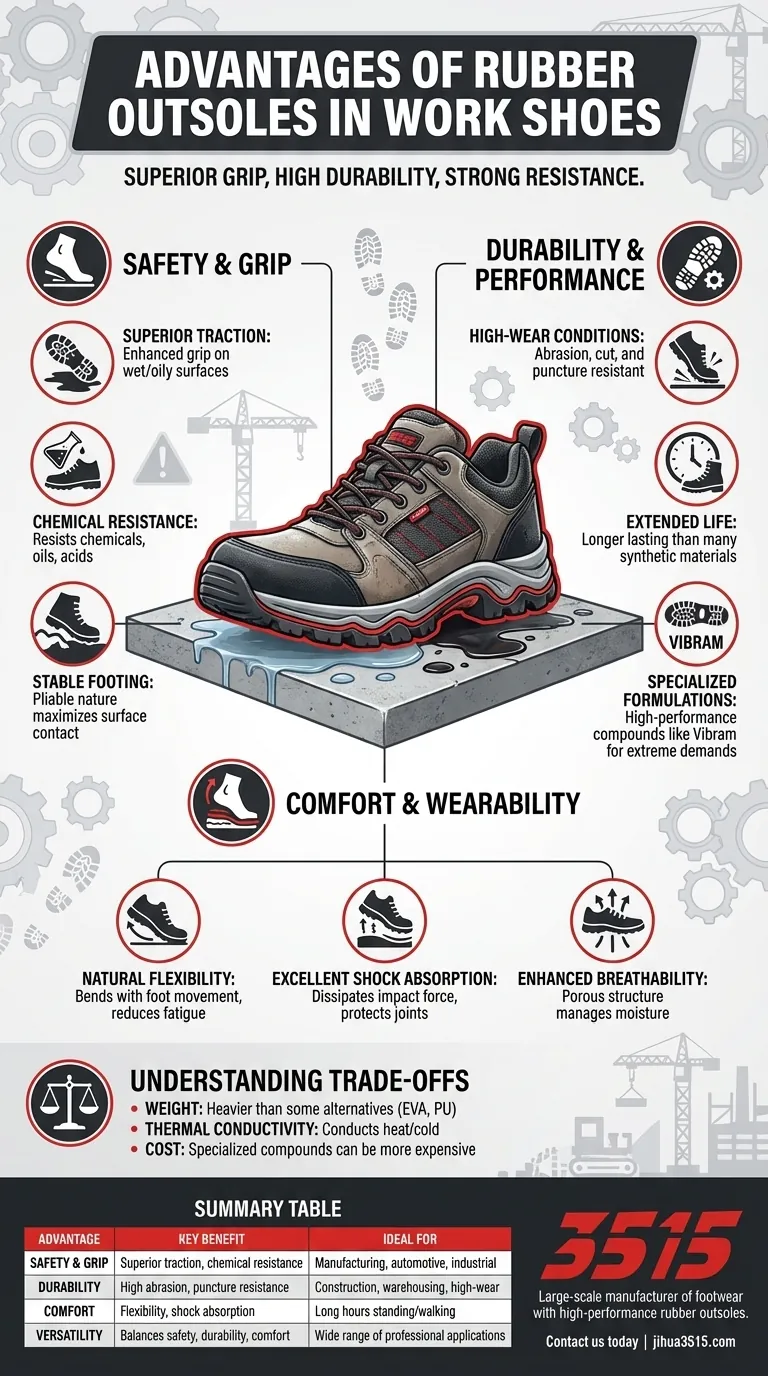
Visual Guide
Related Products
- Durable Rubber Sole Outdoor Shoes Wholesale & Custom Manufacturing
- Durable Rubber-Soled Utility Shoes for Wholesale & Custom Brand Manufacturing
- Wholesale Durable Camo Canvas Shoes with High-Traction Rubber Soles
- Wholesale Durable Camouflage Canvas Shoes with High-Traction Cleated Rubber Sole
- Durable Canvas Work Shoes with Rubber Lug Sole | Wholesale Manufacturer
People Also Ask
- What is the function of the sole in outdoor shoes? Find the Perfect Grip and Support
- What role do outdoor shoes and sneakers play in navigating external terrains? Engineered Stability for Every Surface
- How is AI utilized in the design of outdoor and safety footwear? Harnessing Big Data for Market-Driven Shoe Innovation
- Why is durability important when selecting outdoor shoes? A Guide to Safety & Long-Term Value
- What are the key components of outdoor shoes that affect comfort and sturdiness? A Guide to Durable, High-Performance Footwear