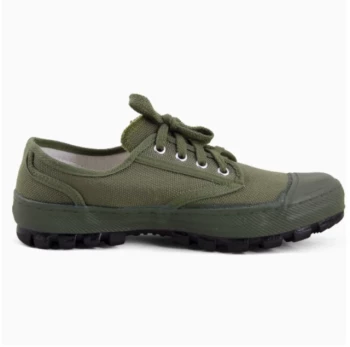
A rubber slip-resistant outsole is the primary mechanical defense against fall-related injuries. It functions by utilizing industrial-grade rubber paired with specialized anti-slip textures to drastically increase the friction coefficient between the sole and the ground. This mechanical advantage ensures the shoe grips rather than slides, particularly on wet or slippery surfaces where elderly individuals are most vulnerable.
While many factors contribute to shoe safety, the outsole provides the fundamental connection to the environment. By enhancing grip and lateral stability, these designs compensate for reduced muscle strength, directly lowering the probability of catastrophic falls and preserving independent mobility.
The Mechanics of Traction and Stability
Increasing the Friction Coefficient
The core effectiveness of these outsoles lies in the material science of industrial-grade rubber.
Unlike softer aesthetic compounds, this material is engineered to resist sliding forces. When combined with specific anti-slip textures, it creates a high-friction interface that maximizes contact with the ground, even in the presence of water or spills.
Enhancing Lateral Stability
Falls do not always occur in a forward motion; many dangerous incidents involve sideways slipping.
A well-designed rubber outsole provides the necessary grip to stop the foot from sliding outward during weight transfer. This lateral stability is crucial for maintaining balance during turning or shifting movements, ensuring the wearer remains upright across various living environments.
Compensating for Physiological Changes
Supporting Unsteady Gaits
As individuals age, they often experience a reduction in muscle strength and gait steadiness.
Sturdy non-slip outsoles act as an external stabilizer, compensating for these physiological deficits. By providing a secure anchor point with every step, the footwear reduces the physical effort required to maintain balance, allowing for safer ambulation.
Protection on Uneven Terrain
High-friction treads are not limited to flat, indoor surfaces; they are essential for navigating uneven ground.
Superior traction allows elderly individuals to maintain independent mobility outdoors without the constant fear of slipping. This proactive safety feature significantly lowers the risk of fractures and other injuries associated with loss of footing.
Understanding the Limitations
The Balance of "Sturdiness" vs. Weight
While the supplementary references highlight the need for sturdy outsoles, there is a functional trade-off.
If a rubber outsole is too thick or dense, it adds weight to the shoe. For an elderly person with weak hip flexors, a heavy shoe can lead to fatigue, which paradoxically increases the risk of tripping.
The Risk of Excessive Friction
"High friction" is vital for wet surfaces, but it must be calibrated correctly.
If an outsole is too "sticky" on dry surfaces like carpet, it can cause the foot to stop abruptly while the body's momentum continues forward. This friction-induced tripping is a critical factor to consider when selecting footwear for carpeted homes.
Making the Right Choice for Your Safety Goals
Prioritizing the right outsole depends heavily on the specific environment and the user's physical condition.
- If your primary focus is wet environments (kitchens/bathrooms): Prioritize industrial-grade rubber with deep, aggressive tread patterns to maximize water displacement and wet traction.
- If your primary focus is mixed-use mobility: Look for a medium-friction rubber that offers stability without being so aggressive that it creates a tripping hazard on carpets.
- If your primary focus is muscle weakness: Ensure the rubber outsole provides the necessary traction but remains lightweight enough to prevent leg fatigue.
Ultimately, a slip-resistant rubber outsole is not just a shoe component; it is a critical safety instrument that anchors the user to their world.
Summary Table:
| Feature | Mechanical Benefit | Practical Impact |
|---|---|---|
| High Friction Coefficient | Uses industrial-grade rubber to grip surfaces | Drastically reduces sliding on wet or oily floors |
| Lateral Stability | Prevents sideways foot movement during turns | Minimizes risks of balance loss during weight shifts |
| Anti-Slip Textures | Deep treads displace water and spills | Ensures reliable traction on diverse indoor/outdoor terrain |
| External Stabilization | Compensates for reduced muscle strength | Lowers physical effort needed to maintain a steady gait |
Secure Your Global Footwear Supply with 3515
As a large-scale manufacturer serving distributors and brand owners, 3515 offers comprehensive production capabilities for all footwear types. Our flagship Safety Shoes series is engineered with the same industrial-grade slip resistance required for high-risk environments, making us the ideal partner for high-quality elderly safety footwear. Our extensive portfolio also covers work and tactical boots, outdoor shoes, training shoes, sneakers, and Dress & Formal shoes to meet your diverse bulk requirements.
Partner with a manufacturer that prioritizes mechanical defense and user stability. Contact us today to discuss your bulk orders and custom manufacturing needs!
References
- Qabas Ali Al-Jumaili, Mariam Elghobashi. Sole Solutions: Redefining Comfort and Safety for Elderly Women with Cutting-Edge Ergonomic Footwear. DOI: 10.46254/an14.20240622
This article is also based on technical information from 3515 Knowledge Base .
Related Products
- Factory-Direct Wholesale Canvas Boots with High-Traction Rubber Soles
- Durable High-Traction Canvas Sneakers Wholesale & Custom Manufacturing
- Durable Rubber Sole Outdoor Shoes Wholesale & Custom Manufacturing
- Durable Rubber-Soled Utility Shoes for Wholesale & Custom Brand Manufacturing
- Durable Canvas Work Shoes with Rubber Lug Sole | Wholesale Manufacturer
People Also Ask
- What types of jobs are canvas work boots suitable for? Ideal for Light-Duty, High-Mobility Roles
- What are the functional advantages of choosing rubber soles over leather soles for work boots? Superior Safety & Durability
- What are the advantages of rubber soles for work boots? Unbeatable Grip & Durability
- Why are slip-resistant soles important in work boots? Prevent Slips & Boost Safety
- What are the benefits and limitations of using canvas as a primary material for footwear? Key B2B Manufacturing Insights