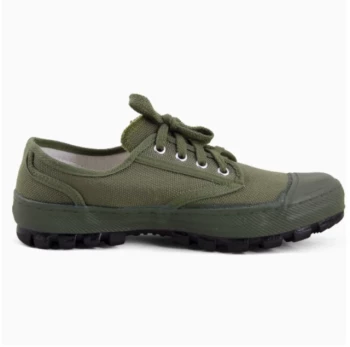
Specialized rubber outsoles are essential for creating a realistic and stable testing environment. They are installed on testing feet to accurately simulate the friction found in real-world foot-ground interactions, preventing slippage during experiments. This ensures that the mechanical data collected is consistent and valid, particularly when evaluating mass-produced footwear like sneakers and safety shoes.
The primary function of specialized rubber outsoles in testing is to standardize the material interface, ensuring that slip-resistance and wear-resistance data reflect actual gait cycles rather than experimental artifacts.
Simulating Real-World Interactions
Replicating Friction Characteristics
To obtain valid data, the testing setup must mimic the actual physical relationship between a foot and the ground.
Specialized rubber outsoles are used to replicate the specific friction coefficients present in human movement. This simulation ensures the test subject (the shoe) reacts as it would on a human foot.
Preventing Unwanted Slippage
During mechanical testing, the testing foot applies force to the footwear.
Without a high-friction interface, the testing foot could slide inside or against the shoe. The rubber outsole provides the necessary grip to anchor the foot, ensuring the movement is applied directly to the shoe's sole.
Ensuring Data Precision
Stability of Mechanical Data
Reliability is the cornerstone of biomechanical experimentation.
By preventing internal slipping, the rubber outsole stabilizes the entire mechanical system. This stability is critical for collecting clean, noise-free data regarding forces and moments during the gait cycle.
Consistency for Mass Production
When evaluating mass-produced items like safety shoes, variables must be strictly controlled.
The rubber interface acts as a constant variable. This allows engineers to verify that changes in performance are due to the shoe's design (such as slip-resistance patterns) and not inconsistencies in the testing apparatus.
Understanding the Trade-offs
Material Degradation
While specialized rubber provides consistency, it is subject to wear and tear.
If the rubber outsole degrades over repeated testing cycles, its friction properties will change. This requires regular calibration or replacement to prevent data drift.
Contextual Limitations
A single type of rubber cannot simulate every environment perfectly.
The specific rubber compound must be chosen carefully to match the intended testing scenario. Using the wrong density or texture can yield misleading results regarding how a shoe performs on specific surfaces (e.g., wet tile vs. asphalt).
Optimizing Your Evaluation Strategy
To get the most out of your footwear evaluation experiments, match your setup to your specific testing goals:
- If your primary focus is Slip-Resistance: Ensure the rubber outsole's friction coefficient closely matches the skin or sock material relevant to the end-user scenario to prevent internal slippage.
- If your primary focus is Wear-Resistance: Prioritize the consistency of the rubber interface to ensure that any observed wear is a result of the shoe design, not the testing equipment.
By controlling the foot-ground interface with precision, you transform raw mechanical data into actionable insights for footwear design.
Summary Table:
| Feature | Benefit |
|---|---|
| Replicates Friction | Mimics real foot-ground interaction for valid data |
| Prevents Unwanted Slippage | Ensures forces apply directly to the shoe's sole |
| Stabilizes Mechanical Data | Facilitates clean, noise-free data collection |
| Ensures Consistency | Verifies performance changes are due to shoe design |
As a large-scale manufacturer serving distributors and brand owners, 3515 offers comprehensive production capabilities for all footwear types, anchored by our flagship Safety Shoes series. Our extensive portfolio covers work and tactical boots, outdoor shoes, training shoes, and sneakers, as well as Dress & Formal shoes to meet diverse bulk requirements. Ready to elevate your footwear line with reliable, high-quality production? Contact us today to discuss your bulk manufacturing needs!
References
- Toshiki Kobayashi, Hiroaki Hobara. Effects of step frequency during running on the magnitude and symmetry of ground reaction forces in individuals with a transfemoral amputation. DOI: 10.1186/s12984-022-01012-8
This article is also based on technical information from 3515 Knowledge Base .
Related Products
- Durable Rubber Sole Outdoor Shoes Wholesale & Custom Manufacturing
- Durable Rubber-Soled Utility Shoes for Wholesale & Custom Brand Manufacturing
- Wholesale Durable Camouflage Canvas Shoes with High-Traction Cleated Rubber Sole
- Durable Canvas Work Shoes with Rubber Lug Sole | Wholesale Manufacturer
- Wholesale Durable Camo Canvas Shoes with High-Traction Rubber Soles
People Also Ask
- What is the function of the sole in outdoor shoes? Find the Perfect Grip and Support
- What role do outdoor shoes and sneakers play in navigating external terrains? Engineered Stability for Every Surface
- How is AI utilized in the design of outdoor and safety footwear? Harnessing Big Data for Market-Driven Shoe Innovation
- Why is durability important when selecting outdoor shoes? A Guide to Safety & Long-Term Value
- What are the key components of outdoor shoes that affect comfort and sturdiness? A Guide to Durable, High-Performance Footwear