
In an office environment, a cushioned footbed is a foundational component of all-day comfort and support. Its primary purpose is to distribute your body weight evenly across the entire foot, improve alignment, and absorb the repetitive impact of walking on hard surfaces. This significantly reduces the soreness, fatigue, and pressure points that build up over a long workday.
A cushioned footbed is not a luxury feature; it is an essential ergonomic tool. It transforms a shoe from a simple covering into a support system that actively manages the physical stress your feet endure, directly impacting your comfort and focus throughout the day.
The Mechanics of All-Day Comfort
Understanding how a footbed works reveals why it is so critical. The benefits go far beyond a simple feeling of softness; they are rooted in biomechanical principles that protect your entire body.
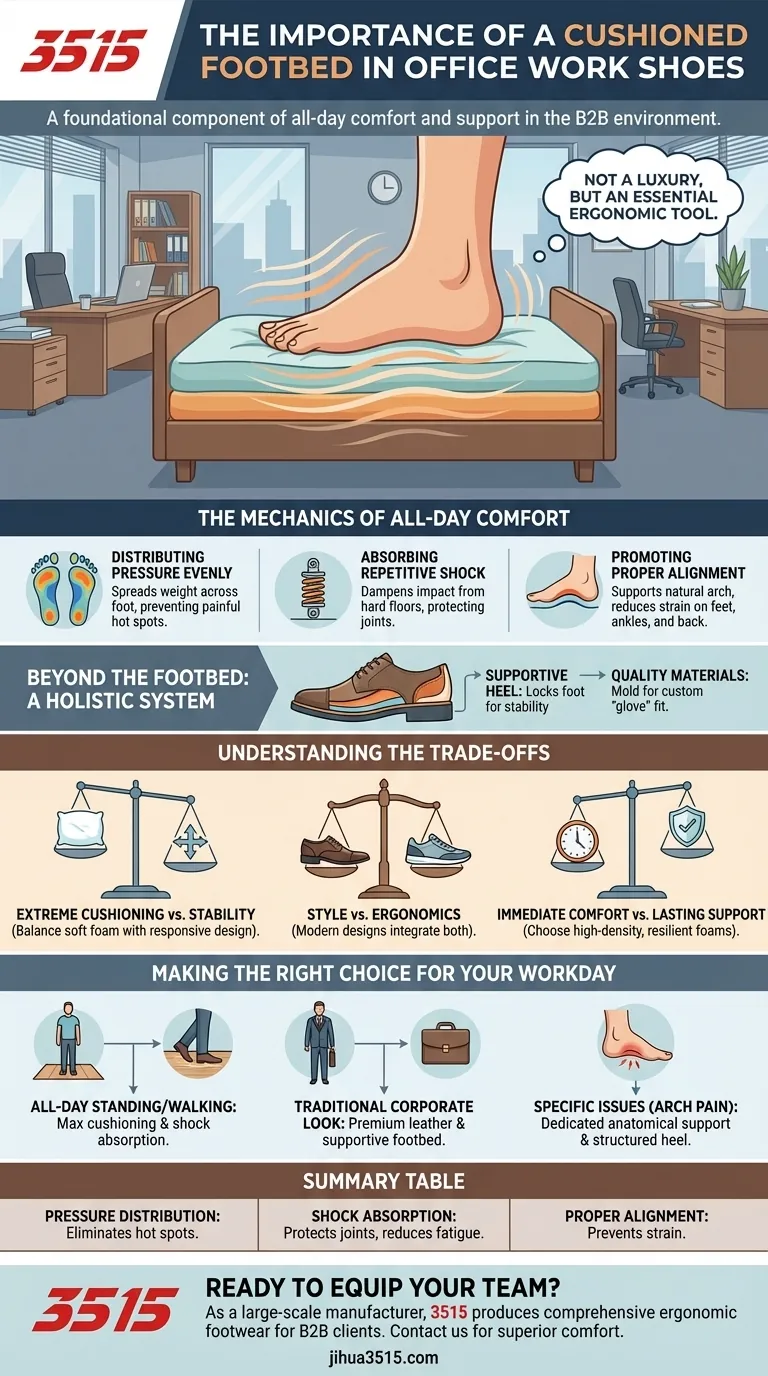
Distributing Pressure Evenly
Your body weight naturally creates high-pressure zones on the heel and the ball of your foot. A cushioned footbed conforms to the unique shape of your sole, spreading this pressure across a wider surface area. This prevents the formation of painful "hot spots" and alleviates strain.
Absorbing Repetitive Shock
Office environments typically have unforgiving floors like concrete, tile, or thinly carpeted surfaces. Each step you take sends a small shockwave up through your feet, ankles, and knees. A quality cushioned midsole, often made of specialized foam, acts as a shock absorber, dampening this impact before it can cause joint-wear and fatigue.
Promoting Proper Foot Alignment
A well-designed footbed provides support for your foot's natural arch. This is critical for maintaining proper alignment, which prevents your foot from rolling inward (over-pronation) or outward. Correct alignment reduces strain not only on your feet but also on your ankles, knees, and lower back.
Beyond the Footbed: A Holistic System for Support
While the cushioned footbed is the star player, it works as part of a team. The most effective office shoes integrate cushioning with other critical design elements.
The Role of a Supportive Heel
Lasting comfort requires more than just a soft base. A supportive, structured heel counter locks your foot in place, preventing slippage and providing stability. This works in tandem with the footbed to prevent arch pain and ensure your foot is properly positioned with every step.
The Importance of Quality Materials
High-quality materials, such as premium leathers, enhance the function of the footbed. They are breathable and gradually mold to the specific contours of your feet, creating a custom-like, "glove" fit. This synergy between material and cushioning maximizes comfort.
Understanding the Trade-offs
Choosing the right shoe involves balancing several factors. Recognizing the potential downsides of certain features is key to making an informed decision.
Cushioning vs. Stability
Extreme, "pillowy" cushioning can sometimes feel less stable, especially if it lacks a supportive structure. The ideal work shoe balances soft, shock-absorbing foam with a responsive design that provides a firm and stable foundation for walking.
Immediate Comfort vs. Lasting Support
Some memory foam footbeds feel exceptionally soft at first but can compress or "pack down" over time, losing their supportive qualities. Look for shoes that use high-density, resilient foams designed for lasting comfort and durability, not just initial softness.
Style vs. Ergonomics
Historically, the most professional-looking dress shoes sacrificed comfort for a sleek profile. Fortunately, modern shoe design increasingly integrates advanced ergonomic features, including excellent cushioning, into polished and professional styles. You no longer have to choose between looking good and feeling good.
Making the Right Choice for Your Workday
Your ideal shoe depends on the specific demands of your daily routine. Use your primary need to guide your selection.
- If your primary focus is all-day standing or walking on hard floors: Prioritize shoes with maximum cushioning and proven shock absorption to combat fatigue.
- If your primary focus is a traditional corporate look with moderate walking: Seek a balance of a supportive, cushioned footbed within a premium leather shoe that molds to your foot.
- If you experience specific issues like arch pain or fatigue: Look beyond general cushioning to shoes with dedicated anatomical arch support and a structured heel.
Investing in a properly cushioned and supportive shoe is a direct investment in your daily productivity and long-term well-being.
Summary Table:
| Benefit | Key Function |
|---|---|
| Pressure Distribution | Spreads body weight evenly to eliminate hot spots and soreness. |
| Shock Absorption | Dampens impact from hard floors to protect joints and reduce fatigue. |
| Proper Alignment | Supports the foot's natural arch to prevent strain on feet, ankles, and back. |
Ready to equip your team with all-day comfort?
As a large-scale manufacturer, 3515 produces a comprehensive range of ergonomic footwear for distributors, brand owners, and bulk clients. Our production capabilities encompass all types of cushioned and supportive office shoes and boots designed to enhance productivity and well-being.
Contact us today to discuss your footwear needs and discover how we can bring superior comfort to your customers.
Visual Guide
Related Products
- Custom Manufactured Air Cushion Leather Business Shoes for Wholesale
- Wholesale Comfortable Business Casual Shoes Custom Manufacturing
- Wholesale Breathable & Cushioned Training Shoes Custom Factory Production
- Wholesale Breathable Athletic Sneakers - Custom Lightweight Cushioned Footwear Manufacturer
- Wholesale Breathable Training Shoes Custom Athletic Footwear Manufacturer
People Also Ask
- What kind of shoes do businessmen wear? Master the Dress Code for Professional Success
- What are the essential business shoes every man should own? Build a Professional Wardrobe Foundation
- What are the benefits of lubricating work shoes? Protect Your Investment & Extend Lifespan
- What type of boots are suitable for challenging weather conditions in a business setting? | Durable & Professional Footwear
- When is saddle soap recommended for cleaning leather shoes? A Guide to Deep Restoration
















