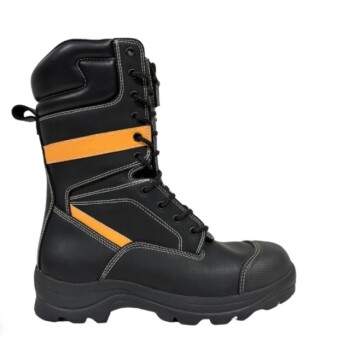
When it comes to fire boots, leather thickness is a direct measure of safety and resilience. The 8-9oz leather standard is considered superior because its significant thickness—roughly 20% greater than most heavy-duty work boots—provides better heat insulation, enhanced structural support, and far greater resistance to the cuts and abrasions common in extreme environments.
The choice of 8-9oz leather for elite fire boots is not about preference; it is a technical decision rooted in maximizing durability and thermal protection. This added thickness is the fundamental difference between a standard work boot and a specialized tool designed to withstand severe conditions.
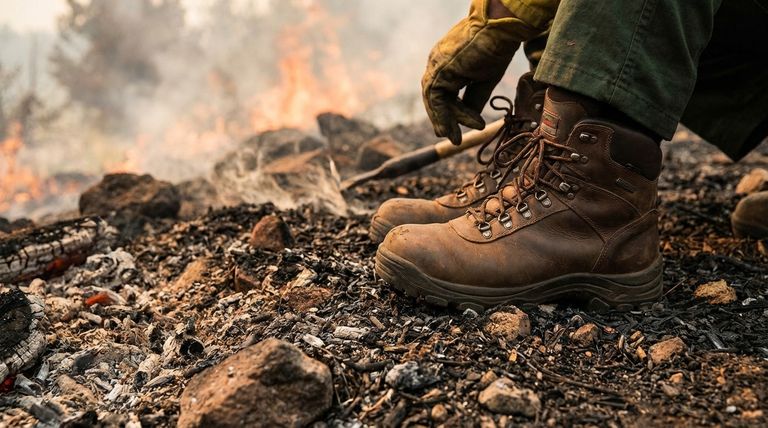
The Critical Role of Thickness
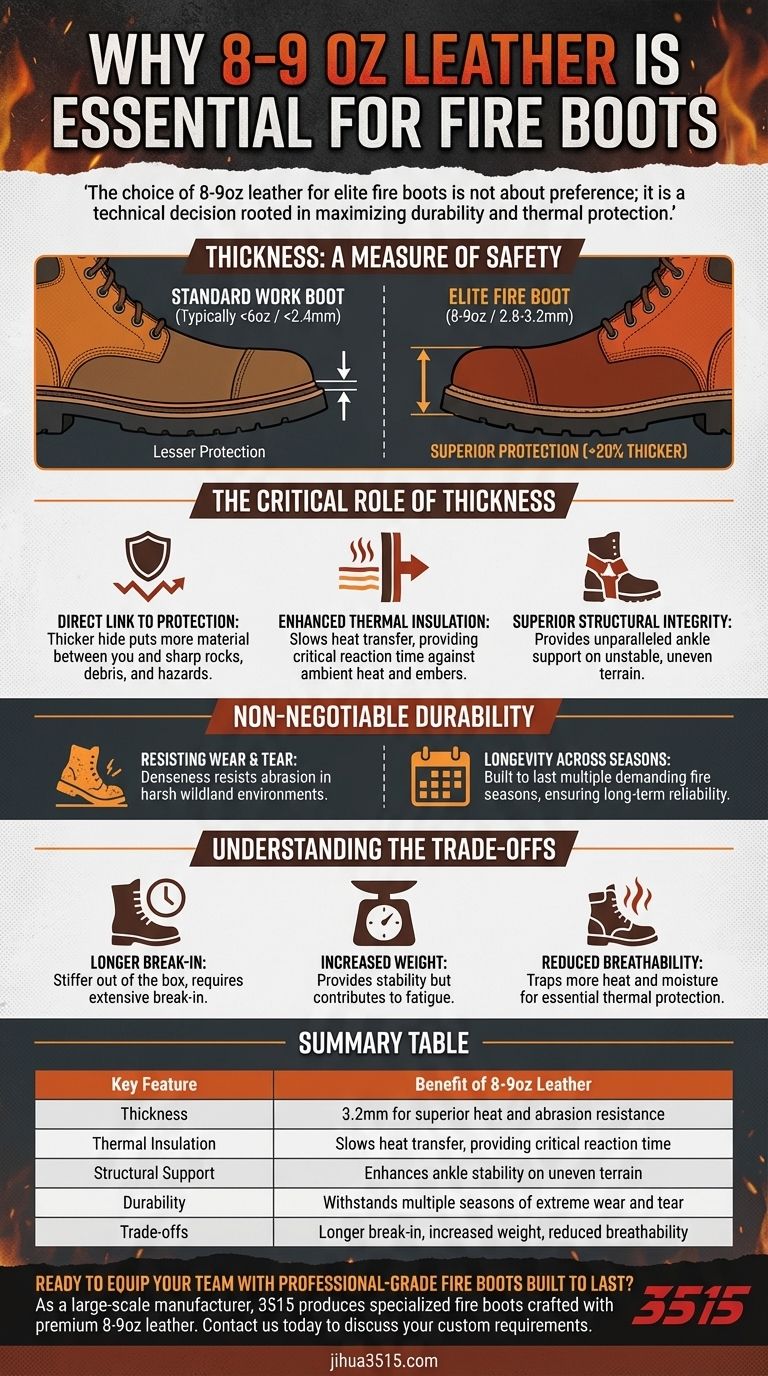
The weight of leather, measured in ounces, corresponds directly to its thickness. While a minimum of 6oz leather (2.4mm) might be acceptable, the 8-9oz (2.8-3.2mm) standard provides a clear performance advantage in the field.
A Direct Link to Protection
A thicker hide puts more material between your foot and the hazards you face. This includes sharp rocks, fallen branches, and other debris found on the fireline that can easily puncture or slash lesser materials.
Enhanced Thermal Insulation
Crucially for firefighting, a thicker material inherently slows the transfer of heat. This provides a greater margin of safety from ambient heat and brief contact with embers or hot ground, giving you precious seconds to react.
Superior Structural Integrity
The rigidity of 8-9oz leather delivers unparalleled ankle support. This is vital when navigating unstable and uneven terrain under a heavy load, helping to prevent the sprains and twists that can take a firefighter out of commission.
Why Durability is Non-Negotiable
A fire boot is an investment in safety and performance. The material's ability to withstand punishment season after season is a core requirement, not a luxury.
Resisting Wear and Tear
The harsh environment of a wildland fire will quickly abrade and degrade thinner leather. The dense, thick construction of 8-9oz leather is specifically chosen for its ability to resist this constant wear.
Longevity Across Multiple Seasons
Boots built with this heavier leather are known to last for multiple demanding fire seasons. This long-term reliability is not just cost-effective; it means you can depend on a proven, broken-in tool when it matters most.
Understanding the Trade-offs
Choosing a thicker, more robust material inevitably involves compromises. Recognizing these trade-offs is key to understanding why this leather is reserved for such demanding applications.
A Longer Break-in Period
The most immediate trade-off is comfort. A boot made from 8-9oz leather will be significantly stiffer out of the box and requires a much more extensive break-in period to conform to your foot.
Increased Weight
More material means more weight. While providing stability, this added weight can contribute to fatigue over the course of a long shift covering difficult ground. This is a compromise made for the sake of superior protection.
Reduced Breathability
Thicker leather is less porous, which is excellent for keeping external elements out but can also trap more heat and moisture from your foot. This is a comfort trade-off for achieving essential thermal protection from external hazards.
Making the Right Choice for Your Goal
Your boot choice should directly reflect the demands of your job.
- If your primary focus is maximum protection and longevity on the fireline: 8-9oz leather is the undisputed professional standard and the correct choice for front-line duty.
- If you are in a support role with less direct exposure to hazards: A boot with 6-7oz leather may offer a balance of protection and a faster break-in, but it will not match the sheer resilience of an 8-9oz boot.
- If you are considering a standard work boot for this task: You should avoid this, as typical leathers lack the critical thickness required to handle the unique thermal and physical dangers of firefighting.
Ultimately, choosing 8-9oz leather is an investment in uncompromising safety and the long-term reliability your work demands.
Summary Table:
| Key Feature | Benefit of 8-9oz Leather |
|---|---|
| Thickness | 3.2mm for superior heat and abrasion resistance |
| Thermal Insulation | Slows heat transfer, providing critical reaction time |
| Structural Support | Enhances ankle stability on uneven terrain |
| Durability | Withstands multiple seasons of extreme wear and tear |
| Trade-offs | Longer break-in, increased weight, reduced breathability |
Ready to equip your team with professional-grade fire boots built to last?
As a large-scale manufacturer, 3515 produces a comprehensive range of safety footwear for distributors, brand owners, and bulk clients. Our production capabilities encompass all types of specialized boots, including fire boots crafted with premium 8-9oz leather for maximum protection and durability.
Contact us today to discuss your custom fire boot requirements and experience the 3515 difference in quality and reliability.
Visual Guide
Related Products
- Wholesale Durable Leather Work Boots | 8-Inch Goodyear Welt Manufacturer
- High Performance Fire-Retardant Waterproof Safety Boots
- Durable Leather Tactical Boots Wholesale & Custom Manufacturing for Brands
- Durable Leather High-Ankle Tactical Boots for Wholesale & Custom Manufacturing
- Premium Flame-Retardant Waterproof Safety Boots and Shoes
People Also Ask
- What is the difference between full-grain and top-grain leather? Premium Material Guide for Boot Manufacturers
- What is the complete process for deep cleaning leather work boots? A Step-by-Step Guide to Preserve Your Investment
- Why is it important to waterproof leather work boots? Protect Your Investment and Performance
- What are the advantages of leather as an upper material for work boots? Unmatched Durability & Custom Comfort
- What are the key qualities of leather for work boots? Superior Durability, Breathability & Custom Fit