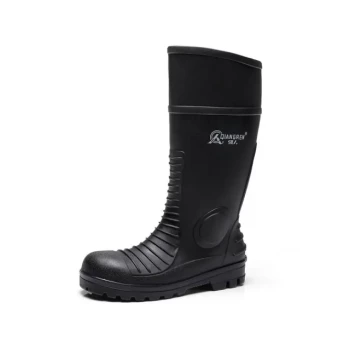
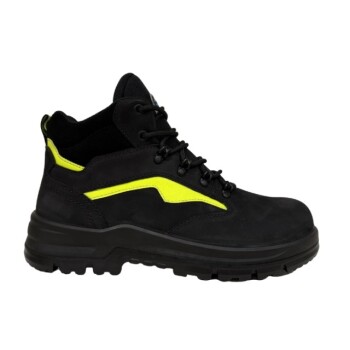
In short, work boots are essential because they are purpose-built pieces of Personal Protective Equipment (PPE) designed to mitigate specific, severe workplace hazards. Unlike standard footwear, they provide robust protection for the foot's complex structure of 26 bones and 38 joints, preventing debilitating injuries that could otherwise be common in risk-bearing industries.
The core issue is that industrial environments—from construction sites to commercial kitchens—present a unique set of dangers that standard shoes are simply not designed to handle. Work boots bridge this critical safety gap by integrating specific protective features directly into their construction.
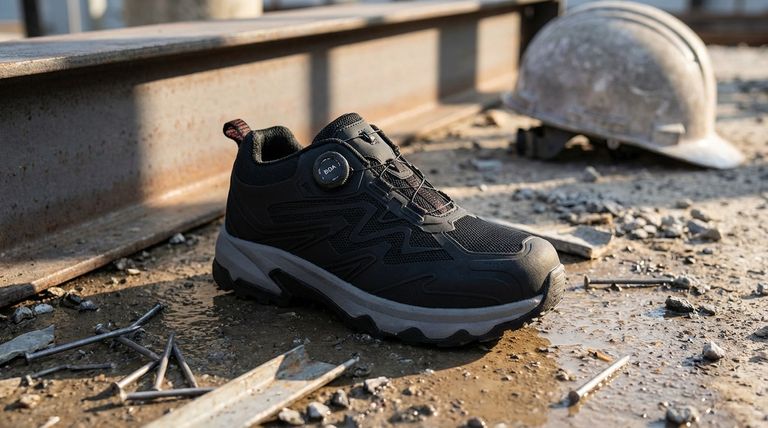
The Anatomy of Risk: Why Foot Protection is Non-Negotiable
To understand the necessity of work boots, we must first appreciate the vulnerability of the human foot and the nature of workplace hazards.
The Foot's Complex Structure
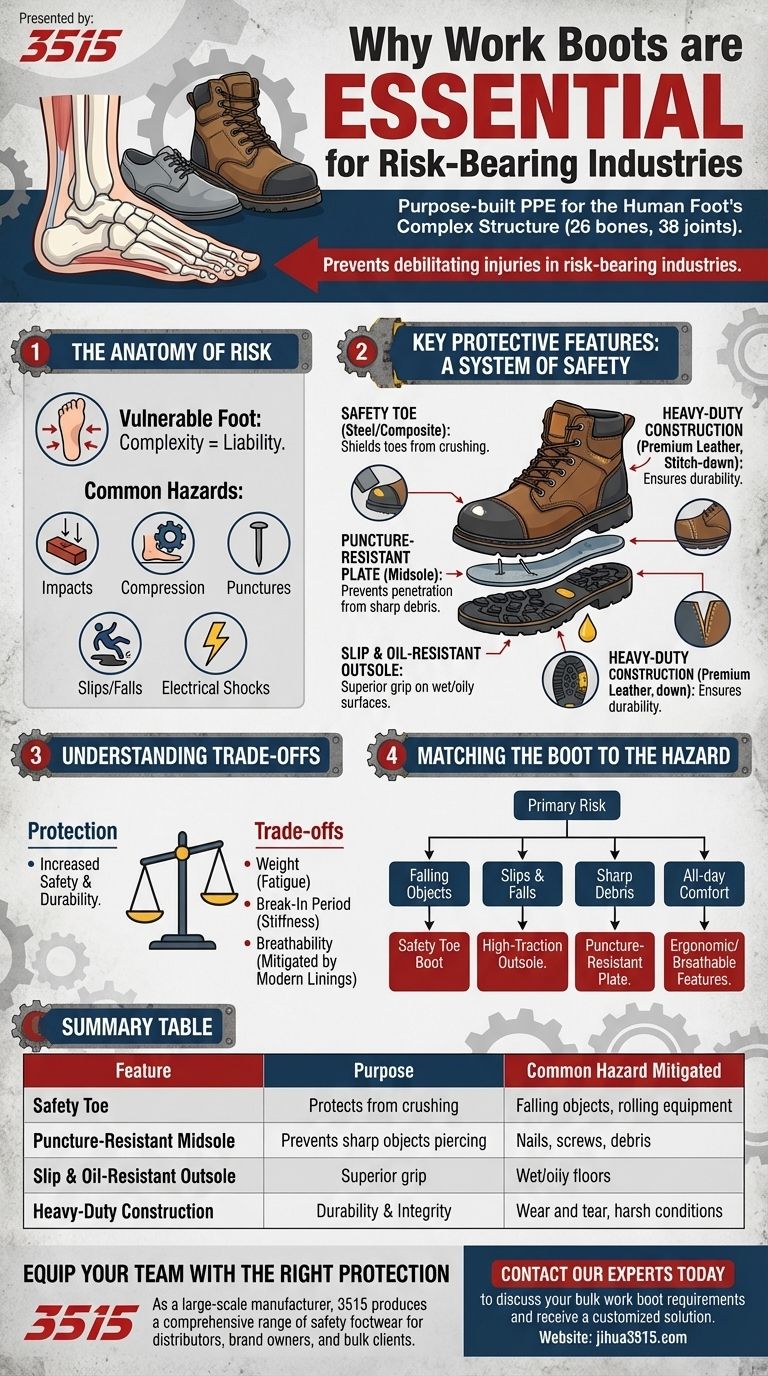
The foot is a masterpiece of biological engineering, but its complexity is also a liability. With dozens of bones and joints working in concert, even a minor injury can severely impair mobility and cause significant pain.
Protecting this structure is fundamental to a worker's ability to perform their job and maintain their quality of life.
Common Workplace Hazards
Work boots are engineered to defend against a predictable set of risks prevalent in industrial, medical, and service environments.
These include impacts from falling objects, compression from heavy machinery, punctures from sharp debris on the ground, slips on wet or oily surfaces, and even electrical shocks.
Key Protective Features of a Work Boot
A work boot is not simply a sturdy shoe; it is a system of safety features. Each component serves a distinct protective function.
Impact and Compression Resistance
This is the most well-known feature, often taking the form of a steel or composite safety toe. This reinforced cap shields the toes from being crushed by heavy falling items or rolled over by equipment.
Puncture Protection
Many work boots include a puncture-resistant plate in the midsole. This flexible-yet-strong plate prevents sharp objects like nails, screws, or metal shards from penetrating the sole of the boot and injuring the foot.
Slip and Oil Resistance
The outsole is critical. Work boots designed for environments like restaurants, factories, or automotive shops feature specialized rubber compounds and tread patterns that provide superior grip on slippery, wet, or oily floors.
Heavy-Duty Construction
The overall build quality is a safety feature in itself. Using premium leather, durable stitch-down welts, and thick soles ensures the boot can withstand the abuse of a demanding job site without failing and exposing the worker to risk.
Understanding the Trade-offs
While essential, the protective features of work boots introduce certain trade-offs that users should understand.
Protection Comes with Weight
Safety features, especially steel toes and thick puncture-proof soles, add significant weight compared to casual shoes. This can lead to increased fatigue over a long shift.
The Break-In Period
The same robust leather and stiff construction that provide support and durability often require a "break-in" period. Initially, the boots may feel stiff and less comfortable until they conform to the wearer's foot.
Balancing Durability and Breathability
Waterproofing and thick leather are excellent for protection from the elements but can limit airflow. Modern boots often mitigate this with breathable linings and moisture-wicking materials to improve comfort during long wear.
Matching the Boot to the Hazard
Choosing the right boot requires identifying the most significant risks in your specific work environment.
- If your primary focus is protection from falling objects: Prioritize a boot with a certified safety toe (steel or composite).
- If your primary focus is preventing slips and falls: Ensure the boot has a high-traction, oil-and-slip-resistant outsole.
- If your primary focus is working around sharp ground debris: Select a boot that explicitly features a puncture-resistant midsole plate.
- If your primary focus is all-day comfort and support: Look for boots that balance safety features with ergonomic insoles and breathable linings.
Ultimately, wearing the correct work boot is a foundational element of personal responsibility and workplace safety.
Summary Table:
| Protective Feature | Purpose | Common Hazard Mitigated |
|---|---|---|
| Safety Toe (Steel/Composite) | Protects toes from crushing impacts | Falling objects, rolling equipment |
| Puncture-Resistant Midsole | Prevents sharp objects from piercing the sole | Nails, screws, metal debris on the ground |
| Slip & Oil-Resistant Outsole | Provides superior grip on slippery surfaces | Wet floors, oil spills, smooth surfaces |
| Heavy-Duty Construction | Ensures durability and overall structural integrity | General wear and tear, harsh job site conditions |
Equip your team with the right protection.
As a large-scale manufacturer, 3515 produces a comprehensive range of safety footwear for distributors, brand owners, and bulk clients. Our production capabilities encompass all types of safety boots and shoes, ensuring your workforce is protected against the specific hazards they face.
Contact our experts today to discuss your bulk work boot requirements and receive a customized solution.
Visual Guide
Related Products
- Durable Leather Work Boots for Wholesale & Custom Manufacturing
- Durable Leather Work Boots for Wholesale & Custom OEM Manufacturing
- Durable Leather Work Boots Wholesale Manufacturer & Custom Factory
- Durable Leather Moc Toe Work Boots for Wholesale & Custom Manufacturing
- Wholesale Durable 6-Inch Work Boots | Custom & Private Label Manufacturer
People Also Ask
- What is the difference between full-grain and top-grain leather? Premium Material Guide for Boot Manufacturers
- What are the common workplace hazards that can be mitigated with the right work boots? Protect Your Workforce
- What are the common foot issues workers face due to uncomfortable work boots? Prevent Pain & Deformities
- What are the advantages of leather versus synthetic work boots? A Guide to Choosing the Right Material
- What are the key components of modern work boots? Engineered for Ultimate Durability and Comfort