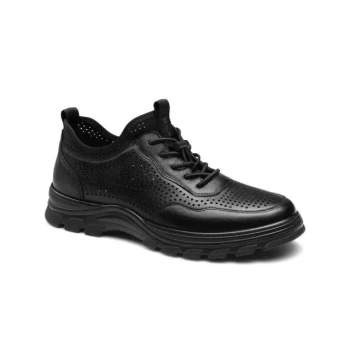
Stable, slip-resistant footwear is the baseline requirement for valid gait analysis data. Without it, experimental results become contaminated by mechanical artifacts rather than reflecting the subject's true physiological condition. High-performance footwear ensures that critical metrics—such as gait frequency, speed, and joint moments—are derived from the user's motor control, not from compensatory movements triggered by slippery surfaces or unstable equipment.
Core Insight In gait experiments, the shoe is the interface between the human biological system and the measurement device. The primary function of slip resistance and stability is to neutralize environmental noise, ensuring that any observed instability is a result of the subject's functional state, not a failure of their equipment.
Ensuring Data Integrity and Precision
Eliminating Accidental Instability
The primary threat to the accuracy of a fall risk assessment or gait study is accidental instability. This occurs when a subject loses balance due to equipment failure—in this case, the shoe losing traction—rather than a physiological deficit.
Scientific tread patterns in professional footwear provide the necessary friction to prevent these non-biological slips. By securing the foot-to-ground interface, researchers ensure that recorded gait fluctuations are genuine markers of the subject's physical capability.
Reducing Kinematic Compensation
When a subject wears unstable or slippery shoes, they subconsciously alter their walking pattern to maintain balance. This phenomenon is known as kinematic compensation.
High-performance training shoes utilize midsole support to minimize foot displacement within the shoe. This allows the subject to maintain a natural gait cycle, ensuring that ground reaction forces and joint moments reflect natural biomechanics rather than a guarded or altered walking style.
The Role of Plantar Feedback
Optimizing Sensory Input
Gait analysis is highly sensitive to plantar feedback—the sensory information the foot receives from the ground. The stability of the shoe directly influences how clearly this feedback is transmitted to the subject.
If a shoe is unstable or possesses inconsistent sole hardness, it distorts the subject's perception of the ground. This distortion can delay or alter the subject's reaction to perturbations, leading to data that misrepresents their actual balance recovery potential.
Consistency in Perturbation Protocols
In experiments involving treadmills or perturbation platforms, the friction coefficient between the shoe and the belt must be constant.
Superior grip ensures that when the belt speed changes to simulate a trip or slip, the foot moves exactly as the protocol intends. This allows researchers to perform limit testing on balance recovery, confident that the subject's response is a reaction to the specific perturbation intensity, not an unpredictable slide of the shoe.
Understanding the Trade-offs
Standardization vs. Realism
While high-performance shoes are critical for data purity, they present a trade-off regarding ecological validity.
Using a standardized, high-stability shoe eliminates variables and allows for clean comparison between subjects. However, it may mask risks associated with the subject's daily footwear choices.
The "Zero-Drop" Necessity
Not all "stable" shoes are suitable for all experiments. Commercial shoes often have varying heel-to-toe drops that introduce vertical variables.
For studies measuring specific interventions (like heel lifts) or precise joint angles, standardized zero-drop shoes are required. While they offer stability, their primary value is a neutral geometry that prevents the shoe's design from skewing anatomical data.
Making the Right Choice for Your Experiment
Selecting the correct footwear depends entirely on the specific variable you intend to isolate.
- If your primary focus is Fall Risk Assessment: Prioritize high-traction, supportive training shoes to ensure that any recorded instability is strictly physiological and not mechanical.
- If your primary focus is Biomechanical Intervention: Use standardized zero-drop footwear to eliminate geometric variables and ensure observed changes are derived solely from the intervention.
- If your primary focus is High-Intensity Perturbation: Ensure shoes function in tandem with a safety suspension system to allow for aggressive limit testing without risking participant injury.
By controlling the footwear variable, you transform the shoe from a potential source of error into a calibrated instrument of measurement.
Summary Table:
| Feature | Impact on Gait Analysis | Research Benefit |
|---|---|---|
| Slip Resistance | Eliminates accidental instability | Ensures gait fluctuations are physiological, not mechanical |
| Midsole Support | Reduces kinematic compensation | Allows subjects to maintain natural biomechanical patterns |
| Plantar Feedback | Optimizes sensory input accuracy | Prevents distortion of the subject's ground perception |
| Consistent Grip | Standardizes perturbation response | Enables precise limit testing on balance recovery |
| Neutral Geometry | Eliminates vertical variables | Ensures joint angle data is not skewed by shoe design |
Partner with 3515 for Precision Footwear Solutions
As a large-scale manufacturer serving distributors and brand owners, 3515 offers comprehensive production capabilities for all footwear types, anchored by our flagship Safety Shoes series. Our extensive portfolio covers work and tactical boots, outdoor shoes, training shoes, and sneakers, as well as Dress & Formal shoes to meet diverse bulk requirements.
Whether you need standardized footwear for clinical research or high-performance training shoes for athletic distribution, we provide the stability and slip-resistance your customers demand. Contact us today to discuss your bulk manufacturing needs and discover the value of a 3515 partnership.
References
- Ke Zhang, Jizhong Liu. A Fall Risk Assessment Model for Community-Dwelling Elderly Individuals Based on Gait Parameters. DOI: 10.1109/access.2023.3327091
This article is also based on technical information from 3515 Knowledge Base .
Related Products
- Lightweight Breathable Training Shoes for Wholesale & Custom OEM Manufacturing
- Custom OEM Training Shoes Wholesale Manufacturer Durable & Breathable
- Wholesale Breathable & Cushioned Training Shoes Custom Factory Production
- Wholesale Durable & Breathable Training Shoes for Custom Brands
- Wholesale Breathable Training Shoes Custom Athletic Footwear Manufacturer
People Also Ask
- Why are lightweight training shoes often preferred over professional hiking boots in urban walking? Maximize City Comfort
- What is the primary role of specialized training or orthopedic shoes? Enhance Safety in Elderly Balance Training
- Why are professional-grade training shoes essential for physical therapy? Ensure Patient Safety and Gait Stability
- Why is the use of flat-soled or professional training shoes essential for WBV? Maximize Vibration Energy Transfer
- Why is the integration of advanced cushioning in training shoes necessary for athletes? Boost Recovery and Performance