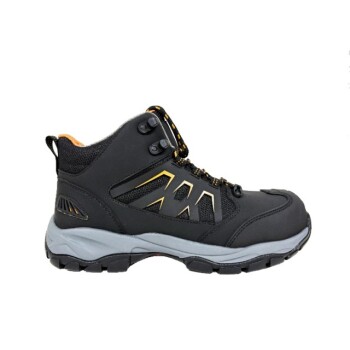
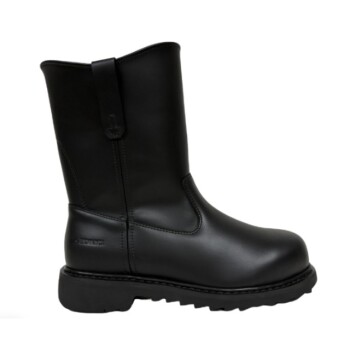
Navigating complex terrains demands specialized footwear because standard athletic shoes lack the structural integrity required for steep stairs and irregular surfaces. Tactical boots and outdoor shoes utilize reinforced midsoles and high-top designs to biomechanically lock the foot in place, preventing the gait instability and insufficient ankle strength that frequently lead to falls.
By integrating midsole shanks and rigid ankle support, these boots compensate for human biomechanical limitations, providing the structural stability necessary to traverse uneven environments safely.
The Mechanics of Stability in Complex Environments
Built-in Support Structures
The primary reason these boots are necessary is the inclusion of midsole shanks.
These rigid inserts stiffen the sole, preventing the shoe from twisting or collapsing when only a portion of the foot is in contact with a step or rock.
This structural reinforcement ensures that the platform under your foot remains consistent, even when the ground beneath it is not.
Locking the Foot for Biomechanical Control
Tactical boots feature high-top ankle protection designs that serve a specific biomechanical function.
Unlike low-cut shoes, these designs effectively "lock" the foot and ankle complex in place.
This support reduces the reliance on sheer muscular strength to maintain balance, which is critical when navigating steep stairs or unpredictable outdoor corridors where fatigue sets in quickly.
Enhancing Grip and Traction
Beyond internal structure, these boots utilize industrial-grade wear-resistant rubber outsoles.
This specialized rubber compound is designed to bite into irregular surfaces, providing superior grip compared to standard trainers.
Reliable traction is the first line of defense against slips, particularly on slick stairs or wet outdoor passageways.
Physical Protection and Psychological Focus
Defense Against Environmental Hazards
Complex terrains often hide sharp objects, loose debris, or abrasive surfaces.
Tactical footwear addresses this with thickened heel counters and puncture-resistant outsoles.
The construction often uses robust synthetic leather or specialized fabrics that resist abrasion, ensuring the foot remains safe even in rugged geographical environments.
The Psychology of Safety
There is a distinct psychological advantage to wearing reinforced footwear.
By providing high reliability and physical stability, these boots lower the user's perception of environmental risk.
This allows you to focus your mental energy on physical training or the task at hand, rather than constantly worrying about where you place your feet.
Understanding the Trade-offs
Weight vs. Agility
The reinforced materials and heavy-duty rubber that provide stability inevitably add weight.
While necessary for rough terrain, heavier boots can increase fatigue over long distances on flat, smooth paths compared to lightweight athletic shoes.
Reduced Sensory Feedback
The robust construction that protects your feet also isolates them.
Thick, puncture-resistant soles reduce "ground feel," making it harder to sense the nuances of the terrain beneath you.
This lack of sensitivity can be a disadvantage in activities requiring precise, delicate foot placement.
Making the Right Choice for Your Goal
Selecting the correct footwear requires balancing the severity of the terrain with your need for mobility.
- If your primary focus is maximum stability on steep or uneven ground: Prioritize boots with a rigid midsole shank and high-top lacing to mechanically support the ankle.
- If your primary focus is wet or slippery environments: Ensure the boot features slip-resistant soles and waterproof construction to maintain traction where friction is low.
- If your primary focus is speed on flat, smooth paths: Consider trading the heavy-duty protection for a lightweight boot design to reduce energy expenditure.
True safety in complex terrain comes from matching your equipment's structural capabilities to the specific biomechanical demands of the environment.
Summary Table:
| Feature | Tactical/Outdoor Boots | Standard Athletic Shoes | Benefit in Complex Terrain |
|---|---|---|---|
| Midsole Structure | Rigid Shank Support | Flexible Foam | Prevents shoe twisting on uneven steps |
| Ankle Design | High-Top Locking | Low-Cut | Reduces risk of sprains and muscle fatigue |
| Outsole Material | Industrial-Grade Rubber | Standard Rubber | Superior grip on slick or jagged surfaces |
| Protection | Puncture-Resistant | Minimal/Lightweight | Guards against sharp debris and abrasions |
| Ground Feel | Low (Isolated) | High (Sensitive) | Protects foot from impact and sharp objects |
Elevate Your Product Line with 3515 Footwear
As a large-scale manufacturer serving global distributors and brand owners, 3515 offers comprehensive production capabilities for all footwear types. Our flagship Safety Shoes and Tactical Boots are engineered with the reinforced support and structural integrity required for the most demanding environments.
From work and outdoor shoes to training sneakers and formal dress shoes, we provide the bulk manufacturing expertise and quality assurance your brand needs to stand out. Partner with us to deliver high-performance footwear that guarantees safety and stability for your customers.
Ready to scale your footwear business? Contact us today to discuss your bulk requirements!
References
- Charupa Lektip, Jiraphat Nawarat. Construction of the Short-Form Thai-Home Fall Hazard Assessment Tool (Thai-HFHAT-SF) and Testing Its Validity and Reliability in the Elderly. DOI: 10.3390/ijerph19095187
This article is also based on technical information from 3515 Knowledge Base .
Related Products
- Durable Mid-Cut Tactical Boots for Wholesale & Private Label
- Wholesale Durable Mid-Cut Tactical Boots for Custom & Private Label Brands
- Durable High-Ankle Tactical Boots for Wholesale & Custom Manufacturing
- High-Traction Suede Tactical Boots Wholesale & Custom Manufacturing
- Durable Leather Tactical Boots Wholesale & Custom Manufacturing for Brands
People Also Ask
- What are some key features of top-tier tactical boots for 2023? Find the Perfect Boot for Your Mission
- Can tactical boots be stylish for everyday wear? Yes, with the right styling and features.
- What are the weight and mobility differences between combat and tactical boots? Choose the Right Boot for Your Mission
- How should tactical boots be stored to maintain their condition? Protect Your Gear Investment
- What are the main construction similarities between tactical boots and tactical sneakers? Built for Performance & Durability