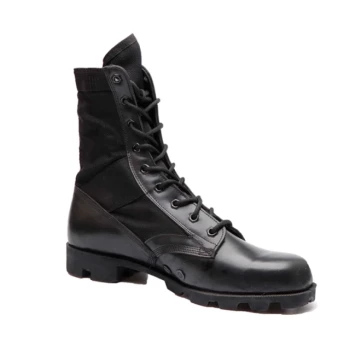
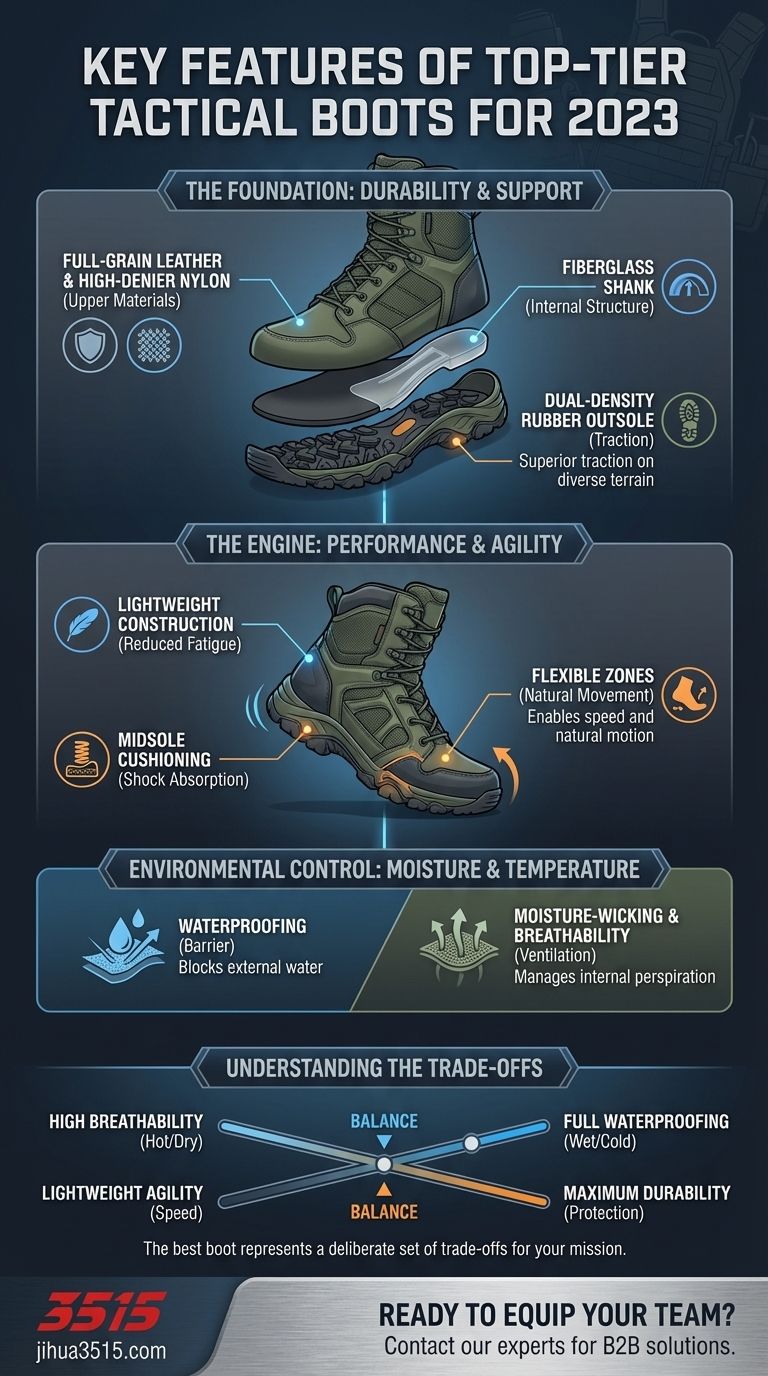
In 2023, the key features of a top-tier tactical boot are a sophisticated blend of material science and ergonomic design. These boots are defined by their use of durable yet lightweight materials like high-denier nylon and synthetic leather, advanced support systems such as fiberglass shanks, superior traction from dual-density rubber outsoles, and crucial environmental controls like waterproofing and moisture-wicking linings.
The central challenge in selecting a top-tier tactical boot is not finding one with the most features, but rather understanding that the best boot represents a deliberate set of trade-offs. Your specific mission dictates whether you should prioritize absolute durability, lightweight agility, or all-weather protection.
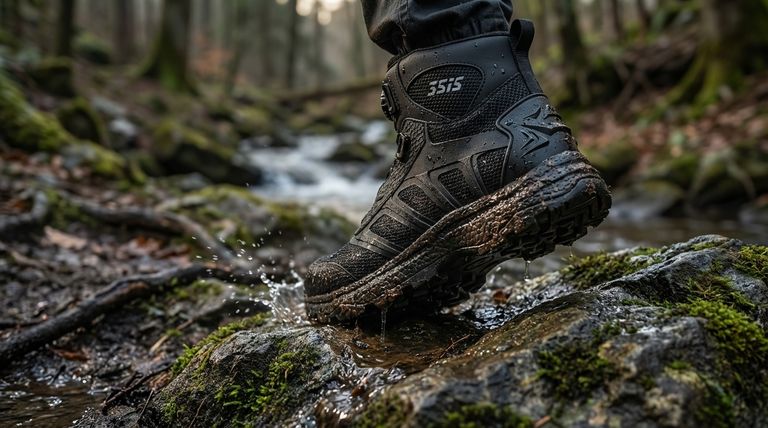
The Foundation: Durability and Support
A tactical boot's primary function is to protect your feet and provide a stable platform in demanding conditions. This foundation is built from the materials of its upper, the structure of its core, and its connection to the ground.
### Upper Materials: The First Line of Defense
Modern boots blend traditional and advanced materials. Full-grain leather offers maximum durability and water resistance, while synthetics like high-denier nylon provide a lighter, more breathable, and often more flexible alternative. The best boots frequently combine these for a balance of toughness and performance.
### Outsole Construction: The Point of Contact
The outsole is where the boot meets the terrain. Top-tier models feature aggressive, multi-directional lugs for exceptional traction on surfaces ranging from wet pavement to loose gravel. Dual-density rubber is often used to provide a durable exterior with a softer, grippier interior for enhanced stability.
### The Internal Structure: Shanks and Insoles
Hidden within the boot is a shank, a stiff piece of material (like fiberglass or composite) placed between the insole and outsole. This provides critical arch support and torsional rigidity, preventing the boot from twisting on uneven ground and reducing foot fatigue. This is paired with a cushioned, often removable, insole for comfort and shock absorption.
The Engine: Performance and Agility
While protection is essential, modern operational needs demand speed and reduced fatigue. Top-tier boots are engineered to feel less like traditional boots and more like athletic footwear.
### Lightweight Construction: The War on Fatigue
Every ounce on your feet matters over a long day. The use of synthetic leathers, nylon fabrics, and composite hardware significantly reduces the boot's overall weight, which directly translates to less energy expended and reduced fatigue.
### Midsole Cushioning: Absorbing the Impact
The midsole is the primary layer for shock absorption. Advanced foams, similar to those found in high-end running shoes, cushion the foot from the repetitive impact of walking, running, and carrying heavy loads, protecting your joints and increasing comfort.
### Flexibility: Enabling Natural Movement
Rigid boots can feel cumbersome and slow. Modern designs incorporate flexible zones in the upper and sole, particularly around the ankle and forefoot. This allows for a more natural range of motion, crucial for kneeling, climbing, or sprinting.
Environmental Control: Managing Moisture and Temperature
Your feet must remain dry and comfortable to perform. Top-tier boots manage moisture from both the outside environment and from perspiration.
### Water Resistance vs. Waterproofing
Water-resistant boots, typically made of treated leather, will shed light rain and splashes but can eventually soak through. Waterproof boots feature an internal membrane or bootie that completely blocks water from entering, keeping your feet dry in heavy rain or when submerged.
### Breathability and Moisture Wicking
An effective boot must let sweat escape. Features like mesh panels and moisture-wicking linings are critical for ventilation. They pull perspiration away from the skin, allowing it to evaporate and keeping your feet drier and cooler, which is essential for preventing blisters.
Understanding the Trade-offs
No single boot excels in every category. Making an informed choice requires understanding the inherent compromises in design.
### The Waterproofing vs. Breathability Dilemma
The most common trade-off is between environmental protection and comfort. A fully waterproof membrane is excellent at keeping water out, but it will always be less breathable than a non-waterproof design. In hot, dry climates, a highly breathable boot is often a better choice to manage sweat, even if it offers less protection from rain.
### The Durability vs. Weight Balance
Heavier, more robust materials like thick leather provide maximum durability and protection. However, this comes at the cost of increased weight and a longer break-in period. Lighter, synthetic boots offer immediate comfort and agility but may not withstand the same level of long-term abuse.
Making the Right Choice for Your Mission
Your intended use is the most important factor in selecting a boot. Evaluate your needs against these common scenarios.
- If your primary focus is maximum durability and support: Seek out boots with a high proportion of full-grain leather, a rigid shank, and robust ankle reinforcement.
- If your primary focus is speed and agility: Prioritize lightweight synthetic uppers, a flexible sole design, and excellent breathability.
- If your primary focus is all-weather versatility: Look for a hybrid design that combines a reliable waterproof membrane with strategic use of breathable materials.
Ultimately, choosing the right tactical boot is about aligning its specific design features with the demands of your environment and mission.
Summary Table:
| Key Feature Category | Core Components | Primary Benefit |
|---|---|---|
| Foundation: Durability & Support | Full-grain leather, fiberglass shank, dual-density rubber outsole | Maximum protection, stability, and traction on rough terrain. |
| Engine: Performance & Agility | Synthetic uppers, advanced foam midsoles, flexible zones | Reduced weight and fatigue, enabling natural movement and speed. |
| Environmental Control | Waterproof membranes, moisture-wicking linings, mesh panels | Keeps feet dry from external elements and internal perspiration. |
Ready to equip your team with mission-specific tactical boots?
As a large-scale manufacturer, 3515 produces a comprehensive range of durable, agile, and all-weather footwear for distributors, brand owners, and bulk clients. Our production capabilities encompass all types of tactical boots and shoes, ensuring you get the right balance of features for your specific needs.
Contact our experts today to discuss your requirements and discover how we can deliver superior quality and value.
Visual Guide
Related Products
- Durable Leather Tactical Boots Wholesale & Custom Manufacturing for Brands
- High-Traction Suede Tactical Boots Wholesale & Custom Manufacturing
- Durable Leather High-Ankle Tactical Boots for Wholesale & Custom Manufacturing
- Durable Mid-Cut Tactical Boots for Wholesale & Private Label
- Wholesale Waterproof Tactical Boots Custom Suede & High-Traction Soles
People Also Ask
- What specialized protections do tactical boots offer? Maximize Endurance with High-Performance Footwear
- What features should law enforcement officers look for in tactical boots? Essential Guide for Safety & Performance
- Importance of Professional Tactical Boots in Loess Gully Regions: Ensure Safety and Precision for Field Monitoring
- What is rucking, and why are tactical boots suitable for it? Discover the Ultimate Footwear for Heavy Loads
- What makes the traction of tactical boots superior? Unlock the Science of Unbeatable Grip