
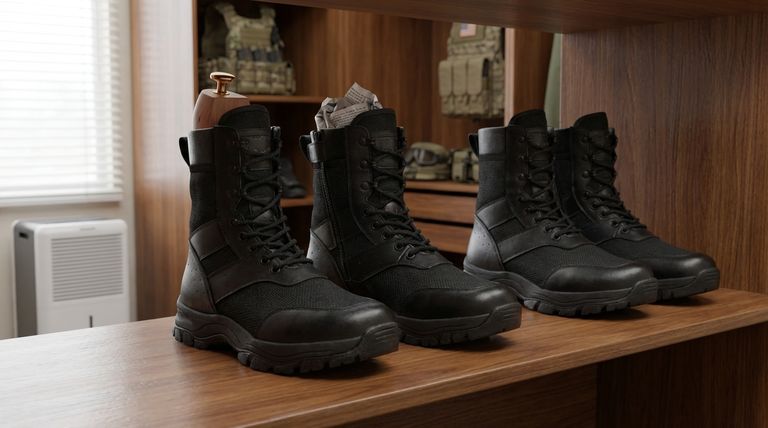
To properly store tactical boots, you must keep them in a cool, dry environment away from direct sunlight, using boot trees or newspaper to maintain their structural integrity. This simple act is the final and most critical step in a maintenance routine that prevents material degradation, preserves their shape, and ensures they are always ready for use.
Proper storage isn't a passive activity; it is an active measure to protect your investment. The goal is to control the environment around your boots to halt the gradual breakdown of materials and preserve the support they are designed to provide.
The Principles of Proper Boot Storage
Effective storage goes beyond simply putting your boots on a shelf. It requires a deliberate approach to managing the two primary enemies of high-performance footwear: environmental factors and loss of shape.
Control the Environment
Your boots' materials are constantly under assault from their surroundings. The ideal storage location is cool, dry, and dark.
A cool, stable temperature prevents the adhesives used in boot construction from weakening and stops synthetic materials from becoming brittle.
Low humidity is crucial to prevent the growth of mold and mildew, which can permanently damage leather, fabrics, and stitching.
Avoiding direct sunlight is non-negotiable. UV radiation breaks down the chemical bonds in both natural leather and synthetic fabrics, causing them to fade, weaken, and crack over time.
Maintain Structural Integrity
Tactical boots are engineered to provide support. Storing them improperly allows gravity and neglect to undo that engineering.
Using boot trees is the best method for maintaining shape. They provide gentle, even pressure from the inside, preventing the toe box from collapsing and minimizing deep creases in the ankle area where the boot flexes.
If boot trees are not available, stuffing the boots tightly with newspaper or paper towels is a functional alternative. This helps absorb any residual moisture and provides the internal support needed to hold their form.
Always Store Clean and Dry
Never store boots that are damp or dirty. This is the most common and damaging mistake.
Storing damp boots creates a perfect breeding ground for mold and bacteria, which will rot the materials from the inside out and create powerful odors.
Dirt, mud, and chemicals left on the boot's surface can slowly eat away at the materials. Always brush your boots clean before storing them.
Common Pitfalls to Avoid
Even with the best intentions, common mistakes can significantly shorten the life of your boots. Understanding these pitfalls is key to preserving your gear.
The Damp Storage Disaster
Placing wet boots in a closet or box is a recipe for ruin. The trapped moisture will quickly lead to mold, mildew, and the complete breakdown of leather and adhesives. Always air dry boots thoroughly, away from direct heat, before storing.
The Heat Trap
Drying boots too close to a fire, radiator, or vent—or storing them in a hot car trunk—causes irreversible damage. Intense heat can shrink and crack leather, warp synthetic components, and melt the glues that hold the boot together.
The Sunlight Problem
Leaving boots on a back porch or next to a window exposes them to constant UV radiation. This photodegradation acts like a rapid aging process, making materials brittle and weak.
Neglecting Internal Shape
Simply tossing your boots in a pile at the bottom of a closet causes them to collapse under their own weight. This creates permanent creases that weaken the material and compromise the ankle support the boot was designed to offer.
A Simple Checklist for Peak Performance
Your storage strategy should align with how you use your boots. Follow these guidelines to ensure they remain in top condition.
- If your boots are for daily use: Your focus is on the nightly routine. Brush them clean, check for dampness, and insert boot trees every single time you take them off.
- If you are storing them long-term (e.g., between seasons): Perform a deep clean, condition any leather components, and ensure they are completely bone-dry before inserting boot trees and placing them in a breathable bag or box in a stable environment.
- If your boots are primarily synthetic: Pay special attention to avoiding UV light and high heat, as these can degrade plastics, fabrics, and adhesives more quickly than natural materials.
Protecting your gear is a fundamental part of being prepared.
Summary Table:
| Storage Principle | Key Action | Benefit |
|---|---|---|
| Environment | Store in a cool, dry, dark place. | Prevents mold, mildew, and material degradation. |
| Shape | Use boot trees or stuff with newspaper. | Maintains structural integrity and support. |
| Condition | Always store clean and completely dry. | Avoids internal damage and odors. |
As a leading manufacturer of tactical and safety footwear, 3515 understands that durability starts with proper care. Protect your inventory and ensure your customers receive top-quality products. Partner with us for reliable, high-performance boots designed for the most demanding conditions. Contact our team today to discuss your bulk or distributor needs.
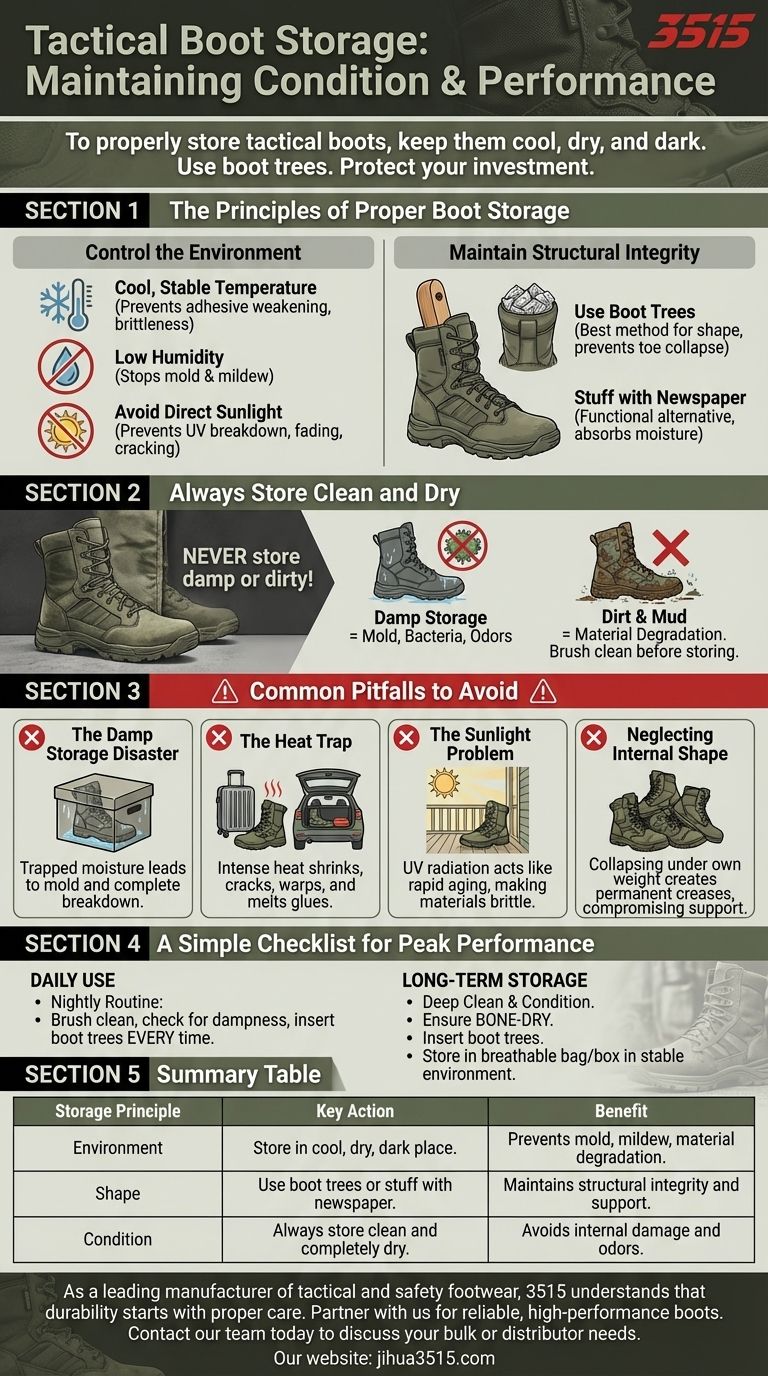
Visual Guide
Related Products
- Durable Leather Tactical Boots Wholesale & Custom Manufacturing for Brands
- High-Traction Suede Tactical Boots Wholesale & Custom Manufacturing
- Durable Leather High-Ankle Tactical Boots for Wholesale & Custom Manufacturing
- Durable Mid-Cut Tactical Boots for Wholesale & Private Label
- Wholesale Waterproof Tactical Boots Custom Suede & High-Traction Soles
People Also Ask
- What specialized protections do tactical boots offer? Maximize Endurance with High-Performance Footwear
- What features should law enforcement officers look for in tactical boots? Essential Guide for Safety & Performance
- Importance of Professional Tactical Boots in Loess Gully Regions: Ensure Safety and Precision for Field Monitoring
- What is rucking, and why are tactical boots suitable for it? Discover the Ultimate Footwear for Heavy Loads
- What makes the traction of tactical boots superior? Unlock the Science of Unbeatable Grip















