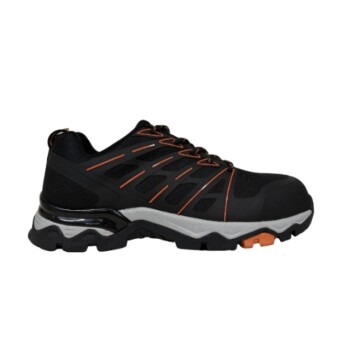
In the precision-driven environment of garment processing, specialized footwear is not merely a uniform requirement but a critical safety barrier. These shoes are necessary to provide an impenetrable shield against unique textile hazards like dropped needles and heavy mechanical parts, while simultaneously offering the traction required to prevent falls on floors compromised by fiber and fluids.
The necessity of covered footwear in textile workshops lies in its dual ability to prevent penetrating injuries from sharp objects and to mitigate the high risk of slipping on floors coated in oil or fiber debris.
The Mechanics of Physical Protection
Defending Against Sharp Hazards
Garment workshops present a unique risk profile dominated by sharp, often difficult-to-see objects.
Dropped needles are a pervasive hazard in sewing and embroidery zones. Specialized covered footwear provides a hardened barrier that prevents these sharp objects from penetrating the sole or upper material and injuring the foot.
Shielding from Impact and Crushing
Textile floors are often active zones for moving heavy machinery components and material rolls.
Footwear designed for this environment protects against crushing injuries caused by falling mechanical parts or heavy objects. This structural reinforcement ensures that an accidental drop results in a deflection rather than a debilitating injury.
Stability in a Dynamic Environment
Counteracting Slip Hazards
The floor of a textile workshop is rarely a clean, dry surface.
Professional-grade safety footwear is engineered with slip-resistant outsoles. This specific tread design is essential for maintaining traction on surfaces that may be slick with oil stains or wet spots, which are common near hydraulic machinery or dyeing processes.
Managing Fiber Debris
A specific challenge in garment processing is the accumulation of lint and fiber dust.
When fiber debris gathers on a smooth floor, it creates a surface similar to ice. Specialized footwear treads are designed to cut through or grip beneath this layer of debris, significantly reducing the risk of slips, falls, and secondary injuries that occur when a worker loses their footing.
Understanding the Trade-offs
Weight vs. Protection
While safety is paramount, specialized footwear is generally heavier than casual shoes due to reinforced materials.
This increased weight can lead to fatigue over long shifts if the footwear is not ergonomically designed. It is a necessary trade-off to ensure penetration resistance and impact protection.
Specificity vs. Versatility
Footwear designed for oil and slip resistance may have softer rubber compounds that wear down faster on rough concrete.
Using these specialized shoes outside the workshop environment can degrade their slip-resistant properties prematurely. They are highly effective tools within the context of the workshop but require dedicated use to maintain their safety rating.
Making the Right Choice for Your Safety
Safety in a textile environment is about matching the equipment to the specific risks of your station.
- If your primary focus is Machine Operation: Prioritize footwear with reinforced toes and puncture-resistant soles to protect against needles and moving parts.
- If your primary focus is Maintenance or Floor Management: Prioritize footwear with high-grade slip-resistant outsoles to handle oil spots and accumulated fiber debris.
The right footwear transforms the workshop floor from a zone of potential injury into a foundation for safe productivity.
Summary Table:
| Hazard Category | Specific Textile Workshop Risk | Safety Shoe Solution |
|---|---|---|
| Sharp Objects | Dropped needles, scissors, pins | Puncture-resistant soles & hardened uppers |
| Impact/Crushing | Heavy fabric rolls, machine parts | Reinforced toe caps & structural support |
| Slippery Surfaces | Oil stains, wet spots, dye spills | Industrial-grade slip-resistant outsoles |
| Debris Hazards | Lint and fiber dust accumulation | Specialized tread patterns for grip |
Partner with 3515 for High-Performance Industrial Footwear
As a large-scale manufacturer serving distributors and brand owners globally, 3515 provides the specialized protection your textile and garment processing workforce requires. Our comprehensive production capabilities ensure every pair—from our flagship Safety Shoes series to our tactical and training lines—meets rigorous safety standards.
Our Value to You:
- Comprehensive Portfolio: We offer everything from work boots and sneakers to Dress & Formal shoes for diverse bulk requirements.
- Industry-Specific Engineering: Our footwear is designed to mitigate the exact risks of garment workshops, including needle penetration and fiber-related slip hazards.
- Bulk Supply Stability: Scale your brand or supply chain with a partner capable of high-volume, consistent manufacturing.
Ready to enhance workshop safety and productivity? Contact us today to discuss your bulk requirements!
References
- Hailemichael Mulugeta, Steven M. Thygerson. Non-Fatal Occupational Injury Prevalence and Associated Factors in an Integrated Large-Scale Textile Industry in Addis Ababa, Ethiopia. DOI: 10.3390/ijerph19063688
This article is also based on technical information from 3515 Knowledge Base .
Related Products
- Premium Suede Sport Safety Shoes for Wholesale & Bulk Orders
- Premium Lightweight Safety Shoes for Wholesale & Bulk Orders
- Wholesale Anti-Smash & Puncture-Proof Safety Shoes Custom Manufacturing for Brands
- Premium KPU Injection Athletic Style Safety Shoes
- Premium Safety Shoes with Rotating Buckle Safety Sneakers
People Also Ask
- What are the primary functions of professional safety shoes? Maximize Safety in Water Supply Confined Spaces
- What industries have specific OSHA footwear requirements? Ensure Compliance & Protect Your Workforce
- What role do specialized safety shoes play in preventing falls? Engineering Stability in Industrial Environments
- How does professional industrial cleaning equipment maintain the performance stability of safety shoes? Pro Maintenance
- What core functions do professional safety shoes serve? Enhance Construction & Industrial Safety Standards