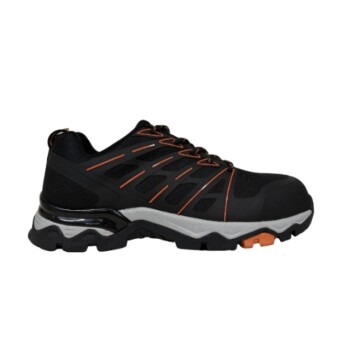
Standardized safety footwear serves as a foundational control mechanism in high-intensity fall risk studies, acting as both a safety device and a scientific instrument. By mandating the use of high-specification shoes, researchers ensure a constant initial coefficient of friction across varying surfaces, such as dry ground or slippery aluminum, thereby eliminating data interference caused by inconsistent sole wear.
In high-intensity intervention studies, standardized safety footwear acts as a dual safeguard: it protects the physical integrity of the participant during extreme disturbances and protects the statistical integrity of the data by removing footwear performance as a confounding variable.
Ensuring Data Stability and Scientific Rigor
Controlling the Coefficient of Friction
In fall risk assessments, the interaction between the shoe and the floor is a critical variable. Standardized footwear ensures that all subjects start with a constant initial coefficient of friction.
This consistency is vital when testing across different nodes, such as transitioning from stable ground to slippery aluminum surfaces. Without this standardization, results could be skewed by the varying grip levels of participants' personal shoes.
Eliminating Experimental Noise
Personal footwear introduces significant variability regarding sole hardness, fit, and tread depth. Standardized shoes eliminate this experimental noise.
By establishing a uniform baseline, researchers can be confident that any improvements in gait parameters are the direct result of the specific training protocol. This ensures that the data reflects human adaptation, not changes in the physical properties of the footwear.
Prioritizing Participant Safety in High-Risk Scenarios
Mitigating Injury Risks
High-intensity studies often involve subjecting participants to extreme environmental disturbances to simulate fall scenarios. In these volatile conditions, personal footwear may be inadequate.
High-specification safety shoes provide superior grip performance. This specialized traction effectively reduces the probability of actual injury during these rigorous assessments.
Providing Structural Support
Beyond simple traction, standardized safety footwear offers essential ankle support.
During high-intensity interventions, the mechanical stress on the joints is significant. Proper ankle support stabilizes the participant, ensuring that the test measures their balance and reaction mechanisms rather than their susceptibility to an ankle sprain.
Understanding the Trade-offs
Standardization vs. Ecological Validity
While standardized footwear is crucial for internal validity, it introduces a limitation regarding real-world application.
By eliminating the variables of "bad" footwear (e.g., worn-out soles or loose fits), the study may not accurately reflect how participants would react in their daily lives while wearing their own shoes. Researchers prioritize the stability of experimental data over naturalistic conditions to ensure the safety of the intervention itself.
Making the Right Choice for Your Goal
To determine how to implement footwear protocols in your study, consider your primary objectives:
- If your primary focus is Internal Validity: Mandate standardized safety footwear to ensure that all observed gait changes are attributed solely to your training intervention.
- If your primary focus is Participant Safety: Utilize high-specification safety shoes with superior grip and ankle support to minimize liability and injury risk during high-disturbance tests.
Standardization transforms footwear from an unpredictable variable into a reliable constant, securing both your data and your subjects.
Summary Table:
| Aspect | Benefit/Role | Impact on Study |
|---|---|---|
| Scientific Rigor | Consistent Coefficient of Friction | Eliminates footwear variability, ensures reliable data |
| Eliminates Experimental Noise | Isolates training protocol effects, validates results | |
| Participant Safety | Mitigates Injury Risks (Superior Grip) | Reduces falls during extreme disturbances, protects subjects |
| Provides Structural Support (Ankle Support) | Prevents sprains, measures true balance and reaction |
Ready to enhance the safety and reliability of your footwear offerings? As a large-scale manufacturer serving distributors and brand owners, 3515 offers comprehensive production capabilities for all footwear types, anchored by our flagship Safety Shoes series. Our extensive portfolio covers work and tactical boots, outdoor shoes, training shoes, and sneakers, as well as Dress & Formal shoes to meet diverse bulk requirements. Contact us today to discuss how our high-specification footwear can meet your bulk demands and elevate your brand's commitment to quality and safety.
References
- Kim Sarah Sczuka, Jochen Klenk. Evaluating the Effect of Activity and Environment on Fall Risk in a Paradigm-Depending Laboratory Setting: Protocol for an Experimental Pilot Study. DOI: 10.2196/46930
This article is also based on technical information from 3515 Knowledge Base .
Related Products
- Premium Suede Sport Safety Shoes for Wholesale & Bulk Orders
- Premium Lightweight Safety Shoes for Wholesale & Bulk Orders
- Wholesale Anti-Smash & Puncture-Proof Safety Shoes Custom Manufacturing for Brands
- Premium KPU Injection Athletic Style Safety Shoes
- Premium Safety Shoes with Rotating Buckle Safety Sneakers
People Also Ask
- What industries have specific OSHA footwear requirements? Ensure Compliance & Protect Your Workforce
- What are the primary functions of professional safety shoes? Maximize Safety in Water Supply Confined Spaces
- What role do specialized safety shoes play in preventing falls? Engineering Stability in Industrial Environments
- What happens during the cutting stage of safety shoes manufacturing? Precision, Process & Quality
- How do specialized safety shoes protect against battery maintenance injuries? Prevent Impact and Chemical Burns