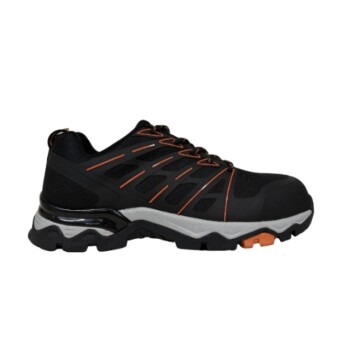
The Y-Balance Test is utilized to evaluate safety shoes because it measures dynamic stability rather than just static standing capability. By requiring a test subject to balance on a single leg and reach in three specific directions, this assessment determines how well a shoe supports the foot and ankle during complex shifts in the center of gravity.
The Y-Balance Test simulates the real-world physical demands of an active work environment. It verifies that safety footwear provides necessary stability under dynamic loads, ensuring workers remain safe when changing direction or navigating obstacles.
The Mechanics of the Evaluation
Simulating Dynamic Loads
Unlike tests that measure stability while standing still, the Y-Balance Test introduces dynamic loads.
It requires the subject to perform active movements, reflecting the actual forces placed on a shoe during physical work.
The Single-Leg Challenge
The test protocol forces the subject to maintain stability on a single leg.
This isolates the support capabilities of the shoe, forcing it to compensate for the imbalance inherent in walking or running.
Multi-Directional Reaching
Subjects must reach in three specific directions while maintaining their balance.
This tests the shoe's ability to handle multi-directional forces, ensuring lateral and anterior support is sufficient.
Why This Matters for Worker Safety
Managing Center of Gravity Shifts
The core purpose of the test is to analyze how the shoe handles shifts in the center of gravity.
When a worker moves, their weight shifts rapidly; the shoe must effectively contain and support the foot to prevent rolling or slipping.
Navigating Real-World Obstacles
The test specifically mimics the mechanics required for stepping over obstacles.
High performance in this test indicates that a worker is less likely to lose their balance when negotiating hazardous or uneven terrain.
Safety During Direction Changes
Sudden changes in direction place high stress on the ankle and the shoe's structure.
The Y-Balance Test ensures the footwear provides adequate dynamic support to prevent falls during these critical transition movements.
Understanding the Scope of the Test
Focus on Movement Over Stasis
It is important to recognize that this is a test of motion, not endurance.
A shoe that performs well here is optimized for agility and activity, which is distinct from a shoe designed purely for standing comfort.
The Human Element
Because the test involves a human subject, it reflects the interaction between the wearer's physiology and the shoe.
This makes it a highly practical measure of "real-world" usage, rather than a purely theoretical mechanical bench test.
Making the Right Choice for Your Goal
When selecting safety footwear, the relevance of the Y-Balance Test depends on the nature of the work environment.
- If your primary focus is dynamic, active work: Prioritize shoes with high Y-Balance performance to ensure safety during frequent direction changes and when stepping over obstacles.
- If your primary focus is stationary tasks: Acknowledge that while dynamic support is valuable, features related to static standing fatigue may be more immediately relevant.
Ultimately, using Y-Balance data ensures your safety gear is capable of supporting workers when they are most vulnerable—while they are moving.
Summary Table:
| Evaluation Metric | Functional Focus | Safety Benefit |
|---|---|---|
| Dynamic Loads | Simulates active movement forces | Prevents instability during physical tasks |
| Single-Leg Stability | Isolates shoe support capabilities | Compensates for imbalances during walking/running |
| Multi-Directional Reach | Tests lateral and anterior support | Ensures stability during sudden direction changes |
| Center of Gravity | Analyzes weight shift management | Reduces risks of rolling or slipping on uneven ground |
Partner with 3515 for High-Performance Safety Footwear
As a large-scale manufacturer serving distributors and brand owners, 3515 offers comprehensive production capabilities for all footwear types, anchored by our flagship Safety Shoes series. Our footwear is engineered to excel in dynamic environments, providing the stability and multi-directional support highlighted by the Y-Balance Test.
Our extensive portfolio covers work and tactical boots, outdoor shoes, training shoes, and sneakers, as well as Dress & Formal shoes to meet your diverse bulk requirements. Ensure your customers receive the highest standard of protection and agility—contact us today to discuss your wholesale or custom manufacturing needs!
References
- S.-P. Cho, Won-Seob Shin. Effect of Shoelace Tightness in Safety Shoes on Static and Dynamic Balance and Gait Ability in Industrial Workers. DOI: 10.14474/ptrs.2024.13.4.416
This article is also based on technical information from 3515 Knowledge Base .
Related Products
- Premium Suede Sport Safety Shoes for Wholesale & Bulk Orders
- Premium Lightweight Safety Shoes for Wholesale & Bulk Orders
- Wholesale Anti-Smash & Puncture-Proof Safety Shoes Custom Manufacturing for Brands
- Premium KPU Injection Athletic Style Safety Shoes
- Premium Safety Shoes with Rotating Buckle Safety Sneakers
People Also Ask
- What industries have specific OSHA footwear requirements? Ensure Compliance & Protect Your Workforce
- What are the primary functions of professional safety shoes? Maximize Safety in Water Supply Confined Spaces
- What role do specialized safety shoes play in preventing falls? Engineering Stability in Industrial Environments
- How do specialized safety shoes protect against battery maintenance injuries? Prevent Impact and Chemical Burns
- What are the main components of safety shoes? A Guide to Protective Footwear Design