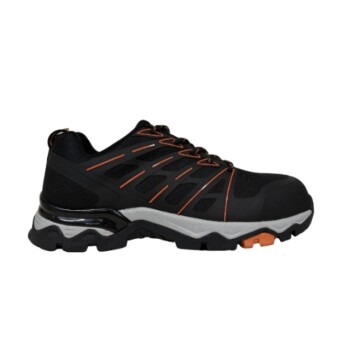
High-specification leather and safety toe caps are classified as critical materials because they combine high value and strict performance requirements with a scarce supply chain. Unlike commodity materials, these components dictate the safety certification and functional quality of the final footwear, yet only a limited number of suppliers are capable of manufacturing them to the necessary industrial-grade standards.
Classifying these items as "critical" is a strategic maneuver to mitigate supply chain risk. It shifts the procurement focus from simple transaction management to deep partnership development, ensuring that strict industrial standards for safety and quality are consistently met.
The Drivers of Criticality
Stringent Performance Standards
These components are not merely aesthetic; they are functional necessities that determine the shoe's viability. Critical materials must meet rigorous industrial standards, such as precise thickness and surface integrity.
If these specific parameters are not met, the final product may fail to achieve necessary safety certifications. This makes the material non-negotiable for production.
Limited Supplier Ecosystem
The classification is heavily influenced by market scarcity. There is a limited number of suppliers globally who possess the technical capability to produce these components to the required specifications consistently.
This scarcity creates a supply bottleneck. The inability to easily switch vendors increases the risk profile of the material, necessitating a "critical" designation.
High Added Value
These components contribute significantly to the overall worth of the product. They are considered high added value items because their quality directly correlates to the durability and premium nature of the finished boot or shoe.
Strategic Implications of Classification
Moving from Transaction to Partnership
The primary purpose of this classification is to change how procurement teams interact with vendors. Recognizing a material as critical encourages the use of partnership contracts rather than short-term buying.
Long-term agreements help secure volume commitments. This effectively "locks in" the capacity of the limited suppliers available.
The Necessity of Close Communication
Critical classification mandates a higher frequency of interaction. Manufacturers must maintain close communication with suppliers to monitor production quality and anticipate potential shortages.
This ongoing dialogue ensures a stable supply chain. It allows for immediate correction if materials drift from the required industrial standards.
Understanding the Trade-offs
High Resource Investment
Managing critical materials requires significant administrative overhead. Building partnerships and monitoring precise technical standards consumes more time and resources than managing standard commodities.
Vulnerability to Dependency
Because there are limited suppliers, you often face a dependency risk. While partnership contracts mitigate this, the underlying lack of alternative sources means your production line remains vulnerable to disruptions at that specific supplier's facility.
Making the Right Choice for Your Supply Chain
Recognizing which materials are critical allows you to allocate resources where they protect the business most.
- If your primary focus is Supply Stability: Secure long-term partnership contracts immediately to ringfence capacity from the limited pool of capable suppliers.
- If your primary focus is Product Certification: Prioritize close communication and strict quality control loops to ensure every batch meets surface and thickness standards.
Ultimately, correctly identifying critical materials allows you to protect your production line against the twin threats of quality failure and supply shortages.
Summary Table:
| Reason for Criticality | Why it Matters |
|---|---|
| Stringent Performance Standards | Dictate safety certification; non-negotiable for production. |
| Limited Supplier Ecosystem | Creates supply bottlenecks; increases risk profile. |
| High Added Value | Directly correlates to product durability and premium nature. |
| Strategic Implications: Partnership | Secures volume commitments; mitigates supply risk. |
| Strategic Implications: Communication | Ensures stable supply; monitors quality against industrial standards. |
Ready to elevate your footwear production with a reliable partner? As a large-scale manufacturer serving distributors and brand owners, 3515 offers comprehensive production capabilities for all footwear types, anchored by our flagship Safety Shoes series. Our extensive portfolio covers work and tactical boots, outdoor shoes, training shoes, and sneakers, as well as Dress & Formal shoes to meet diverse bulk requirements. Ensure your supply chain stability and product quality by partnering with experts. Contact 3515 today to discuss your bulk footwear needs and secure critical material supply!
References
- Nia Budi Puspitasari, Vera Febriani. Integration of the AHP-TOPSIS Approach in Material Supplier Selection. DOI: 10.1051/e3sconf/202451706005
This article is also based on technical information from 3515 Knowledge Base .
Related Products
- Premium Suede Sport Safety Shoes for Wholesale & Bulk Orders
- Premium Lightweight Safety Shoes for Wholesale & Bulk Orders
- Wholesale Anti-Smash & Puncture-Proof Safety Shoes Custom Manufacturing for Brands
- Premium KPU Injection Athletic Style Safety Shoes
- Premium Safety Shoes with Rotating Buckle Safety Sneakers
People Also Ask
- What industries have specific OSHA footwear requirements? Ensure Compliance & Protect Your Workforce
- What are the primary functions of professional safety shoes? Maximize Safety in Water Supply Confined Spaces
- What role do specialized safety shoes play in preventing falls? Engineering Stability in Industrial Environments
- How does professional industrial cleaning equipment maintain the performance stability of safety shoes? Pro Maintenance
- How do the 3R principles influence green footwear design? Master Sustainable Safety Shoe Manufacturing