
Properly storing your riding boots is the single most effective way to protect your investment and extend their life. The correct method involves controlling the environment, maintaining the boot's shape—especially for tall boots—and ensuring they are clean and dry before being put away.
Your goal is not just to put your boots away, but to create a stable environment that actively preserves the leather's condition and the boot's structural integrity between rides.
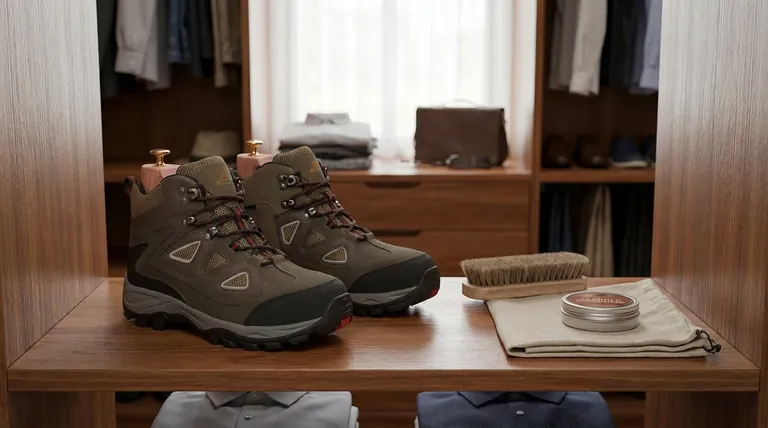
The Three Pillars of Proper Boot Storage
Effective boot care hinges on three core principles: the environment, the boot's structure, and moisture management. Getting these right prevents the most common forms of damage, like cracked leather and collapsed ankles.
Pillar 1: The Right Environment
Where you store your boots is as important as how. The ideal location is a cool, dry place away from direct sunlight.
A closet is a perfect example. Garages or basements can be too humid, promoting mold, while direct sun or proximity to a heat source will dry out and crack the leather.
Pillar 2: Maintaining Structural Integrity
This is especially critical for tall boots. Allowing the shaft to slump over creates a deep, permanent crease at the ankle, which weakens the leather and ruins the boot's supportive structure.
To prevent this, boots must be stored upright with internal support. Boot shapers or boot trees are designed for this purpose, keeping the shaft straight and the ankle smooth.
Pillar 3: Managing Internal Moisture
Leather is a skin; it absorbs sweat and moisture from your feet. Storing boots without allowing them to dry properly from the inside can degrade the leather and cause odor.
This is why cedar boot trees are considered the gold standard. Unlike simple plastic shapers, cedar naturally absorbs excess moisture and neutralizes odors, preserving the leather from the inside out.
Preparing Your Boots for Storage
What you do right after your ride directly impacts how well your boots will store. Never put away dirty or damp boots.
The Importance of a Clean Start
Before storing, always wipe your boots down to remove dust, mud, and sweat. This prevents corrosive elements from sitting on the leather and causing damage over time.
Short-Term vs. Long-Term Storage
For daily storage, a quick cleaning and the insertion of boot shapers is sufficient.
For long-term or off-season storage, perform a more thorough cleaning and apply a quality leather conditioner. Once conditioned, place the boots in a breathable dust bag or box to protect them from debris.
Common Pitfalls and Trade-offs
Choosing the right support for your boots involves a trade-off between cost and function. Understanding these differences helps you make an informed decision.
Boot Trees vs. Boot Shapers
Boot trees support the shape of the foot and the shaft, with cedar models offering superior moisture absorption. They are the best option for total boot care but are more expensive.
Boot shapers are typically plastic inserts that only support the shaft. They are a cost-effective way to prevent ankle creasing but offer no moisture control or foot support.
DIY Solutions: Effective but Limited
Simple solutions like rolled-up magazines, newspaper, or cut pool noodles can effectively keep the boot shaft upright and prevent slumping.
While highly affordable, these methods do not absorb moisture. Newspaper, in particular, can become damp and should be changed regularly to avoid creating a worse environment for your boots.
Making the Right Choice for Your Boots
Your storage strategy should align with your goals, budget, and how frequently you ride.
- If your primary focus is daily use on a budget: Wipe your boots clean and use simple boot shapers or a DIY solution like pool noodles to keep them upright.
- If your primary focus is maximizing longevity and condition: Invest in a pair of full-length cedar boot trees to manage moisture and perfectly maintain the boot's entire shape.
- If your primary focus is long-term or off-season storage: Thoroughly clean and condition the boots, insert cedar trees, and place them inside a breathable dust bag in a climate-controlled closet.
Ultimately, consistent care is the key to ensuring your boots remain a reliable and comfortable part of your gear for years to come.
Summary Table:
| Storage Factor | Key Action | Why It Matters |
|---|---|---|
| Environment | Store in a cool, dry place away from direct sunlight. | Prevents leather from cracking and mold from forming. |
| Structure | Use boot shapers or trees to keep the shaft upright. | Prevents permanent creasing and maintains ankle support. |
| Moisture | Insert cedar boot trees to absorb internal moisture. | Preserves leather from the inside and neutralizes odors. |
| Preparation | Clean and condition boots before long-term storage. | Removes corrosive elements and keeps leather supple. |
Need high-quality riding boots that are built to last? As a large-scale manufacturer, 3515 produces a comprehensive range of durable footwear for distributors, brand owners, and bulk clients. Our production capabilities ensure you receive boots designed with longevity in mind. Contact us today to discuss your needs and discover how we can support your business with reliable, well-crafted equestrian footwear.
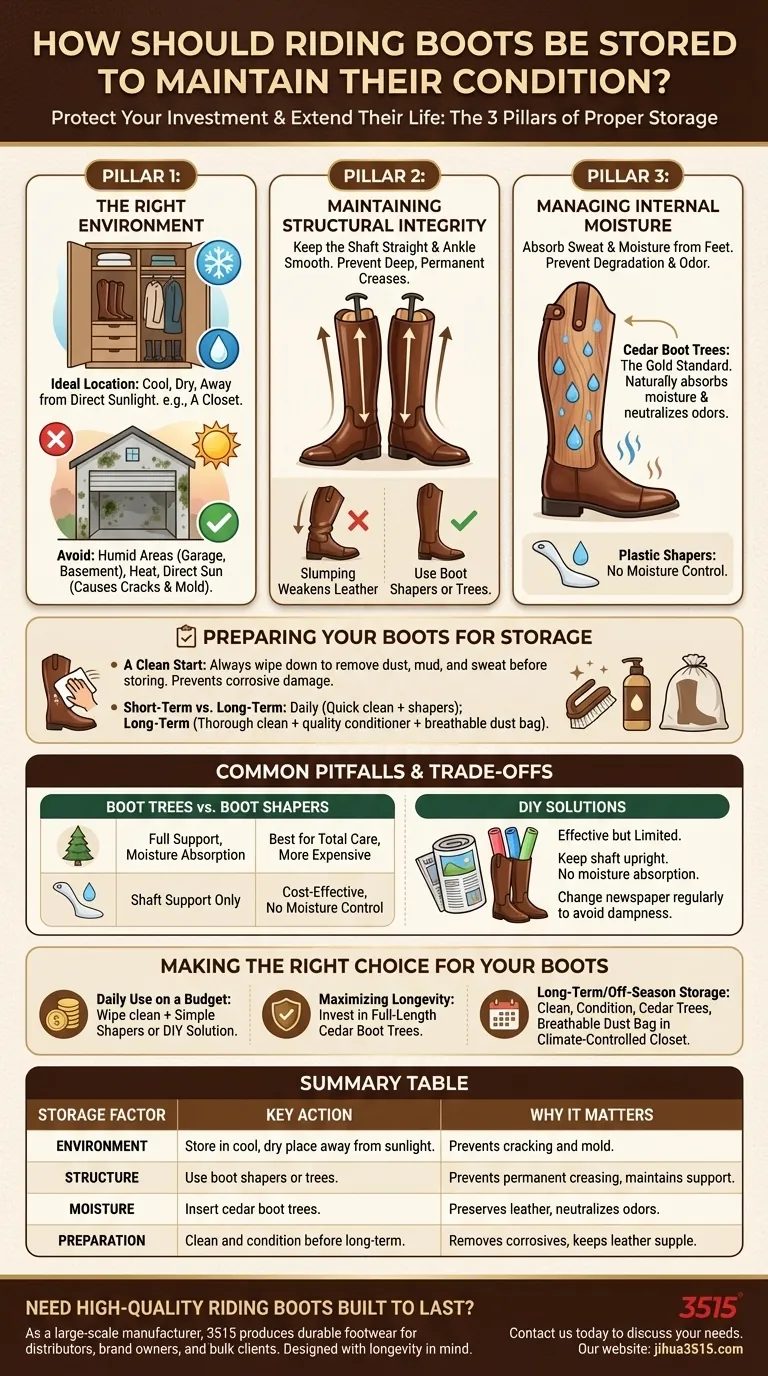
Visual Guide
Related Products
- Heavy-Duty Waterproof Nubuck Safety Boots Safety Shoes for Bulk Supply
- Premium Wholesale Tactical Style Safety Shoes Boots with Quick Lacing
- Wholesale High-Traction Camo Boots - Custom Manufacturer for Brands
- Durable Goodyear Welt Leather Work Boots for Wholesale & Private Label
- Wholesale Tactical Boots High-Traction & Reflective for Bulk & Brand Orders
People Also Ask
- What primary protective functions do professional safety boots provide in urban solid waste recovery and waste picking processes? Discover Dual-Layer Protection.
- How do safety boots reduce cutting hazards? Essential Protection for Your Workforce
- Which organizations develop safety standards for work boots? Ensure Compliance & Worker Safety
- What are the common types of safety boots and their primary uses? A Guide to Industrial Footwear
- Why is ankle and arch support important in safety footwear? Prevent Injury & Fatigue



















