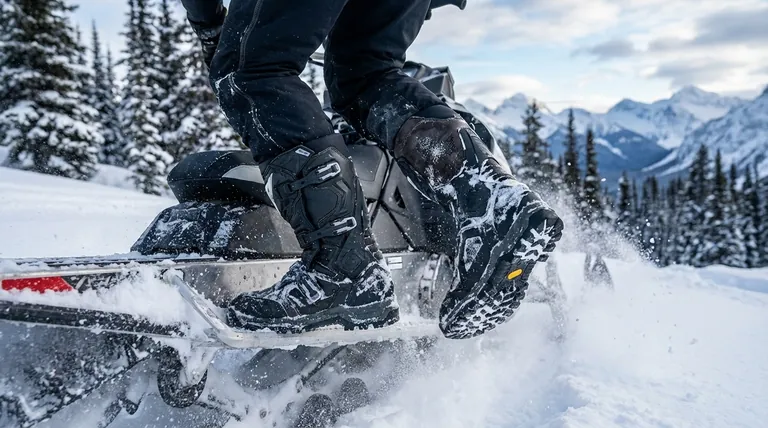
At its core, a snowmobile boot is essential because it is an engineered piece of performance equipment. Unlike a general winter boot designed for warmth, a snowmobile boot provides a unique combination of extreme waterproofing, rigid structural support for machine control, and impact protection tailored specifically to the physical demands of riding.
While standard winter boots prioritize insulation for passive warmth, dedicated snowmobile boots are active systems. They function as the critical interface between the rider and the machine, translating body movements into precise control while ensuring absolute protection from the harsh elements.
Beyond Warmth: The Core Functions of a Snowmobile Boot
A serious rider's gear must perform under stress. A snowmobile boot is designed around three non-negotiable principles: control, protection, and endurance in extreme conditions.
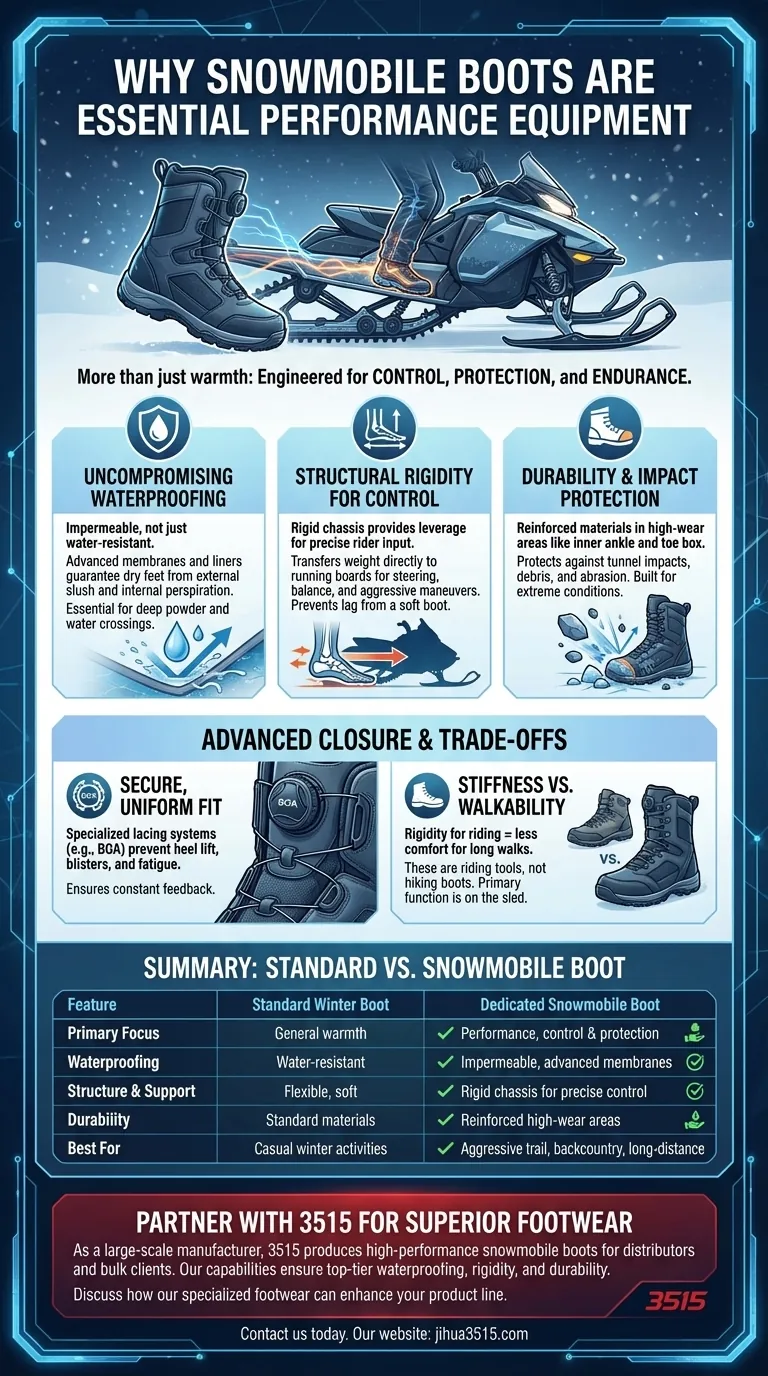
Uncompromising Waterproofing
Standard winter boots may be water-resistant, but snowmobile boots are built to be impermeable. Riders encounter deep powder, slush, and water crossings, making a breach in waterproofing a ride-ending and potentially dangerous event.
These boots use advanced liners and membranes to guarantee your feet stay dry, not just from external moisture but also from internal perspiration during active riding.
Structural Rigidity for Rider Input
The most significant difference from a standard boot is stiffness. A soft, flexible winter boot absorbs your movements, creating a lag between your input and the machine's response.
A purpose-built snowmobile boot has a rigid chassis. This stiffness provides the leverage needed to transfer your weight and foot pressure directly to the running boards, allowing for precise steering, balance, and control, especially during aggressive maneuvers.
Durability and Impact Protection
Snowmobiling involves constant interaction with the machine and the environment. Boots are constructed with reinforced materials in high-wear areas like the inner ankle and toe box.
This robust construction protects you from impacts with the tunnel or debris and ensures the boot can withstand the abrasion and stress of a full riding season.
Advanced Closure Systems
A secure fit is paramount for both comfort and control. Many snowmobile boots utilize specialized lacing systems, like the BOA Fit System, which use a dial to tighten steel laces.
This provides a uniform, locked-in fit that won't loosen over a long ride, preventing the heel lift and foot movement that leads to blisters, fatigue, and reduced machine feedback.
Understanding the Trade-offs
Choosing specialized gear always involves compromises. Understanding them ensures you have the right tool for the job.
Stiffness vs. Walkability
The rigidity that makes a snowmobile boot excellent for riding makes it less comfortable for walking significant distances. These are not hiking boots.
Their primary function is to provide support and control on the sled. Their stiffness can feel cumbersome and awkward when you're off the machine.
The Investment in Performance
Dedicated snowmobile boots represent a higher initial cost than multi-purpose winter boots. This is a direct reflection of their specialized materials, construction, and safety features.
Viewing it as an investment in performance, safety, and comfort is crucial. The right boot prevents foot fatigue and injury, extending your riding days and enhancing your overall experience.
Making the Right Choice for Your Goal
The ideal boot depends entirely on your primary riding style.
- If your primary focus is aggressive trail or backcountry riding: Prioritize boots with maximum stiffness, integrated ankle support, and a micro-adjustable closure system for ultimate control and protection.
- If your primary focus is long-distance touring or utility work: Seek a balance of robust support and all-day comfort, with top-tier insulation and proven waterproofing being the most critical features.
- If your primary focus is casual family riding: A high-quality, fully waterproof, and well-insulated boot is still essential, but you can opt for a model with more flex for greater off-sled comfort.
Ultimately, investing in a proper snowmobile boot is the foundation for a safer, more controlled, and enjoyable experience on the snow.
Summary Table:
| Feature | Standard Winter Boot | Dedicated Snowmobile Boot |
|---|---|---|
| Primary Focus | General warmth & comfort | Performance, control & protection |
| Waterproofing | Water-resistant | Impermeable, advanced membranes |
| Structure & Support | Flexible, soft | Rigid chassis for precise machine control |
| Durability | Standard materials | Reinforced high-wear areas |
| Best For | Casual winter activities | Aggressive trail, backcountry, and long-distance snowmobiling |
Ready to equip serious riders with superior performance footwear?
As a large-scale manufacturer, 3515 produces a comprehensive range of high-performance snowmobile boots for distributors, brand owners, and bulk clients. Our production capabilities ensure top-tier waterproofing, structural rigidity, and durability tailored for the demands of aggressive riding.
Contact us today to discuss how our specialized footwear can enhance your product line and meet the needs of your most discerning customers.
Visual Guide
Related Products
- Durable Spiked Camouflage Boots Wholesale & Factory Production
- Wholesale Waterproof Tactical Boots Custom Suede & High-Traction Soles
- Wholesale High-Traction Camo Boots - Custom Manufacturer for Brands
- Factory Direct Wholesale Rain Boots Durable Waterproof & Fully Customizable
- Wholesale Lightweight Tactical Boots Custom Manufacturer for Desert & Combat Use
People Also Ask
- How does boot height affect waterproofing? Choose the Right Height for Ultimate Protection
- What are the best types of shoes for different gardening conditions? Find Your Perfect Match.
- What role does camouflage play in hunting boots? It's More Than Just a Pattern
- What should you look for to ensure boots are fully waterproof? The Essential 2-Part System
- How does boot construction affect waterproofing? The Science Behind Truly Dry Feet