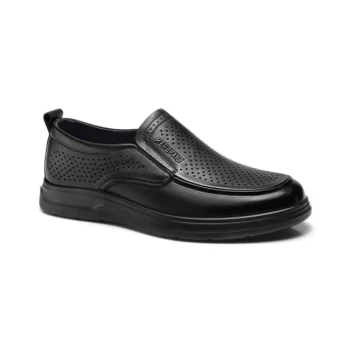
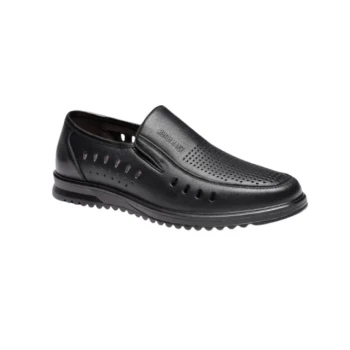
At their core, slip-resistant shoes are a critical preventive measure against one of the most common and costly sources of workplace injury. They are specifically engineered to provide superior traction on wet, oily, or otherwise slick surfaces, directly reducing the risk of slips, trips, and falls. These incidents are not minor inconveniences; they account for a significant percentage of all workplace accidents, injuries, and even fatalities.
The true importance of slip-resistant shoes extends beyond the individual wearer. They are a fundamental component of a safe work environment, protecting employees from injury while shielding employers from significant financial and operational risks.
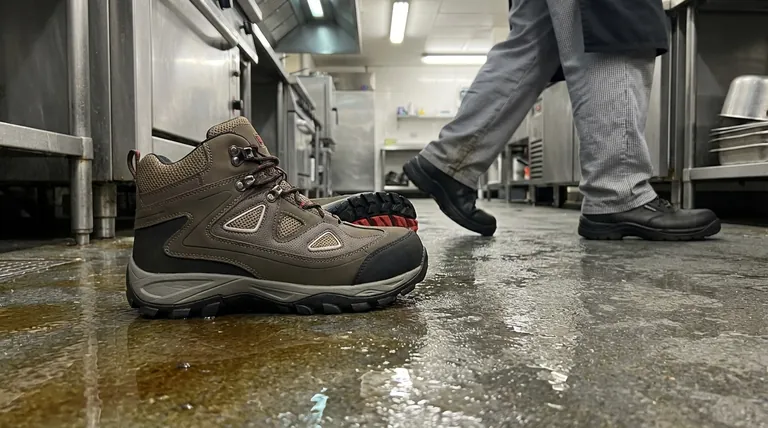
The High Cost of a Simple Slip
Ignoring the need for proper footwear has measurable and severe consequences. The data from leading safety organizations paints a clear picture of a widespread and expensive problem.
The Financial Burden
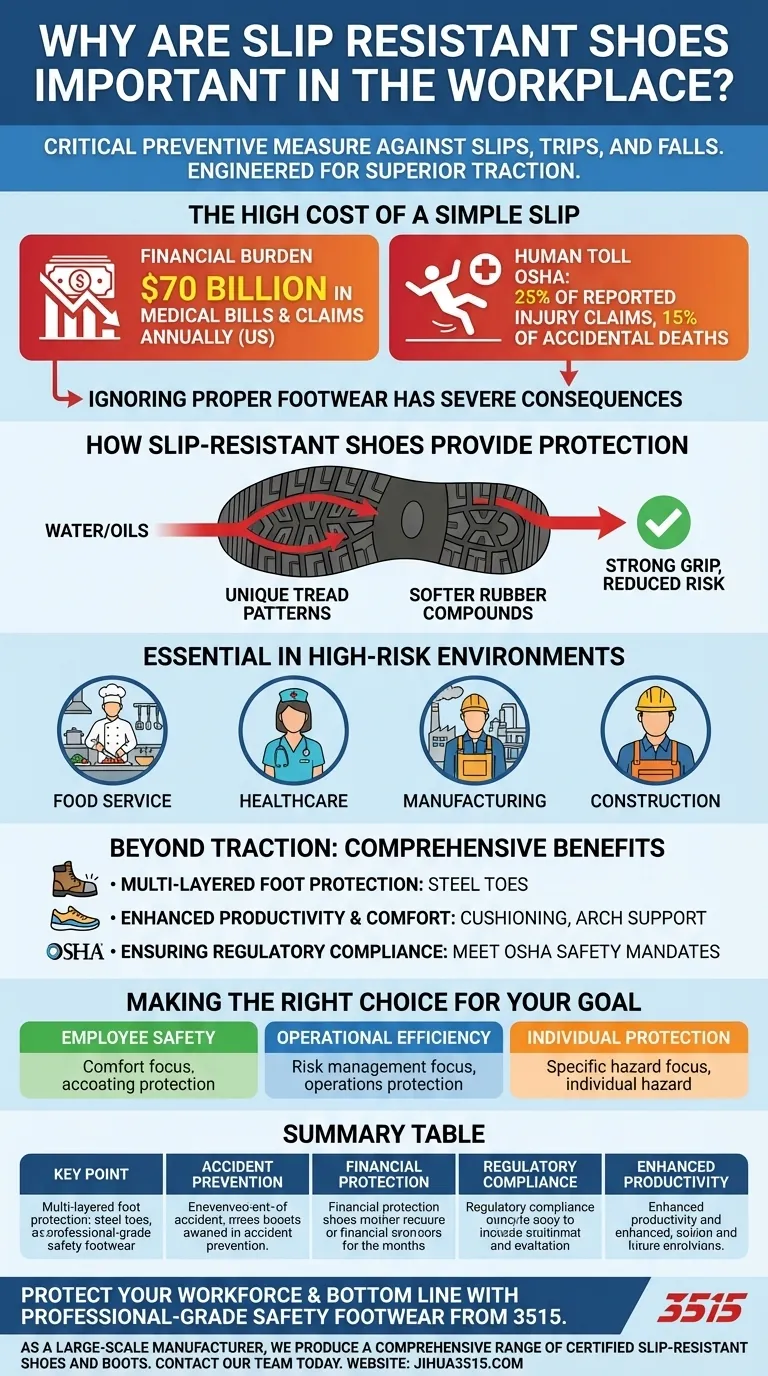
Slips and falls are a massive financial drain on the economy. These incidents contribute to an estimated $70 billion in medical bills and workers' compensation claims annually in the United States.
For an employer, a single incident can lead to costly insurance claims, lost productivity, and potential legal liabilities.
The Human Toll
According to the Occupational Safety and Health Administration (OSHA), slips, trips, and falls are a leading cause of severe workplace incidents. They account for approximately 25% of all reported injury claims and, tragically, 15% of all accidental deaths in the workplace.
The Centers for Disease Control and Prevention (CDC) further notes that these accidents are the third most common cause of non-fatal work-related injuries, underscoring their frequency.
How Slip-Resistant Shoes Provide Protection
The primary function of this specialized footwear is to create a stable connection between the wearer and the ground, especially when conditions are hazardous.
Engineered for Superior Traction
The key difference lies in the outsole. Slip-resistant shoes feature unique tread patterns and are made from softer rubber compounds that work together to channel liquids away from the sole.
This design allows the shoe to make solid contact with the floor, providing a much stronger grip on slick surfaces and significantly reducing the risk of an accident.
Essential in High-Risk Environments
Certain industries present a constant slip hazard where this footwear is non-negotiable. These include:
- Food Service and Kitchens: Greasy and wet floors are a daily reality.
- Healthcare Facilities: Spills are common, and staff must move quickly.
- Manufacturing Plants: Oils, coolants, and other liquids often coat the floors.
- Construction Sites: Workers face uneven terrain and unpredictable wet conditions.
Beyond Traction: The Comprehensive Benefits
While preventing falls is the main objective, the advantages of high-quality safety footwear extend further, contributing to a better and more productive work environment.
Multi-Layered Foot Protection
Many slip-resistant shoes are also safety shoes that incorporate features like steel toes or composite guards. This protects feet from falling objects and compression hazards common in industrial settings.
Enhanced Productivity and Comfort
When workers are confident in their footing, they can focus more on their tasks instead of worrying about staying upright. Modern designs also incorporate features like cushioning and arch support, reducing fatigue over long shifts and boosting overall productivity.
Ensuring Regulatory Compliance
OSHA mandates that employers provide a safe working environment. Equipping staff with appropriate personal protective equipment (PPE), including slip-resistant footwear, is a key part of meeting these safety regulations and fostering a culture of safety.
Making the Right Choice for Your Goal
Selecting the right footwear is a crucial decision for both employees and employers, with different priorities guiding the choice.
- If your primary focus is employee safety and well-being: Invest in shoes that not only offer certified slip resistance but also provide comfort and support to reduce fatigue and long-term strain.
- If your primary focus is operational efficiency and risk management: Mandating appropriate slip-resistant footwear is a direct strategy to reduce injury claims, minimize lost workdays, and ensure OSHA compliance.
- If your primary focus is individual protection in a hazardous role: Prioritize a shoe that matches your specific environment, whether that means protection against oils in a kitchen or a steel toe on a construction site.
Ultimately, proper footwear is one of the most effective and straightforward ways to prevent a common, dangerous, and costly category of workplace accidents.
Summary Table:
| Key Point | Why It Matters |
|---|---|
| Accident Prevention | Reduces slips, trips, and falls on wet or oily surfaces. |
| Financial Protection | Mitigates costly workers' compensation claims and lost productivity. |
| Regulatory Compliance | Helps meet OSHA mandates for a safe work environment. |
| Enhanced Productivity | Boosts employee confidence and reduces fatigue with comfortable designs. |
Protect your workforce and your bottom line with professional-grade safety footwear from 3515.
As a large-scale manufacturer, we produce a comprehensive range of certified slip-resistant shoes and boots for distributors, brand owners, and bulk clients. Our production capabilities encompass all types of safety footwear tailored for high-risk environments like food service, healthcare, and manufacturing.
Contact our team today for a consultation to find the right safety solution for your business needs. We'll help you enhance workplace safety, ensure compliance, and reduce operational risks.
Visual Guide
Related Products
- Premium Suede Sport Safety Shoes for Wholesale & Bulk Orders
- Advanced KPU Athletic Safety Shoe with Steel Toe Cap Anti-Slip Rotary Lacing System
- Heavy-Duty Waterproof Nubuck Safety Boots Safety Shoes for Bulk Supply
- Durable High-Traction Canvas Sneakers Wholesale & Custom Manufacturing
- Durable Leather Moc Toe Work Boots for Wholesale & Custom Manufacturing
People Also Ask
- What industries have specific OSHA footwear requirements? Ensure Compliance & Protect Your Workforce
- What are the primary functions of professional safety shoes? Maximize Safety in Water Supply Confined Spaces
- What role do specialized safety shoes play in preventing falls? Engineering Stability in Industrial Environments
- How do the 3R principles influence green footwear design? Master Sustainable Safety Shoe Manufacturing
- What core functions do professional safety shoes serve? Enhance Construction & Industrial Safety Standards