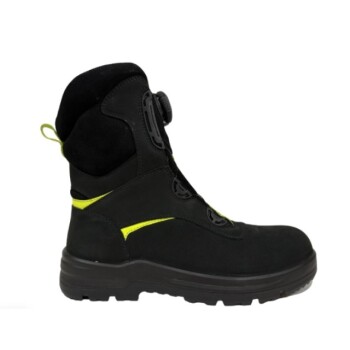
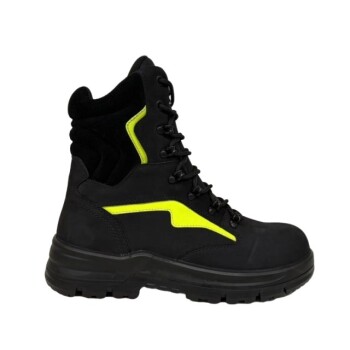
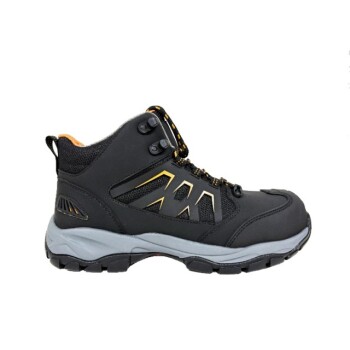
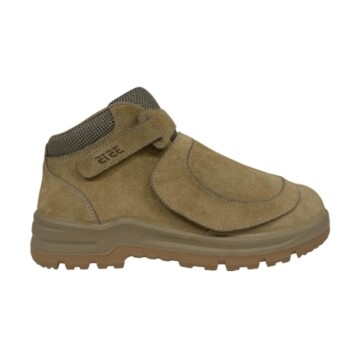
Safety boots are designated as a core detection target because they serve as the fundamental barrier against the most frequent industrial hazards: impacts, punctures, and slips. By isolating safety boots as a specific category within AI-based monitoring systems, organizations can automate the verification of compliant footwear in real-time, ensuring the "final line of defense" is always active.
Industrial safety protocols rely on safety boots as the primary guarantee against casualty rates in complex environments. Including them as a detection class allows computer vision systems to bridge the gap between written safety policy and actual on-site adherence.
The Critical Role of Foot Protection
Defense Against Impact and Crushing
Construction sites are dynamic environments where falling objects are a constant risk. Safety boots are engineered with reinforced components, such as steel or composite toe caps, to absorb impact energy. AI systems prioritize detecting these boots to prevent crushing injuries that occur during heavy-duty labor.
Puncture and Slip Prevention
Beyond falling objects, the ground level of a construction site presents significant dangers. Safety boots feature puncture-proof midsoles to block sharp objects like nails or metal scraps. Additionally, rugged outsoles provide essential traction on unstable footing, mitigating slip-and-fall accidents.
Protection from Electrical Hazards
In addition to mechanical protection, industrial-grade footwear often includes insulation against electrical shocks. This multi-faceted protection makes the safety boot a versatile component in reducing casualty rates across various sub-factors of construction risk.
Why AI Monitoring Targets Boots
Real-Time Compliance Verification
Manual safety checks are often sporadic and difficult to enforce in complex production environments. Computer vision algorithms solve this by continuously scanning for the specific visual signatures of safety boots. This allows for immediate identification of non-compliant workers before an accident occurs.
The Weight of PPE in Safety Analysis
According to PIPRECIA weight analysis, PPE holds the highest significance weight (0.0686) among safety sub-factors. It is statistically the most critical component for improving site safety performance. Therefore, monitoring systems focus heavily on boots as a high-value target to maximize the reduction of accident rates.
The Final Line of Defense
PPE is categorized as the last physical barrier protecting a worker when other safety measures fail. Because safety boots are the final shield against unavoidable site hazards, ensuring their presence through automated detection is non-negotiable for holistic risk management.
Understanding the Limitations
Visual Verification vs. Internal Integrity
While AI can confirm that a worker is wearing the correct type of footwear, it cannot inspect the internal integrity of the boot. A camera system can identify a work boot, but it cannot verify if the internal steel toe is intact or if the tread is worn down.
The Risk of Over-Reliance
Automated detection ensures compliance, but it does not eliminate the hazards themselves. Relying solely on PPE monitoring without addressing the root causes of loose debris or unstable ground can lead to a false sense of security. Detection systems should support, not replace, site maintenance and hazard removal.
Ensuring Site Safety Through Detection
If your primary focus is immediate risk reduction:
- Deploy detection systems at entry points to ensure no worker enters the "final line of defense" zone without compliant footwear.
If your primary focus is long-term safety culture:
- Use data from boot detection to identify trends in non-compliance and target specific teams for safety re-training.
If your primary focus is hazard management:
- Correlate boot detection alerts with specific site areas to determine where floor hazards (slips/punctures) are most prevalent.
Automating the detection of safety boots transforms footwear from a passive accessory into an active, monitored component of your total safety architecture.
Summary Table:
| Hazard Category | Safety Boot Feature | AI Detection Benefit |
|---|---|---|
| Impact & Crushing | Steel/Composite Toe Caps | Automates verification of crush-protection |
| Puncture Risks | Puncture-proof Midsoles | Ensures barrier against sharp ground debris |
| Slip & Fall | High-traction Outsoles | Monitors compliance in high-risk traction zones |
| Electrical Shock | Insulated Soles | Identifies protective gear for electrical work |
| Compliance Gap | Visual Signatures | Bridges the gap between policy and real-time use |
Strengthen your safety infrastructure with professional-grade footwear from 3515. As a premier large-scale manufacturer serving global distributors and brand owners, 3515 provides the rigorous production capabilities needed to support high-standard safety monitoring systems. Our flagship Safety Shoes series is engineered for the toughest industrial environments, complemented by a diverse portfolio of tactical boots, outdoor shoes, training sneakers, and formal dress shoes. Partner with us to provide your customers with the 'final line of defense' that meets bulk requirements without compromising quality. Contact us today to explore our wholesale and manufacturing solutions!
References
- Muhamad Alfin Taufiqurrochman, Herny Februariyanti. Rancang Bangun Aplikasi Deteksi Alat Pelindung Diri (APD) untuk Pekerja Proyek dengan Menggunakan Algoritma Yolov5. DOI: 10.35870/jtik.v8i2.1960
This article is also based on technical information from 3515 Knowledge Base .
Related Products
- Puncture-Resistant Velcro Safety Boots for Wholesale & Custom Manufacturing
- Wholesale Durable Safety Boots | Custom Steel Toe & Puncture-Resistant Manufacturing
- Premium Grain Leather Safety Boots for Bulk Supply
- Heavy-Duty Waterproof Nubuck Safety Boots Safety Shoes for Bulk Supply
- Premium High-Cut Waterproof Safety Boots Manufacturing & Wholesale Solutions
People Also Ask
- Why are industrial safety boots with steel toes necessary for machine operators? Essential Foot Protection for Safety
- What are the characteristics of steel toe safety boots? Maximum Protection, Key Trade-offs
- Is it true that steel toes can cause toes to get cut off? Debunking the Dangerous Myth
- What are the primary safety functions of safety boots with steel-toe designs? Essential Protection for Industry
- What are the different types of safety toe boots available? Choose the Right Protection for Your Job