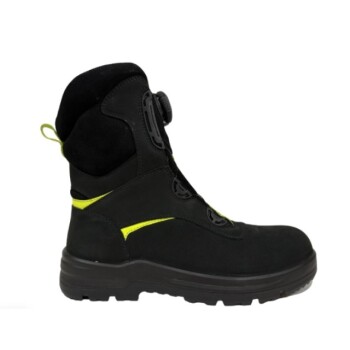
At their core, logger or packer boots are a specialized category of heavy-duty work boot engineered for stability and support on dangerous, uneven terrain. Unlike a standard work boot, their defining features are a shaft height of 8 inches or more and a distinctively raised heel, designed to provide exceptional ankle support and prevent slips in challenging environments.
The key distinction is purpose: while many work boots focus on protecting the foot from falling objects, a logger boot's primary design is to protect the entire leg and body by providing a stable, unyielding platform on treacherous ground like forests, mountainsides, or utility poles.
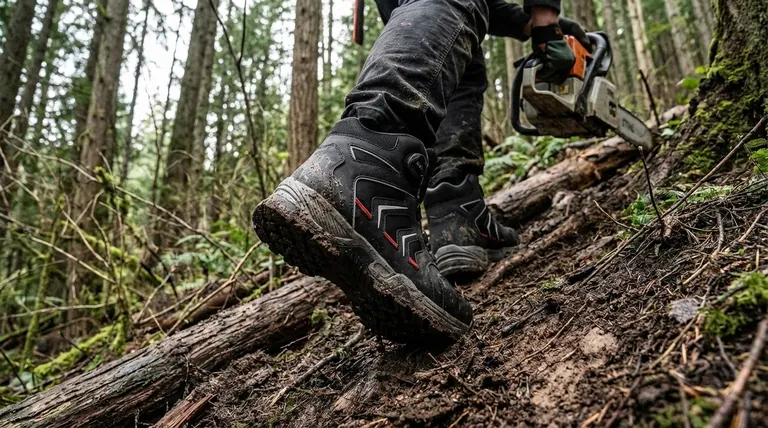
The Defining Features of a Logger Boot
To understand what logger boots are used for, you must first understand their unique anatomy. Each component is purpose-built to solve a specific environmental challenge.
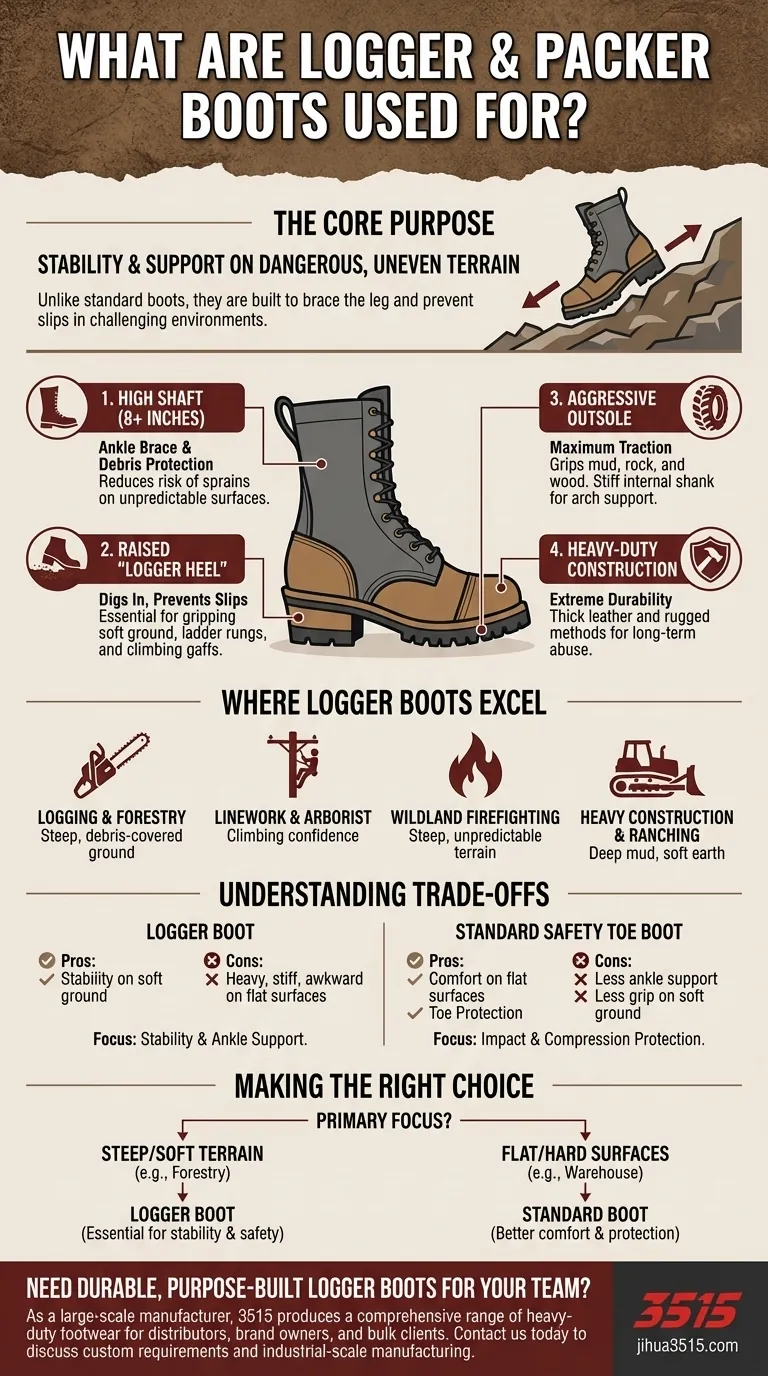
The High Shaft (8+ Inches)
The tall leather shaft is the first line of defense. It physically braces the ankle, significantly reducing the risk of sprains and twists on unpredictable surfaces.
This height also provides crucial protection from underbrush, debris, and worksite hazards that would easily get into shorter boots.
The Raised "Logger Heel"
This is arguably the most critical feature. The high, right-angled heel is designed to dig into soft ground, mud, and loose soil, providing a locking-in effect that prevents sliding.
For arborists and linemen, this heel is essential for securely catching on ladder rungs or providing a stable base when using climbing gaffs.
The Aggressive Outsole
Logger boots feature deep, aggressive lugs on the outsole. This tread pattern is designed to grip tenaciously on varied surfaces, from wet dirt and rock to wood and mud, maximizing traction with every step.
Inside the boot, a stiff internal shank provides rigid arch support, which is critical for reducing foot fatigue during long days spent standing or climbing.
Heavy-Duty Construction
These boots are built for extreme durability. Using thick leather and rugged construction methods, they are designed to withstand years of abuse. This extended lifespan often makes them a more economical choice over the long term compared to replacing less durable boots more frequently.
Where Logger Boots Excel
The unique design of logger boots makes them the ideal choice for specific, demanding professions where ground stability is a primary safety concern.
Logging and Forestry
This is the boot's original and most common application. Loggers work on steep, debris-covered ground where a single slip can be catastrophic. The heel and ankle support are non-negotiable safety features.
Linework and Arborist Work
Climbing utility poles or trees requires absolute confidence in your footing. The raised heel helps lock onto climbing equipment and rungs, providing the stability needed to work safely at height.
Wildland Firefighting
Firefighters operate on steep, unpredictable terrain under extreme conditions. The durability, traction, and support of a logger-style boot are essential for safety and performance during long incidents.
Heavy Construction and Ranching
For any job that involves working in deep mud, on soft earth, or navigating rough-graded construction sites, the logger boot provides superior stability and protection compared to standard boots.
Understanding the Trade-offs
No single boot is perfect for every task. The features that make logger boots excel in some environments become drawbacks in others.
Logger vs. Standard Safety Toe Boots
A standard safety toe boot is primarily designed to protect your toes from impact and compression from falling objects. While many logger boots include a safety toe, their core design is about stability and ankle support.
If your main hazard is dropping heavy items on a flat concrete floor, a logger boot's aggressive heel and stiffness may be unnecessary and even uncomfortable.
Weight and Break-in Period
The robust construction that makes logger boots so durable also makes them very heavy and stiff. They almost always require a significant break-in period before they become comfortable for all-day wear.
Not Ideal for Flat Surfaces
The raised heel that provides excellent stability on soft ground can feel awkward and create an unnatural posture when walking for long periods on hard, flat surfaces like concrete or asphalt. This can lead to discomfort in the feet, knees, and back.
Making the Right Choice for Your Job
Selecting the correct boot is a critical safety decision. Your choice should be dictated by your primary work environment and the specific hazards you face daily.
- If your primary focus is working on steep, uneven, or soft terrain (like forestry or linework): A logger boot's raised heel and superior ankle support are essential for your safety and stability.
- If your primary focus is working on flat, hard surfaces with impact hazards (like a warehouse or factory floor): A standard safety toe boot with a lower, flatter sole will provide the necessary protection with greater comfort.
- If you need a combination of both: Seek out logger boots that are equipped with a certified safety toe, but remain aware of the comfort trade-offs when working on hard, flat ground.
Choosing the right boot is about matching the tool to the task for maximum safety and efficiency.
Summary Table:
| Feature | Purpose | Ideal For |
|---|---|---|
| High Shaft (8+ inches) | Ankle support & debris protection | Logging, brush clearing |
| Raised Logger Heel | Prevents slips on soft ground | Arborists, linemen, ranchers |
| Aggressive Outsole | Maximum traction on mud & rock | Wildland firefighting, construction |
| Heavy-Duty Construction | Long-lasting durability | All demanding outdoor professions |
Need durable, purpose-built logger boots for your team?
As a large-scale manufacturer, 3515 produces a comprehensive range of heavy-duty footwear for distributors, brand owners, and bulk clients. Our production capabilities encompass all types of logger and packer boots, ensuring your workforce has the stability and protection they need for dangerous terrain.
Contact us today to discuss your custom boot requirements and benefit from our industrial-scale manufacturing expertise.
Visual Guide
Related Products
- Durable Leather Work Boots for Wholesale & Custom Manufacturing
- Durable Leather Work Boots for Wholesale & Custom OEM Manufacturing
- Durable Leather Work Boots Wholesale Manufacturer & Custom Factory
- Premium Grain Leather Safety Boots for Bulk Supply
- Premium Waterproof High-Cut Industrial Safety Boots for Wholesale and Bulk Orders
People Also Ask
- What is the difference between full-grain and top-grain leather? Premium Material Guide for Boot Manufacturers
- What are the common workplace hazards that can be mitigated with the right work boots? Protect Your Workforce
- What are the common foot issues workers face due to uncomfortable work boots? Prevent Pain & Deformities
- What are the advantages of leather versus synthetic work boots? A Guide to Choosing the Right Material
- What are the key components of modern work boots? Engineered for Ultimate Durability and Comfort