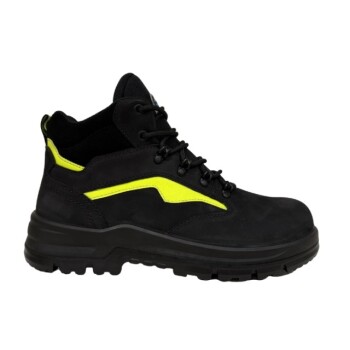
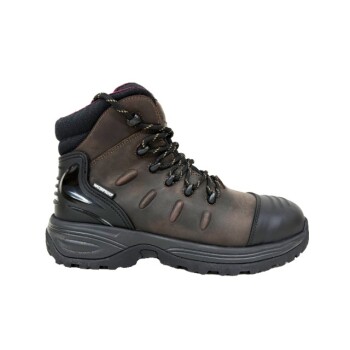
Rubber work boots are defined by their superior capacity to create an impenetrable barrier against moisture and contaminants. They are the industry standard for wet, muddy, or chemically hazardous environments where keeping feet dry and secure is the primary safety requirement. Beyond waterproofing, they offer intrinsic shock absorption and naturally high traction that synthetic alternatives often struggle to match.
While leather offers structure and PVC offers economy, natural rubber provides the highest level of environmental defense. It is the optimal choice when your work involves constant exposure to liquids, mud, or slippery terrain, prioritizing isolation from the elements over breathability.
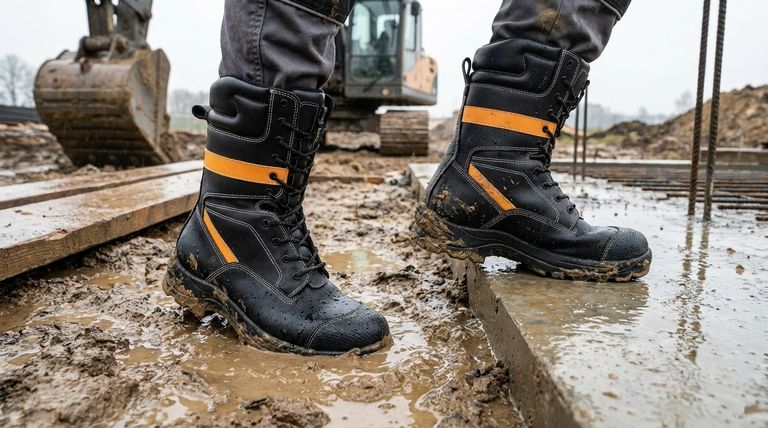
The Protective Capabilities of Rubber
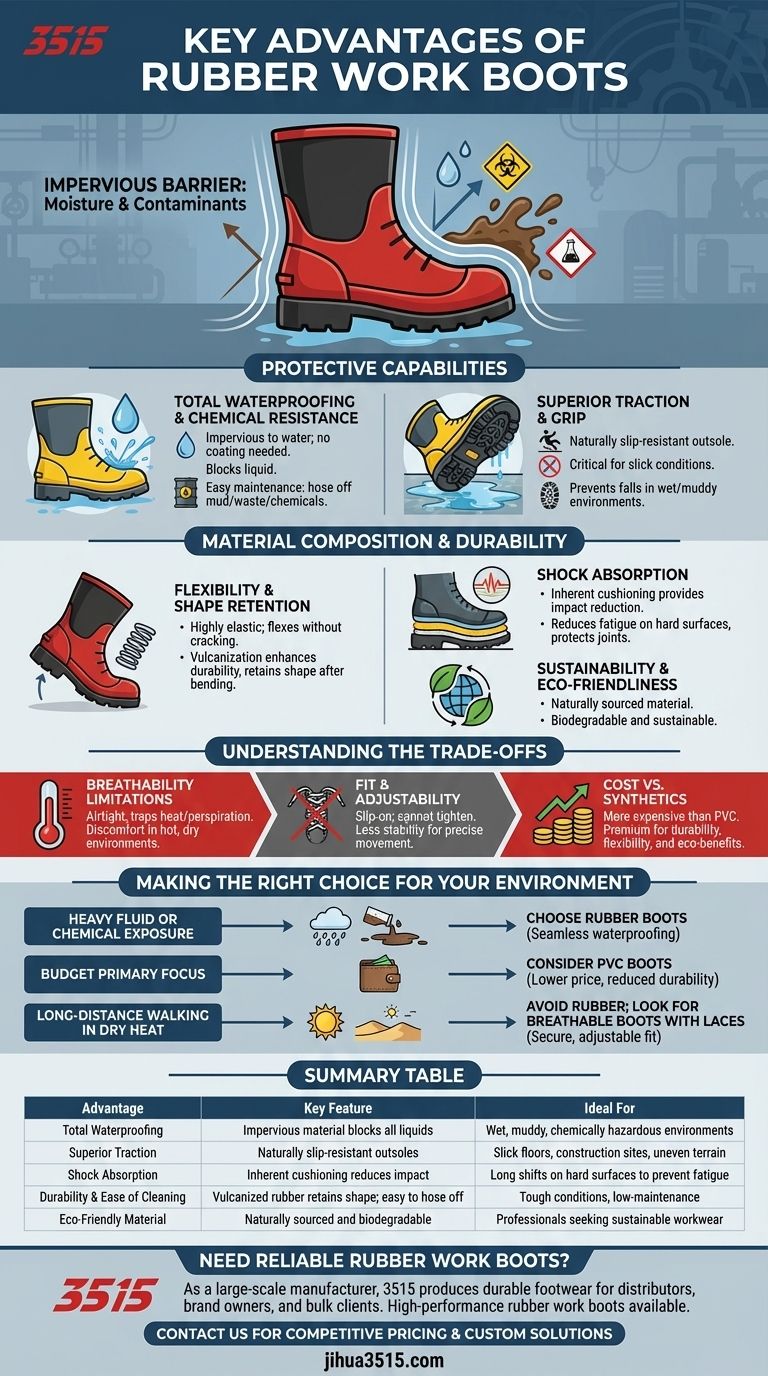
Total Waterproofing and Chemical Resistance
The most distinct advantage of rubber is that it is impervious to water. Unlike treated leather or porous synthetics, a rubber boot does not rely on a coating that can wear off; the material itself blocks liquid.
This makes them exceptionally easy to maintain. Mud, animal waste, and industrial chemicals can often be hosed off at the end of a shift without degrading the boot's structural integrity.
Superior Traction and Grip
Rubber outsoles are naturally slip-resistant, making them critical for safety in slick conditions.
Whether you are navigating muddy construction sites or wet concrete floors, natural rubber provides distinct traction. This grip helps prevent falls in environments where stability is compromised by liquids.
Material Composition and Durability
Flexibility and Shape Retention
Rubber is highly elastic, allowing the boot to flex with your foot without cracking or permanently warping.
Through a process known as vulcanization, the durability of the rubber is chemically enhanced. This ensures the boot retains its shape over time, even after repeated bending and heavy use in harsh conditions.
Shock Absorption
Natural rubber offers inherent cushioning properties. This material provides excellent shock absorption for the soles of your feet.
This reduction in impact is vital for reducing fatigue during long shifts on hard surfaces, protecting your joints and lower back from excessive strain.
Sustainability and Eco-Friendliness
Unlike PVC (a synthetic plastic), rubber is a naturally sourced material. It is biodegradable and sustainable, offering an eco-friendly alternative for professionals concerned with their environmental footprint.
Understanding the Trade-offs
Breathability Limitations
The same property that makes rubber waterproof also makes it airtight. Rubber boots lack breathability, meaning they trap heat and perspiration inside the boot.
If you are working in hot, dry environments, this can lead to discomfort or hygiene issues over long periods compared to breathable leather options.
Fit and Adjustability
Rubber boots are typically slip-on and cannot be tightened or adjusted like lace-up boots.
This lack of adjustment can make them feel cumbersome or heavy when walking long distances. Without the ability to lock the ankle in place, they may offer less stability for tasks requiring precise movement on uneven, dry ground.
Cost vs. Synthetics
While often more affordable than premium leather, natural rubber tends to be more expensive than PVC boots. You are paying a premium for the increased durability, flexibility, and environmental benefits of natural rubber over cheap plastics.
Making the Right Choice for Your Environment
To ensure you select the correct footwear for your specific needs, assess your primary working conditions:
- If your primary focus is heavy fluid or chemical exposure: Choose rubber boots for their seamless, impenetrable waterproofing and ease of cleaning.
- If your primary focus is budget: Consider PVC boots, which offer waterproofing at a lower price point but with reduced durability and flexibility.
- If your primary focus is long-distance walking in dry heat: Avoid rubber; look for breathable boots with laces that allow for a secure, adjustable fit to prevent fatigue.
Select rubber when the environment is your enemy, and total isolation from the wet and cold is the only way to get the job done.
Summary Table:
| Advantage | Key Feature | Ideal For |
|---|---|---|
| Total Waterproofing | Impervious material blocks all liquids | Wet, muddy, or chemically hazardous environments |
| Superior Traction | Naturally slip-resistant outsoles | Slick floors, construction sites, uneven terrain |
| Shock Absorption | Inherent cushioning reduces impact | Long shifts on hard surfaces to prevent fatigue |
| Durability & Ease of Cleaning | Vulcanized rubber retains shape; easy to hose off | Tough conditions requiring low-maintenance footwear |
| Eco-Friendly Material | Naturally sourced and biodegradable | Professionals seeking sustainable workwear options |
Need reliable rubber work boots for your team?
As a large-scale manufacturer, 3515 produces a comprehensive range of durable footwear for distributors, brand owners, and bulk clients. Our production capabilities encompass all types of safety boots, including the high-performance rubber work boots described here.
We can provide the unbeatable protection your workforce needs. Contact us today for competitive pricing and custom solutions tailored to your specific requirements.
Visual Guide
Related Products
- Durable Canvas Work Shoes with Rubber Lug Sole | Wholesale Manufacturer
- Factory-Direct Wholesale Canvas Boots with High-Traction Rubber Soles
- Factory Direct Wholesale Rain Boots Durable Waterproof & Fully Customizable
- Durable Leather Work Boots for Wholesale & Custom OEM Manufacturing
- Durable Leather Work Boots for Wholesale & Custom Manufacturing
People Also Ask
- What are the properties of canvas as a shoe material? A Guide to Lightweight Comfort & Style
- Why is the selection of high-strength fabric materials necessary in the production of canvas shoes and training shoes?
- What types of jobs are canvas work boots suitable for? Ideal for Light-Duty, High-Mobility Roles
- Can canvas shoes be worn in rainy conditions? The Truth About Water Resistance
- What are the functional advantages of choosing rubber soles over leather soles for work boots? Superior Safety & Durability