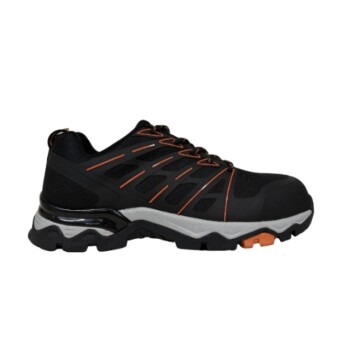
In construction motion data labeling systems, the absence of Personal Protective Equipment (PPE)—specifically safety shoes and helmets—is strictly categorized as an unsafe activity. This classification captures specific actions, such as the active removal of a helmet or the passive failure to wear professional protective footwear.
The categorization of missing PPE as an "unsafe activity" serves as a fundamental data point for automated safety systems. It transforms the physical status of a worker’s gear into a digital compliance indicator, enabling AI models to detect and flag protection risks in real time.
The Logic Behind the Classification
Defining Unsafe Activities
Motion libraries do not categorize missing gear simply as "non-compliant." Instead, they label actions like removing a safety helmet or failing to wear safety shoes directly as unsafe activities. This aligns the data label with the immediate physical risk posed to the worker.
The Function of Physical Barriers
High-performance PPE, including professional safety shoes and protective clothing, is recognized as a critical physical barrier. The labeling system treats the absence of this gear as the removal of that barrier. Consequently, the label indicates a vulnerability rather than just a procedural error.
Implications for Automated Monitoring
Wear Status as a Key Indicator
In automated systems, the wear status of PPE is used as a primary metric for determining safety compliance. By treating the presence of shoes and helmets as binary indicators (worn vs. not worn), the system can objectively assess the safety level of an individual worker.
Enabling Real-Time Risk Detection
Precise labeling allows AI models to move beyond general surveillance. By specifically tagging actions like "removing a helmet," models can be trained to perform real-time monitoring. This allows the system to identify individual protection risks the moment they occur on a construction site.
Critical Considerations in Data Labeling
Precision is Mandatory
General labeling is insufficient for effective AI training. The reference emphasizes the need for precise labeling of specific actions. Grouping all safety violations under a single tag reduces the model's ability to distinguish between missing footwear and a missing helmet.
Distinguishing Action vs. State
Effective labeling distinguishes between the action of removing gear and the state of not wearing it. Both "removing a safety helmet" (action) and "failing to wear professional safety shoes" (state) are captured. This granularity helps the system understand the context of the unsafe activity.
Making the Right Choice for Your Goal
To effectively utilize motion data for construction safety, align your labeling strategy with your specific objective:
- If your primary focus is AI Model Training: Ensure your dataset separates specific actions (e.g., "removing helmet") from static states (e.g., "no shoes") to improve the model's recognition accuracy.
- If your primary focus is Safety Compliance Reporting: Aggregate these specific "unsafe activity" labels to generate high-level reports on how often physical barriers are being compromised on site.
Precise data labeling is the bridge that turns raw video footage into actionable safety intelligence.
Summary Table:
| Aspect | Classification/Description | Key Purpose/Implication |
|---|---|---|
| Missing PPE Category | Unsafe Activity | Flags immediate physical risk to workers |
| Underlying Logic | Removal of a Critical Physical Barrier | Transforms gear status into digital compliance |
| Automated Monitoring | Wear Status as Key Indicator, Real-Time Risk Detection | Objectively assesses safety, identifies risks instantly |
| Data Labeling Principle | Precision (Specific Actions vs. Static States) Mandatory | Improves AI model recognition accuracy and context |
| Goals | AI Model Training / Safety Compliance Reporting | Tailor labeling for specific analytical needs |
Elevate your construction safety standards with high-quality PPE! As a large-scale manufacturer serving distributors and brand owners, 3515 offers comprehensive production capabilities for all footwear types, anchored by our flagship Safety Shoes series. Our extensive portfolio covers work and tactical boots, outdoor shoes, training shoes, and sneakers, as well as Dress & Formal shoes to meet diverse bulk requirements. Ensure your team's protection and compliance by choosing durable, reliable footwear. Contact 3515 today to discuss your bulk PPE needs!
References
- Yuanyuan Tian, Jiayu Chen. Construction motion data library: an integrated motion dataset for on-site activity recognition. DOI: 10.1038/s41597-022-01841-1
This article is also based on technical information from 3515 Knowledge Base .
Related Products
- Premium Suede Sport Safety Shoes for Wholesale & Bulk Orders
- Premium Lightweight Safety Shoes for Wholesale & Bulk Orders
- Premium KPU Injection Athletic Style Safety Shoes
- Premium KPU Athletic Safety Shoes for Wholesale
- Advanced KPU Athletic Safety Shoe with Steel Toe Cap Anti-Slip Rotary Lacing System
People Also Ask
- What industries have specific OSHA footwear requirements? Ensure Compliance & Protect Your Workforce
- What are the primary functions of professional safety shoes? Maximize Safety in Water Supply Confined Spaces
- What role do specialized safety shoes play in preventing falls? Engineering Stability in Industrial Environments
- Why is barefoot walking used as a baseline in gait safety research? Unlocking Natural Biomechanics for Shoe Design
- Why are customized foot sensors or professional safety shoes incorporated into biomechanical testing? Precision Insights