
Beyond aesthetics, the materials and construction of a riding boot are foundational elements that directly dictate your safety, comfort, and effectiveness as a rider. A high-quality boot is engineered with specific materials that offer durability and flexibility, while its construction ensures a supportive fit essential for control and longevity.
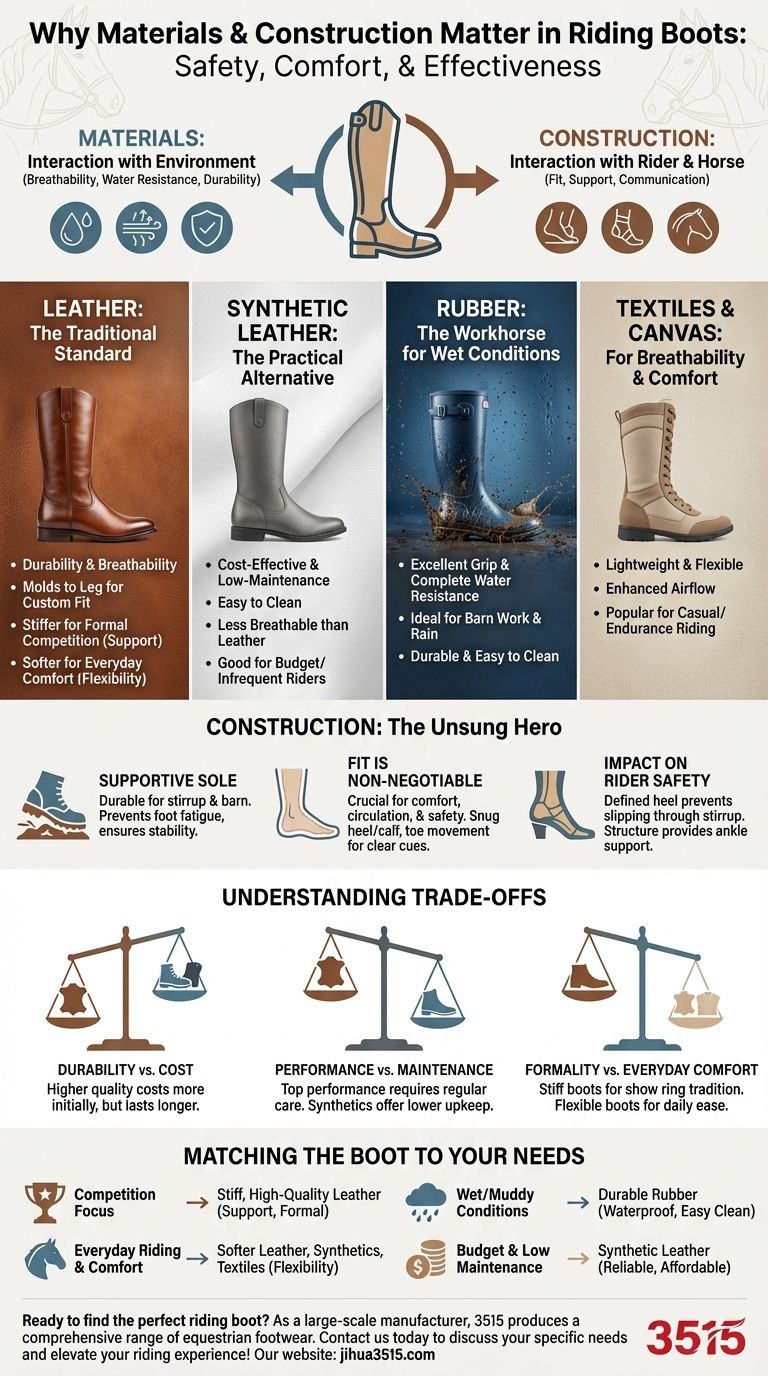
The core principle is simple: materials determine the boot's interaction with the environment (breathability, water resistance, durability), while construction determines its interaction with you and your horse (fit, support, communication).
The Role of Materials: More Than Just Appearance
The material of your boot is the first line of defense against wear and tear while defining its fundamental characteristics.
Leather: The Traditional Standard
Genuine leather is the benchmark for riding boots due to its unique combination of durability and breathability. It molds to the rider's leg over time, creating a custom fit.
Stiffer leather is often preferred for formal competitions as it provides a clean, traditional look and significant leg support. Softer, more flexible leathers are common for everyday riding, offering greater comfort from the start.
Synthetic Leather: The Practical Alternative
Simulated leather provides a cost-effective and low-maintenance option. It is easy to clean and does not require the conditioning that genuine leather does.
While synthetics are an excellent choice for budget-conscious riders or those who ride infrequently, they typically offer less breathability than high-quality leather.
Rubber: The Workhorse for Wet Conditions
Rubber is prized for its durability, excellent grip, and complete water resistance. This makes it the ideal material for working around the barn, riding in the rain, or navigating muddy conditions.
Textiles and Canvas: For Breathability and Comfort
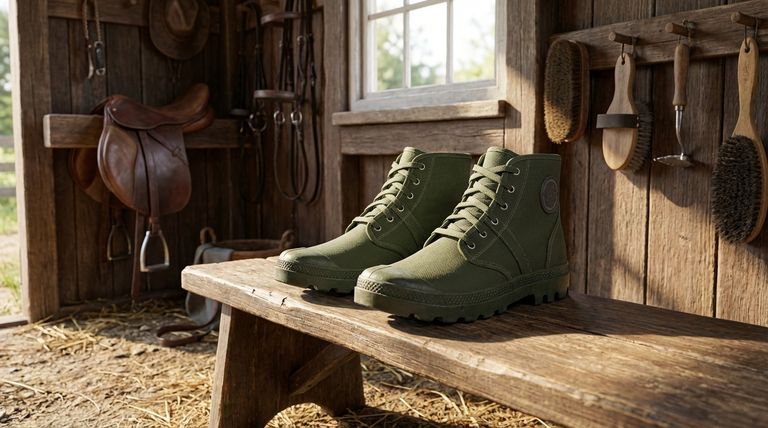
Modern boots often incorporate textiles or canvas, especially in areas where flexibility and airflow are needed. These materials are lightweight and enhance overall comfort, making them a popular feature in boots designed for casual or endurance riding.
Why Construction is the Unsung Hero
How a boot is put together is just as critical as the materials used. Proper construction translates directly to performance and safety in the saddle.
The Importance of a Supportive Sole
The sole of the boot must be durable enough to withstand the rigors of the barn and the stirrup. A well-constructed sole provides the support needed to prevent foot fatigue and ensure stability while riding.
Fit is Non-Negotiable
A proper fit is the most crucial aspect of a boot's construction. An ill-fitting boot can cause discomfort, restrict blood flow, and compromise your safety.
A correctly fitted boot should be snug around the heel and calf yet allow for toe movement. This close fit is essential for enabling clear communication with the horse through subtle leg cues.
The Impact on Rider Safety
Construction directly impacts safety features. A defined heel prevents your foot from slipping through the stirrup, a major safety risk. The overall structure provides ankle support and protection from the elements.
Understanding the Trade-offs
Choosing a riding boot involves balancing key factors. Understanding these compromises is essential for making an informed decision.
Durability vs. Cost
High-quality materials like genuine leather offer superior longevity but come at a higher initial price. Cheaper alternatives, such as synthetic leather or rubber, are more budget-friendly but may need to be replaced sooner.
Performance vs. Maintenance
Leather provides top-tier performance by molding to your foot and offering excellent breathability. However, it requires regular cleaning and conditioning to maintain its integrity. Synthetics offer reliable performance with minimal upkeep.
Formality vs. Everyday Comfort
Stiff, polished leather boots are the standard for the show ring, emphasizing form and tradition. For daily use, riders often prioritize comfort, opting for boots made from softer leather or those incorporating flexible textiles.
Matching the Boot to Your Riding Needs
Your choice should be guided by your primary riding activities and goals.
- If your primary focus is competition: A boot made from high-quality, stiff leather offers the necessary support and formal appearance.
- If your primary focus is everyday riding and comfort: Softer leathers, synthetics, or boots with textile panels provide greater flexibility and require less break-in time.
- If your primary focus is working in wet or muddy conditions: A durable rubber boot is the most practical choice for its waterproofing and easy-to-clean surface.
- If your primary focus is budget and low maintenance: Synthetic leather offers a reliable and affordable entry point into riding footwear.
Ultimately, investing in a boot with the right materials and construction for your needs is a direct investment in your safety, performance, and enjoyment in the saddle.
Summary Table:
| Material/Feature | Key Benefit | Ideal For |
|---|---|---|
| Genuine Leather | Durability, breathability, molds to leg | Competition, everyday riding |
| Synthetic Leather | Cost-effective, low maintenance | Budget-conscious riders |
| Rubber | Waterproof, durable, excellent grip | Wet/muddy conditions, barn work |
| Textiles/Canvas | Lightweight, flexible, breathable | Casual or endurance riding |
| Supportive Construction | Ankle support, secure fit, safety | All riders for clear communication & stability |
Ready to find the perfect riding boot?
As a large-scale manufacturer, 3515 produces a comprehensive range of equestrian footwear for distributors, brand owners, and bulk clients. Our production capabilities encompass all types of riding boots and boots, ensuring you get the right combination of materials and construction for durability, safety, and performance.
Contact us today to discuss your specific needs and elevate your riding experience!
Visual Guide
Related Products
- Heavy-Duty Waterproof Nubuck Safety Boots Safety Shoes for Bulk Supply
- Premium Wholesale Tactical Style Safety Shoes Boots with Quick Lacing
- Wholesale High-Traction Camo Boots - Custom Manufacturer for Brands
- Durable Goodyear Welt Leather Work Boots for Wholesale & Private Label
- Wholesale Tactical Boots High-Traction & Reflective for Bulk & Brand Orders
People Also Ask
- What primary protective functions do professional safety boots provide in urban solid waste recovery and waste picking processes? Discover Dual-Layer Protection.
- How do safety boots reduce cutting hazards? Essential Protection for Your Workforce
- Which organizations develop safety standards for work boots? Ensure Compliance & Worker Safety
- What are the common types of safety boots and their primary uses? A Guide to Industrial Footwear
- Why is ankle and arch support important in safety footwear? Prevent Injury & Fatigue



















