
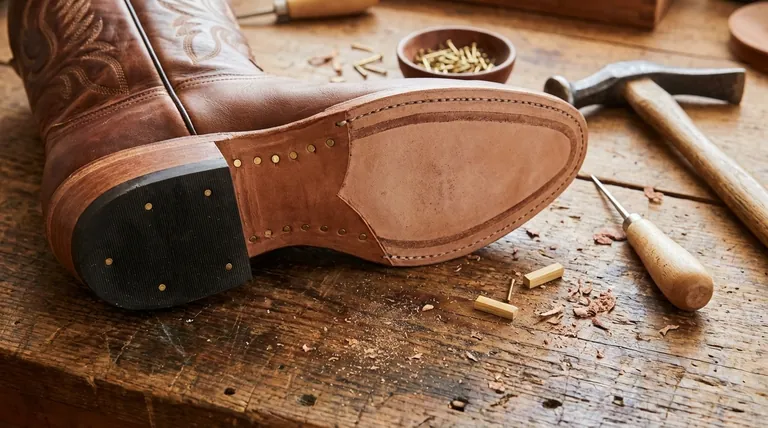
In traditional Western bootmaking, lemonwood pegs and brass nails are used to secure the leather sole to the boot, particularly around the waist (the narrow part of the sole). This method creates an incredibly durable and resilient bond that adapts to environmental changes like moisture and temperature, preventing the sole from detaching over time.
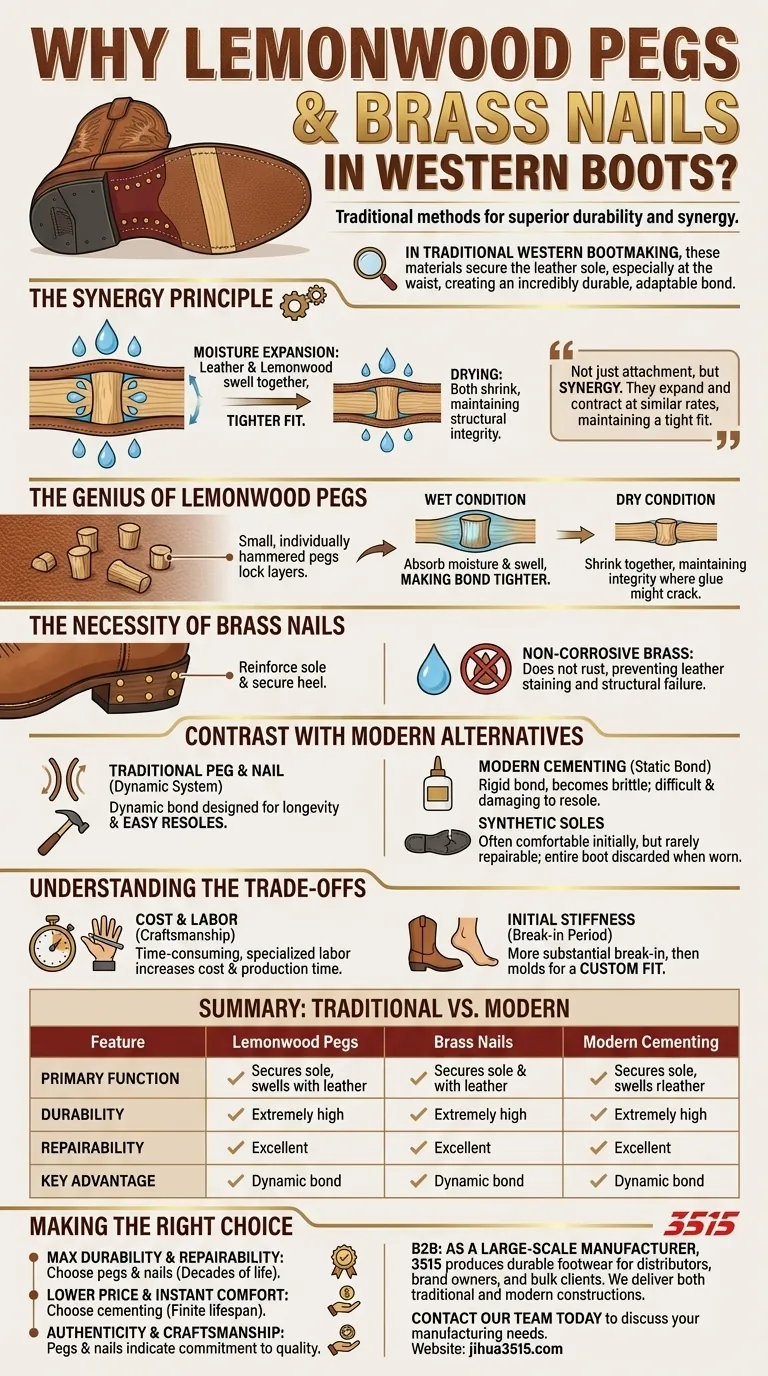
The core principle is not just about attachment, but about synergy. Lemonwood and leather expand and contract with moisture at similar rates, maintaining a tight fit, while non-corrosive brass nails provide a permanent anchor, creating a boot that is both supremely durable and serviceable for a lifetime.
The Functional Purpose of Traditional Hardware
Modern footwear often relies on strong glues (cementing) to attach the sole. While effective, this creates a rigid bond that can become brittle and fail with repeated exposure to harsh conditions. The traditional peg and nail method is a dynamic system designed for longevity.
The Genius of Lemonwood Pegs
Lemonwood is specifically chosen for its unique properties. The small, individually hammered pegs are driven through the outsole, insole, and leather upper to lock them together.
The key is how lemonwood interacts with moisture. When the leather sole gets wet, it swells. The wooden pegs absorb that same moisture and swell right along with it, making the bond even tighter. As the boot dries, they shrink together, maintaining structural integrity where glue might crack or separate.
The Necessity of Brass Nails
While pegs secure the waist, small brass nails are often used to add reinforcement to the sole and to secure the heel.
The choice of brass is critical because it does not rust. Standard iron or steel nails would corrode when exposed to moisture from the ground or the wearer's foot. This rust would not only stain the leather but would eventually cause the nail to fail, compromising the boot's structure.
The Contrast with Modern Alternatives
Understanding why pegs and nails are superior for high-end boots requires comparing them to the common alternative mentioned in footwear construction: synthetic materials and cements.
The Limits of Cementing
Modern adhesives are powerful but create a static bond. Repeated cycles of flexing, heat, and moisture can degrade this bond over time. It makes the boot difficult to resole, as the process often involves tearing away materials that can damage the boot's foundation.
The Issue with Synthetic Soles
Many mass-market boots use a polyurethane or other synthetic sole. These are typically molded and cemented directly to the boot. While often comfortable out of the box and less expensive, they are rarely designed for repair. Once the sole wears out, the entire boot is often discarded.
Understanding the Trade-offs
This traditional construction method is a hallmark of quality, but it is not without its considerations. Acknowledging them is key to making an informed decision.
Cost and Labor
Pegging a sole by hand is a time-consuming process that requires a skilled craftsman. This specialized labor significantly increases the cost and production time of the boots compared to mass-produced, cemented footwear.
Initial Stiffness
A hand-pegged leather sole is often quite rigid at first. These boots typically have a more substantial break-in period than a boot with a flexible synthetic sole. However, once broken in, they mold to the owner's foot for a custom fit.
Making the Right Choice for Your Boots
Your ideal boot construction depends entirely on what you value most in your footwear.
- If your primary focus is maximum durability and repairability: Seek out boots constructed with lemonwood pegs and brass nails, as they are built to last decades with proper care and resoling.
- If your primary focus is a lower price and out-of-the-box comfort: A boot with a modern cemented synthetic sole is a practical choice, but accept that it has a finite lifespan.
- If your primary focus is authenticity and craftsmanship: The use of pegs and nails is a clear indicator of a bootmaker's commitment to traditional, high-quality construction methods.
Choosing the right boot means looking past the surface and understanding the principles that give it a strong foundation.
Summary Table:
| Feature | Lemonwood Pegs | Brass Nails | Modern Cementing |
|---|---|---|---|
| Primary Function | Secures sole; swells/shrinks with leather | Reinforces sole/heel; prevents rust | Creates a rigid, static bond |
| Durability | Extremely high; adapts to moisture | Extremely high; non-corrosive | Can degrade with flexing/moisture |
| Repairability | Excellent; allows for easy resoling | Excellent; permanent anchor | Difficult; can damage boot foundation |
| Key Advantage | Dynamic bond that tightens with moisture | Will not rust or stain leather | Lower initial cost, faster production |
As a large-scale manufacturer, 3515 produces a comprehensive range of durable footwear for distributors, brand owners, and bulk clients. Our production capabilities encompass all types of traditional and modern boots. If you value the superior durability and craftsmanship of boots built with lemonwood pegs and brass nails, or need reliable footwear for your market, we can deliver. Contact our team today to discuss your manufacturing needs and how we can build a lasting partnership.
Visual Guide
Related Products
- Durable Goodyear Welt Leather Work Boots for Wholesale & Private Label
- High-Traction Suede Tactical Boots Wholesale & Custom Manufacturing
- Wholesale Lightweight Tactical Boots Custom Manufacturer for Desert & Combat Use
- Durable Leather Tactical Boots Wholesale & Custom Manufacturing for Brands
- Durable Waterproof Rain Boots | Custom Manufacturer for Wholesale & Brands
People Also Ask
- What is the difference between full-grain and top-grain leather? Premium Material Guide for Boot Manufacturers
- What are the advantages of leather as an upper material for work boots? Unmatched Durability & Custom Comfort
- Why is it important to waterproof leather work boots? Protect Your Investment and Performance
- How should new leather work boots be broken in? A Guide to Comfort and Durability
- What are the advantages of leather uppers in work boots? Unmatched Durability & Protection















