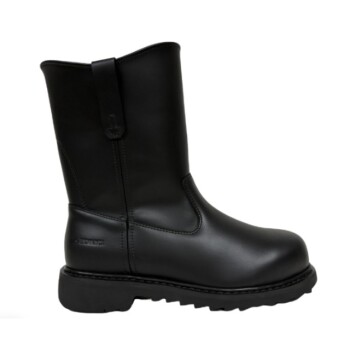
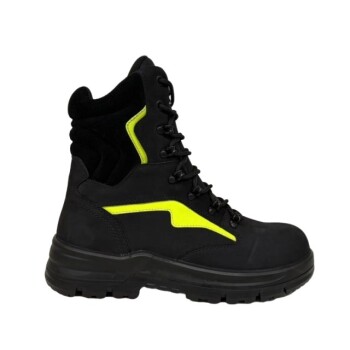
In short, cowboy boots are suitable for the oil and gas industry because modern work-specific models are engineered with the essential safety features required for the job. They integrate reinforced construction, protective safety toes, and specialized oil-resistant soles into a durable and traditionally practical design.
The key is understanding that a true "oilfield" cowboy boot is not a matter of style, but a purpose-built piece of safety equipment. Its suitability comes from combining industrial-grade protection against slips, impacts, and chemicals with the durability and support needed for harsh environments.
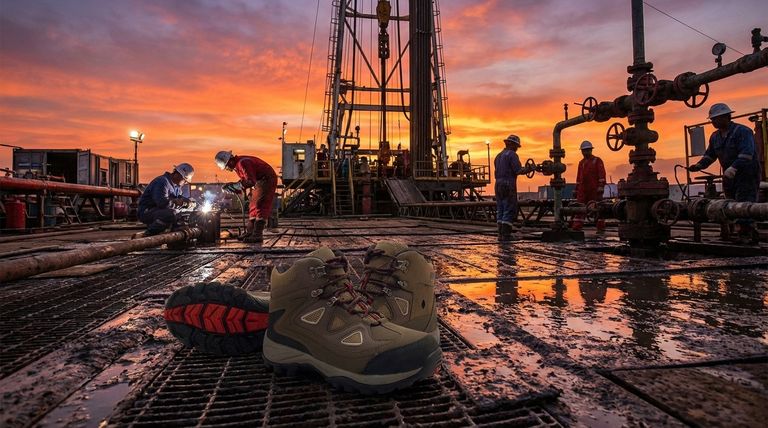
Deconstructing the Oilfield-Ready Boot
To understand their value, you must look past the silhouette and analyze the specific components that address the daily hazards of the oil and gas industry.
The Foundation: A Slip-Resistant Outsole
The most immediate and constant danger on a rig or worksite is a slippery surface.
Oil, water, and drilling muds create treacherous footing. An oilfield-ready boot must have an oil- and slip-resistant sole to provide critical traction and reduce the risk of accidents.
The Shield: Impact and Compression Protection
The worksite is an active environment with heavy equipment and the potential for falling objects.
Boots for this industry feature reinforced construction to protect the entire foot. Most importantly, they incorporate safety toes (steel, composite, or alloy) to shield against crushing and impact injuries.
The Barrier: Material Resilience
Exposure to corrosive substances is a given. The boot's materials must be able to withstand this constant assault.
Premium leather and other chemical-resistant materials are used to prevent degradation from petroleum products and other hazardous fluids. This ensures the boot's structural integrity and protects the worker's feet from chemical burns.
The Core: All-Day Support and Stability
Long shifts on uneven terrain demand more than just surface-level protection.
A steel shank is often built into the boot's midsole to provide arch support and stability, reducing foot fatigue. This feature is critical for maintaining balance and comfort during 12-hour days.
Understanding the Trade-offs: Not All Cowboy Boots are Equal
Choosing the right boot requires recognizing the critical difference between a fashion accessory and a piece of personal protective equipment (PPE).
Traditional vs. Work-Specific Designs
A standard, off-the-shelf cowboy boot from a fashion brand is completely unsuitable and unsafe for an oilfield.
These boots lack safety toes, slip-resistant soles, and the durable construction needed to protect you. You must exclusively look for boots explicitly marketed and built for work environments.
The Necessity of Proper Maintenance
Even the best boots fail without proper care.
Regularly cleaning and inspecting your boots is necessary to maintain their protective qualities. Check for cracks in the leather, embedded debris in the soles, and any signs of chemical degradation.
Making the Right Choice for the Job
Your final decision should be guided by the specific hazards you face most often.
- If your primary focus is protection from falling objects: Prioritize a boot with a certified steel or composite safety toe that meets industry standards.
- If your primary focus is preventing slips on slick surfaces: Ensure the boot explicitly features an oil- and slip-resistant outsole designed for maximum traction.
- If your primary focus is withstanding chemical exposure: Select boots made from high-quality, chemical-resistant materials and maintain them meticulously.
Ultimately, choosing the right cowboy work boot is an investment in your personal safety and on-the-job performance.
Summary Table:
| Key Feature | Why It Matters for Oil & Gas |
|---|---|
| Slip-Resistant Outsole | Provides critical traction on surfaces contaminated with oil, water, and mud. |
| Safety Toe (Steel/Composite) | Protects feet from crushing injuries caused by heavy equipment or falling objects. |
| Chemical-Resistant Materials | Withstands exposure to petroleum products and corrosive substances, ensuring durability. |
| Reinforced Construction & Steel Shank | Offers all-day support, stability, and reduces foot fatigue on uneven terrain. |
Ready to equip your team with reliable, industry-compliant footwear?
As a large-scale manufacturer, 3515 produces a comprehensive range of safety footwear for distributors, brand owners, and bulk clients. Our production capabilities encompass all types of work boots, including purpose-built cowboy boots designed for the toughest conditions.
We can help you source durable, safe, and comfortable boots that meet your specific operational hazards and compliance standards.
Contact 3515 today to discuss your bulk footwear needs and enhance on-site safety.
Visual Guide

Related Products
- Premium Oil Wax Leather Safety Boots for Bulk Purchase
- Premium Wholesale Waterproof Safety Boots High Performance Protection for Industrial Markets
- Heavy-Duty Goodyear Welted Pull-On Safety Rigger Boot
- Premium Waterproof High-Cut Industrial Safety Boots for Wholesale and Bulk Orders
- Durable Leather Work Boots for Wholesale & Custom Manufacturing
People Also Ask
- What materials are commonly used for outsoles in safety boots? A Guide to Durability, Grip, and Comfort
- How do safety boots reduce cutting hazards? Essential Protection for Your Workforce
- What are the common types of safety boots and their primary uses? A Guide to Industrial Footwear
- Which organizations develop safety standards for work boots? Ensure Compliance & Worker Safety
- What primary protective functions do professional safety boots provide in urban solid waste recovery and waste picking processes? Discover Dual-Layer Protection.