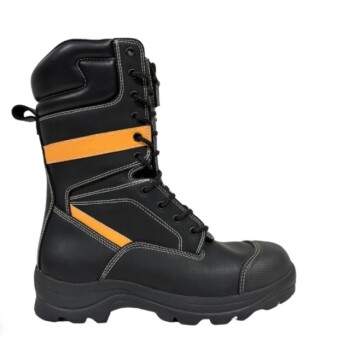
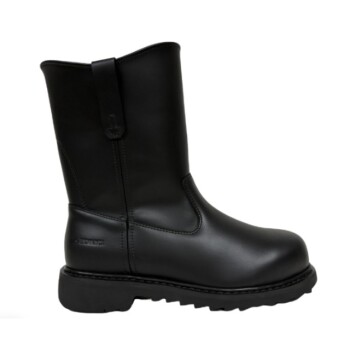
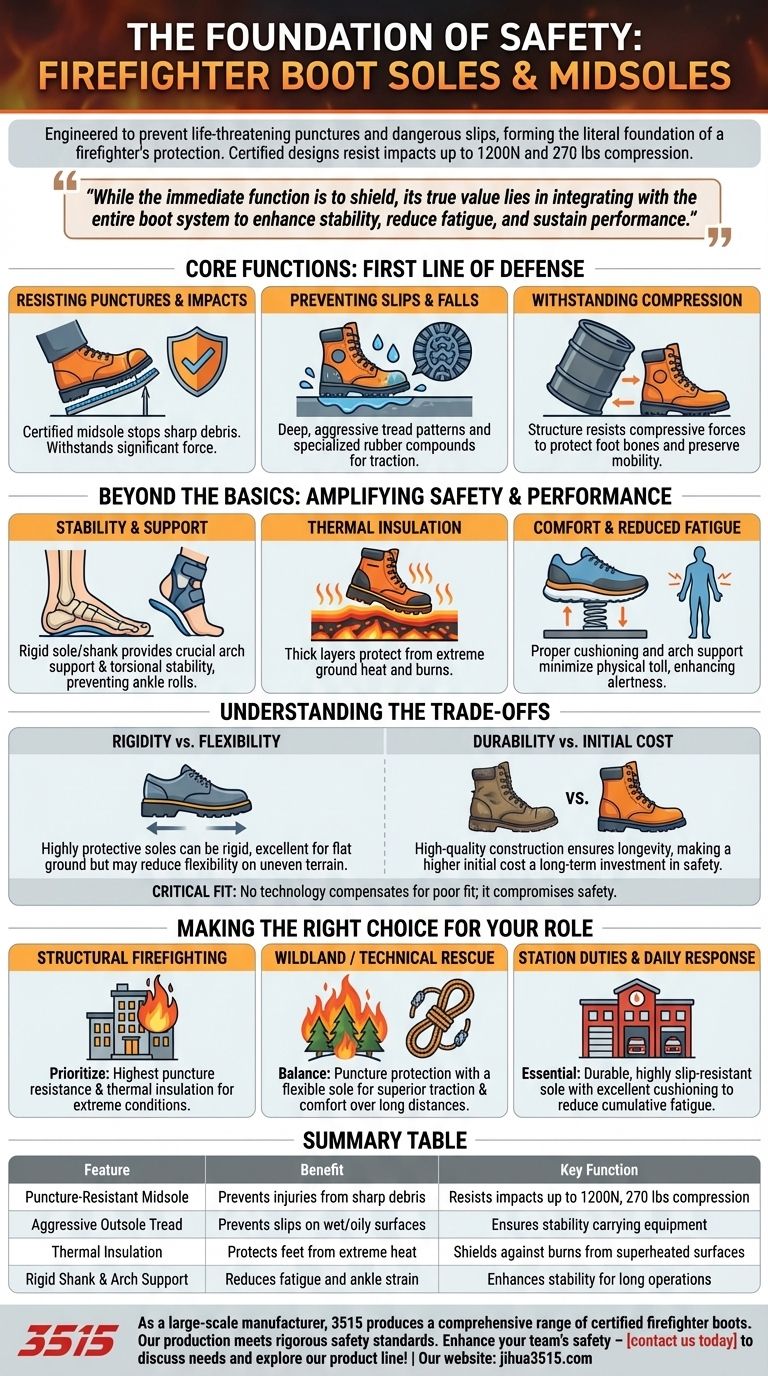
At the most fundamental level, the soles and midsoles of firefighter boots provide two critical, non-negotiable layers of safety. They are engineered to prevent life-threatening punctures from debris on the fire ground and to stop dangerous slips on unpredictable surfaces. Certified designs can resist impacts up to 1200N and compressive forces of 270 lbs, forming the literal foundation of a firefighter's protection.
While the immediate function of a boot's sole is to shield the foot from punctures and slips, its true value lies in how it integrates with the entire boot system to enhance stability, reduce fatigue, and ultimately sustain a firefighter's performance under extreme conditions.
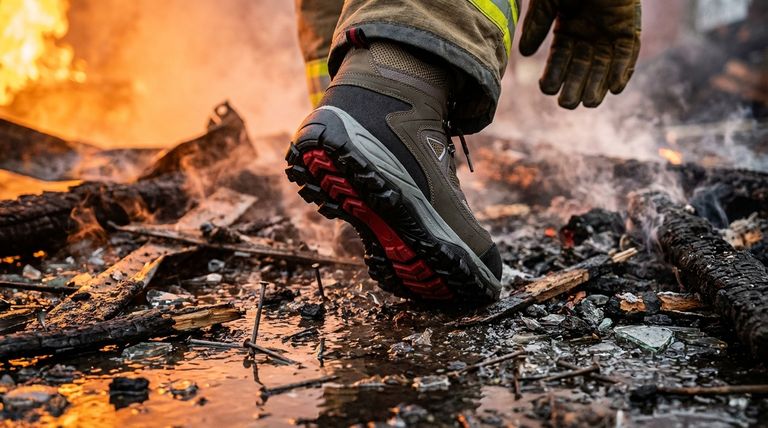
The Foundation of Protection: Core Functions
The sole and midsole are the first line of defense against the hazards a firefighter encounters on the ground. Their design is a direct response to the most common and dangerous environmental threats.
Resisting Punctures and Impacts
The fire ground is littered with sharp objects like nails, glass, and twisted metal. A certified puncture-resistant midsole, often made of a steel plate or composite fabric, is designed to stop these objects from penetrating the foot.
This protective layer is engineered to withstand significant force, ensuring a firefighter can move confidently through wreckage without fear of a debilitating injury from below.
Preventing Slips and Falls
Slips and falls are a leading cause of injury. Firefighter boot outsoles use deep, aggressive tread patterns and specialized rubber compounds to maintain traction on wet, oily, or uneven surfaces.
This stability is crucial not just for preventing falls, but for providing a secure platform when carrying heavy equipment, operating hoses, or rescuing victims.
Withstanding Compression
In addition to sharp objects, firefighters face the risk of heavy items rolling over or pressing down on their feet. The sole and overall boot structure are designed to resist compressive forces.
This feature helps protect the small bones of the foot from being crushed, preserving mobility and preventing severe injury.
Beyond the Basics: How Construction Amplifies Safety
A truly effective boot goes beyond meeting basic standards. The way the sole and midsole are integrated into the boot's overall construction has a profound impact on a firefighter's endurance and operational safety.
The Role of Stability and Support
The rigidity of the sole and shank provides crucial arch support and torsional stability. This design helps prevent ankle rolls and reduces the muscular strain of carrying heavy gear for long periods.
By creating a stable base, the boot allows a firefighter to focus on the task at hand rather than their footing.
Insulation from Extreme Temperatures
The ground itself can be a source of extreme heat. The thick layers of the sole and midsole provide critical thermal insulation, protecting the foot from burns when walking across superheated surfaces or smoldering embers.
The Link Between Comfort and Safety
Safety is not just about resisting external threats; it's also about reducing internal ones like fatigue. A boot with proper cushioning and arch support helps minimize the physical toll of a long incident.
When a firefighter is less fatigued, they are more alert, make better decisions, and are less prone to the mistakes that can lead to injury.
Understanding the Trade-offs
Selecting the right boot involves balancing competing design priorities. Understanding these trade-offs is key to choosing the most effective tool for the job.
The Challenge of Rigidity
A highly protective, puncture-resistant sole is often very rigid. While excellent for stability on flat ground, this can reduce flexibility and comfort, especially when climbing ladders or navigating uneven terrain for extended periods.
Durability as a Safety Feature
The longevity of a boot is a direct safety concern. High-quality construction, using materials like full-grain leather and reinforced stitching, ensures the sole does not delaminate or wear down prematurely.
A durable boot remains a reliable piece of personal protective equipment, making its higher initial cost a worthwhile investment in long-term safety.
The Critical Importance of Fit
No amount of protective technology in a sole can compensate for a poor fit. A boot that is too loose or too tight will cause blisters, chafing, and fatigue, all of which are distractions that compromise safety in a high-stakes environment.
Making the Right Choice for Your Role
The ideal boot sole configuration depends entirely on the primary demands of your job.
- If your primary focus is structural firefighting: Prioritize the highest levels of certified puncture resistance and thermal insulation to handle extreme interior conditions.
- If your primary focus is wildland or technical rescue: Balance puncture protection with a more flexible sole that offers superior traction and comfort over long distances on uneven terrain.
- If your primary focus is station duties and daily response: A durable, highly slip-resistant sole with excellent cushioning is essential for reducing cumulative fatigue and preventing strain.
Ultimately, choosing the right boot means investing in a foundational safety system that protects you from the ground up.
Summary Table:
| Feature | Benefit | Key Function |
|---|---|---|
| Puncture-Resistant Midsole | Prevents injuries from sharp debris | Resists impacts up to 1200N and 270 lbs compression |
| Aggressive Outsole Tread | Prevents slips on wet/oily surfaces | Ensures stability when carrying equipment or rescuing victims |
| Thermal Insulation | Protects feet from extreme heat | Shields against burns from superheated surfaces |
| Rigid Shank & Arch Support | Reduces fatigue and ankle strain | Enhances stability for long-duration operations |
As a large-scale manufacturer, 3515 produces a comprehensive range of certified firefighter boots for distributors, brand owners, and bulk clients. Our production capabilities ensure every pair meets rigorous safety standards for puncture resistance, slip prevention, and thermal protection. Enhance your team’s safety and performance with boots engineered from the ground up—contact us today to discuss your specific needs and explore our full product line!
Visual Guide
Related Products
- High Performance Fire-Retardant Waterproof Safety Boots
- Premium Flame-Retardant Waterproof Safety Boots and Shoes
- Durable Military Combat Boots with Water Drainage for Wholesale & OEM
- Durable Leather Tactical Boots Wholesale & Custom Manufacturing for Brands
- Wholesale Lightweight Tactical Boots Custom Manufacturer for Desert & Combat Use
People Also Ask
- Why are waterproof safety boots recommended for certain work environments? Essential Protection for Wet & Hazardous Jobs
- What roles do 3D vision systems and industrial robots play in the manufacturing of fire safety boots? Smart Automation
- What is the advantage of one-piece construction in waterproof boots? Unbeatable Seamless Protection
- How does boot construction affect waterproofing? The Science Behind Truly Dry Feet
- What materials make waterproof boots durable? The Ultimate Guide to Long-Lasting Footwear