
The high-ankle design of army boots is a direct response to the extreme demands of the field. This is not a stylistic choice but a critical engineering feature. It provides essential stability for the ankle joint, protects the lower leg from a wide range of environmental hazards, and helps keep the foot secure and dry during rigorous movement.
The high-ankle combat boot is an essential piece of equipment designed for one primary purpose: to maximize a soldier's operational effectiveness by minimizing the risk of lower-leg injury and environmental compromise, especially when carrying heavy loads over unpredictable terrain.
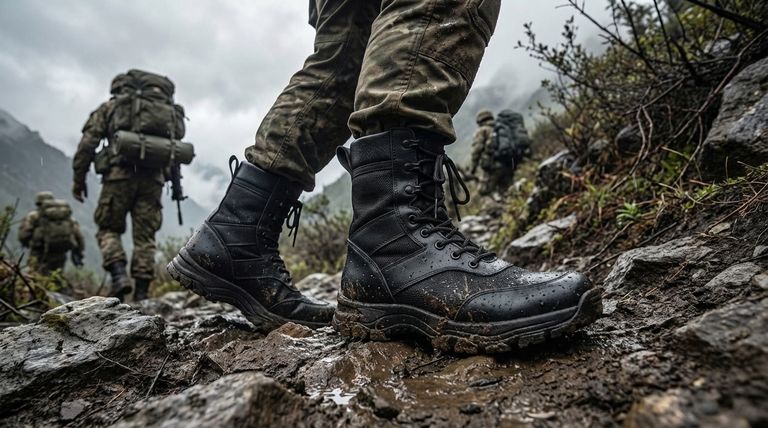
The Core Function: Injury Prevention and Stability
The primary role of the high-ankle design is to function as an external support system for the foot and ankle, mitigating the immense physical stress placed on a soldier.
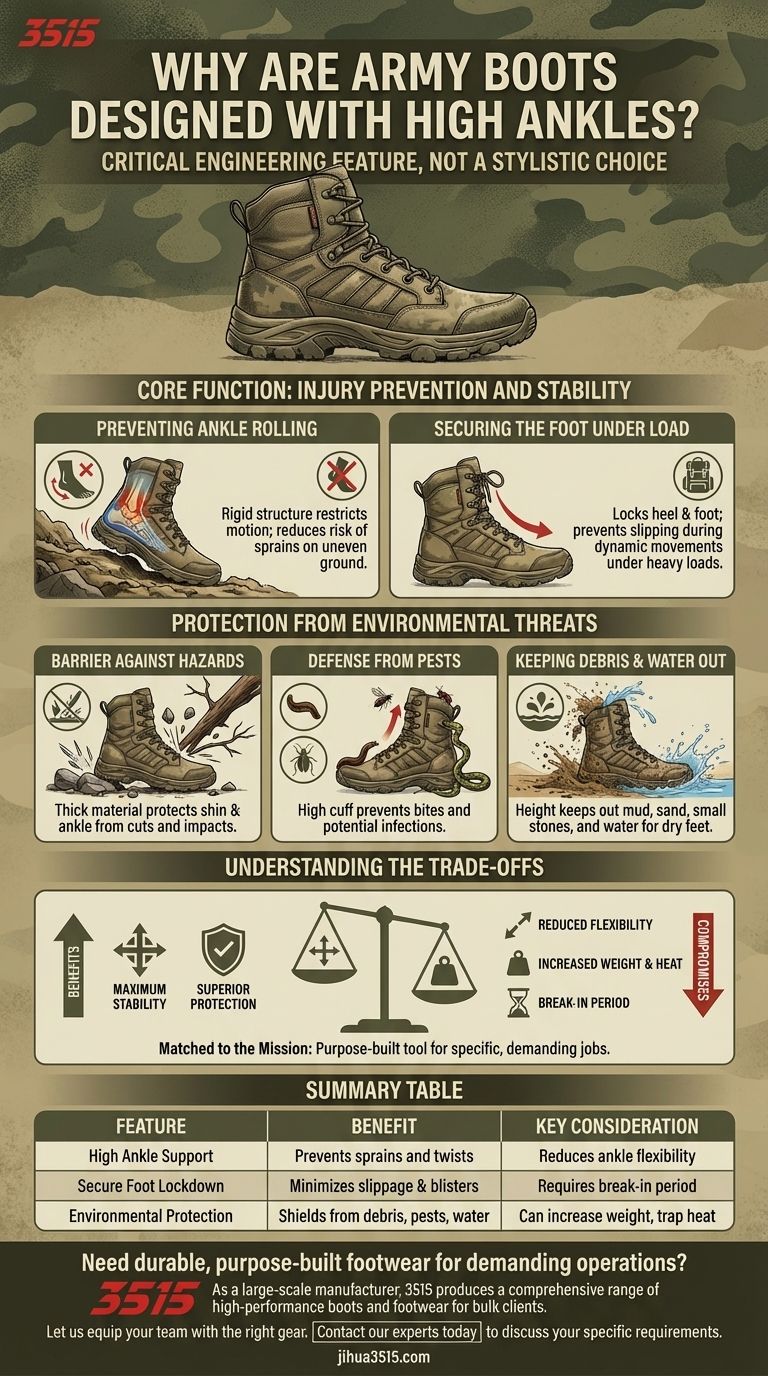
Preventing Ankle Rolling and Strains
The most common and debilitating injuries in the field are sprains and twists. The rigid structure of a high-ankle boot physically restricts the ankle's range of motion, significantly reducing the chance of it rolling or twisting on uneven ground.
This is especially critical during movements like "yomping" or "tabbing"—marching long distances with heavy equipment—where fatigue makes a soldier more susceptible to missteps.
Securing the Foot Under Load
A high boot, when properly laced, locks the heel and foot firmly in place. This prevents the foot from slipping or shifting inside the boot during dynamic movements like running or climbing.
This secure fit is vital for maintaining a stable platform, reducing the friction that causes blisters, and ensuring a soldier's footing is predictable and reliable.
Protection from Environmental Threats
Beyond structural support, the extended height of a combat boot serves as a crucial physical barrier between the soldier and the environment.
A Barrier Against Hazards
The lower shin and ankle are vulnerable to cuts, scrapes, and impacts from sharp rocks, debris, and dense vegetation. The thick leather or synthetic material of the boot provides a simple but effective layer of physical protection.
Defense from Pests and Bites
In many operational environments, insects, leeches, and other pests pose a constant threat. The high cuff of the boot makes it significantly more difficult for them to reach the skin, preventing bites and potential infections.
Keeping Debris and Water Out
The height of the boot helps to keep out mud, sand, small stones, and water. Maintaining dry feet is critical for preventing fungal infections, blisters, and trench foot, ensuring the soldier remains mission-capable.
Understanding the Trade-offs
While the benefits are clear, the high-ankle design is not without its compromises. Acknowledging them is key to understanding its purpose-built nature.
Reduced Flexibility
The very same rigidity that provides stability also limits the natural flexibility of the ankle. This can feel cumbersome during high-speed running on flat surfaces or when needing to pivot quickly.
Increased Weight and Heat
More material means more weight, which can contribute to fatigue over long distances. The high cuff also traps more heat, which can be a significant disadvantage in hot and humid climates, increasing the risk of heat-related foot issues if not managed properly.
A Necessary Break-in Period
Sturdy, high-ankle boots often require a significant break-in period. During this time, the stiff materials slowly conform to the wearer's foot and ankle, which can cause initial discomfort.
Matching the Boot to the Mission
The design of a boot is always a direct reflection of its intended use. The high-ankle combat boot is a specialized tool for a specific, demanding job.
- If your primary focus is maximum stability and protection: The 8-inch or higher combat boot is essential for carrying heavy loads over rough, unpredictable terrain where ankle injury is a primary risk.
- If your primary focus is speed and flexibility: A mid-height or lower-cut tactical boot might be more appropriate for missions on stable ground or in urban environments where mobility is prioritized over maximum support.
- If your primary focus is performance in jungle or wet environments: A high-ankle design is still critical for protection, but it will often incorporate drainage vents and quick-drying materials to mitigate the downsides of water retention.
Ultimately, the high-ankle combat boot is a purpose-built tool engineered to keep a soldier stable, protected, and moving forward in the most unforgiving conditions.
Summary Table:
| Feature | Benefit | Key Consideration |
|---|---|---|
| High Ankle Support | Prevents sprains and twists on uneven terrain. | Reduces ankle flexibility. |
| Secure Foot Lockdown | Minimizes foot slippage and blisters under load. | Requires a proper break-in period. |
| Environmental Protection | Shields from debris, pests, and water. | Can increase weight and trap heat. |
Need durable, purpose-built footwear for demanding operations?
As a large-scale manufacturer, 3515 produces a comprehensive range of high-performance boots and footwear for distributors, brand owners, and bulk clients. Our production capabilities encompass all types of tactical and safety footwear, engineered for maximum support, protection, and reliability.
Let us equip your team with the right gear for the mission. Contact our experts today to discuss your specific requirements and explore our manufacturing solutions.
Visual Guide
Related Products
- Durable High-Ankle Tactical Boots for Wholesale & Custom Manufacturing
- Durable High-Ankle Tactical Boots Wholesale Manufacturer for Custom & Bulk Orders
- Durable Leather High-Ankle Tactical Boots for Wholesale & Custom Manufacturing
- Durable Military Combat Boots with Water Drainage for Wholesale & OEM
- High-Traction Suede Tactical Boots Wholesale & Custom Manufacturing
People Also Ask
- How do tactical boots protect against injuries? Discover the Integrated Safety System
- What are the different types of tactical boots available? Find the Right Boot for Your Mission
- How does additive manufacturing equipment reduce environmental risks? Sustainable Tactics for Modern Footwear Production
- How is the compatibility of polymer materials demonstrated in smart footwear? Enhancing Tactical & Training Performance
- What is the role of high-frequency acquisition hardware in technical skill analysis for outdoor and tactical boots?



















