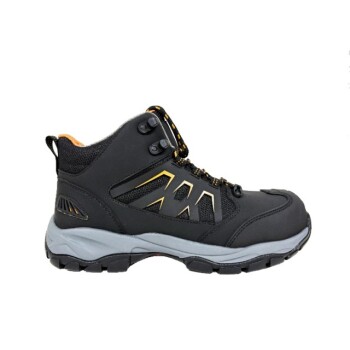
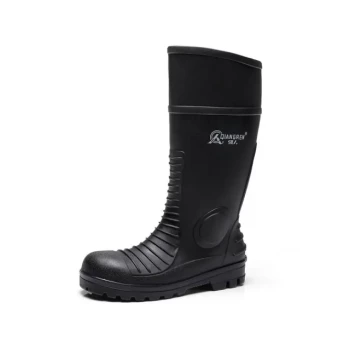
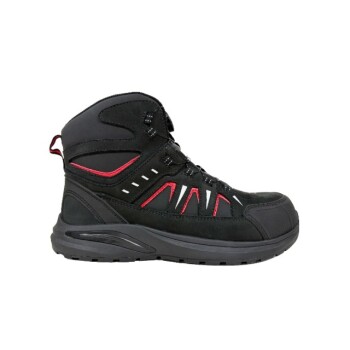
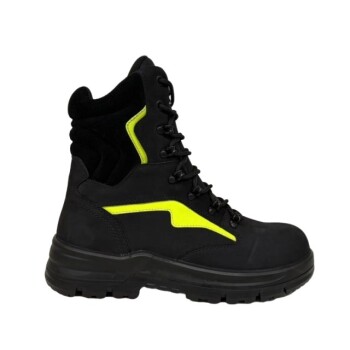
Steel toe boots are a non-negotiable safety standard in industries where foot injuries from impact, compression, or puncture are a daily risk. The most common occupations requiring this protection are found in construction, manufacturing, logistics, and any role involving the operation of heavy machinery or the handling of heavy materials.
The requirement for steel toe boots is not determined by a job title alone, but by a direct assessment of workplace hazards. If your feet are exposed to falling objects, rolling equipment, or sharp materials, protective footwear is the essential line of defense.
The Core Principle: Why This Protection is Critical
Understanding the specific dangers a steel toe boot is designed to mitigate is key to appreciating its necessity. The requirement is always linked directly to the presence of predictable, high-risk hazards in the work environment.
Protection Against Impact and Compression
The primary feature of these boots is the reinforced steel cap integrated into the toe box. This cap acts as a crucial shield.
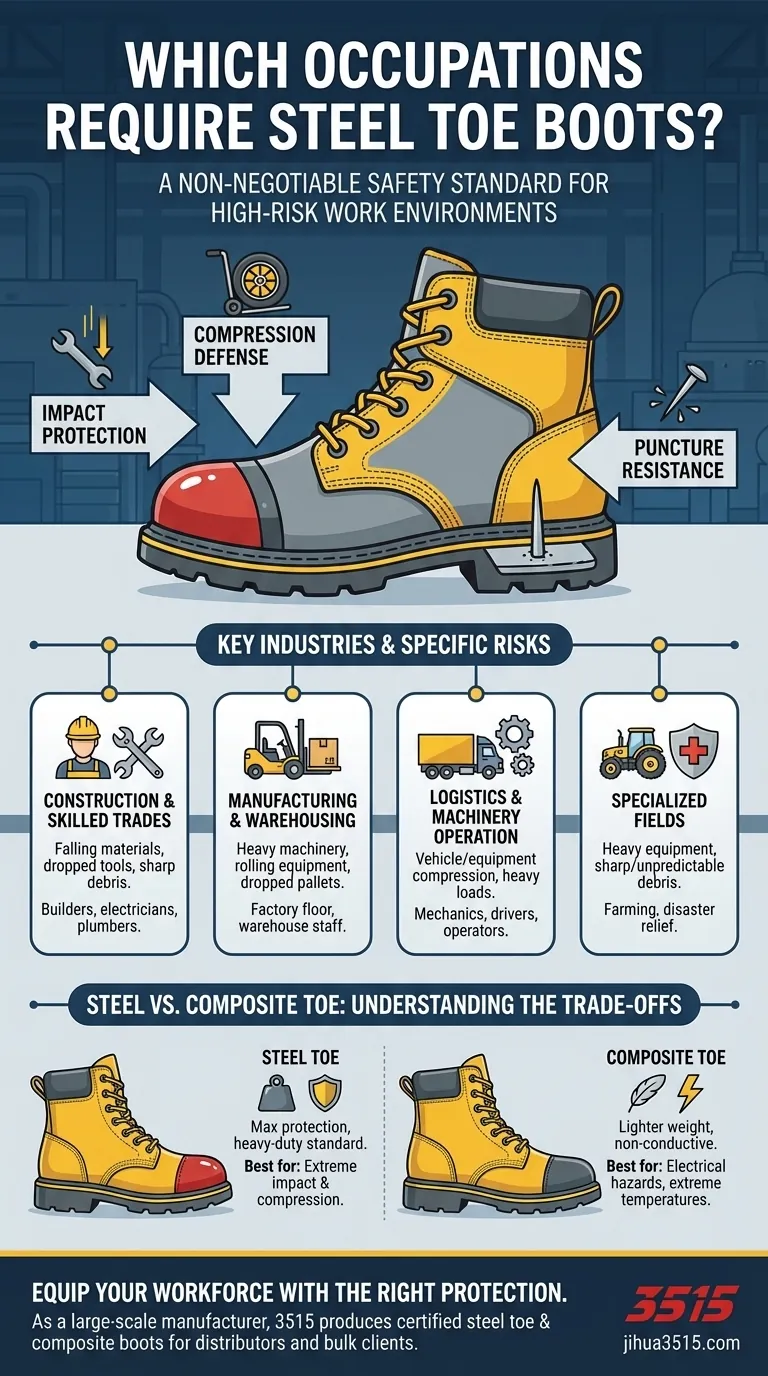
It is designed to protect your toes from severe injury caused by falling objects, such as tools dropped from a height, or from compression events, like a heavy cart or vehicle wheel rolling over the foot.
Defense Against Punctures
Many hazardous job sites, especially in construction or disaster relief, have sharp objects like nails, screws, and other debris on the ground.
While the steel toe protects the front of the foot, many safety boots also include puncture-resistant plates in the sole to prevent these objects from piercing through the bottom of the boot.
Key Industries and Their Specific Risks
While the underlying risks are similar, the context changes depending on the industry. Certain occupations are almost universally required to wear this level of protection.
Construction and Skilled Trades
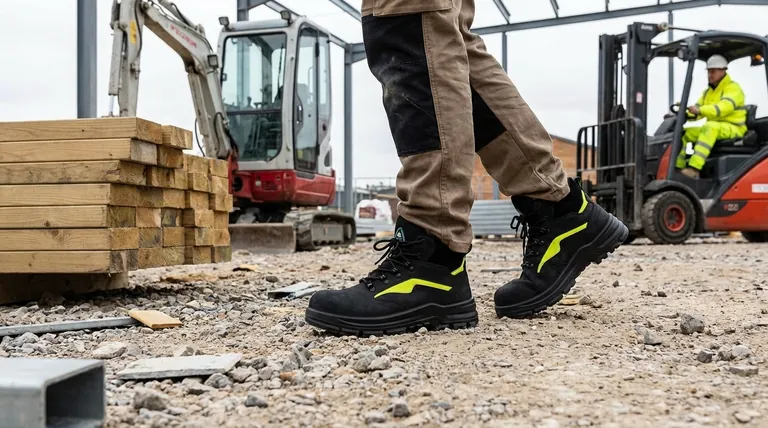
Workers on a construction site are constantly exposed to falling building materials, dropped tools, and sharp ground debris. Builders, carpenters, electricians, and plumbers all operate in environments where foot injuries are a significant and constant threat.
Manufacturing and Warehousing
Factory floors and warehouses are hubs of activity involving heavy machinery, forklifts, and the movement of substantial inventory. A dropped pallet or an accident with a rolling piece of equipment makes protective footwear essential for anyone working in these spaces.
Logistics and Machinery Operation
Operators of heavy machinery, from forklifts to bulldozers, require protection against compression injuries. Similarly, loggers, mechanics, and anyone involved in the transportation and loading of heavy goods relies on steel toe boots for safety.
Specialized Fields
Other professions also carry unique risks. Farmers contend with heavy agricultural equipment, fishers work around dangerous deck machinery, and disaster relief personnel navigate unpredictable and sharp debris fields.
Understanding the Trade-offs: Steel vs. Composite Toe
The term "steel toe" is often used as a catch-all for any safety toe, but it's important to recognize the alternatives and their specific use cases. This choice directly impacts comfort, weight, and suitability for certain environments.
The Strength of Steel
Steel offers the maximum possible protection against impact and compression and remains the standard for the most demanding, heavy-duty work environments. It is the benchmark against which other materials are measured.
The Advantages of Composite
Composite toe caps are made from non-metal materials like Kevlar, carbon fiber, or plastic. They are significantly lighter than steel, which reduces foot fatigue over a long day.
Because they don't conduct electricity or temperature, composite toe boots are often preferred by electricians or those working in extreme cold or heat. They are also ideal for environments with metal detectors, like airports or secure facilities.
Making the Right Choice for Your Goal
Your specific work environment should dictate your choice of protective footwear.
- If your primary focus is maximum protection from heavy objects and machinery: A traditional steel toe boot, often paired with a puncture-resistant sole, is the unequivocal choice for construction and heavy industrial work.
- If your primary focus is protection in a metal-sensitive or temperature-variable environment: A composite toe boot offers certified safety with less weight and without conducting electricity or cold.
- If your primary focus is preventing slips in a less hazardous setting: You may need footwear with a certified slip-resistant outsole, which can be found in boots with or without a safety toe, common in healthcare or service industries.
Ultimately, selecting the right footwear is a critical decision based on a clear-eyed assessment of the specific hazards you face every day.
Summary Table:
| Occupation/Industry | Primary Hazards | Key Protection Needed |
|---|---|---|
| Construction & Skilled Trades | Falling tools/materials, sharp debris | Impact, compression, puncture resistance |
| Manufacturing & Warehousing | Heavy machinery, rolling equipment, dropped pallets | Impact, compression protection |
| Logistics & Machinery Operation | Vehicle/equipment compression, heavy loads | Compression, impact protection |
| Specialized Fields (e.g., Farming, Disaster Relief) | Heavy equipment, sharp/unpredictable debris | Puncture, impact resistance |
Ensure your workforce is equipped with the right safety footwear. As a large-scale manufacturer, 3515 produces a comprehensive range of certified steel toe and composite toe boots for distributors, brand owners, and bulk clients. Our production capabilities encompass all types of safety shoes and boots designed for maximum protection and comfort in your specific industry.
Contact us today for a consultation on your protective footwear needs and discover how we can support your safety standards.
Visual Guide
Related Products
- Durable Steel Toe Safety Boots Wholesale & Custom Manufacturing
- Wholesale Durable Breathable Safety Boots Custom OEM Manufacturer
- Wholesale Durable 6-Inch Work Boots | Custom & Private Label Manufacturer
- Puncture-Resistant Velcro Safety Boots for Wholesale & Custom Manufacturing
- Premium Sport Style Safety Boots for Bulk Orders
People Also Ask
- Why are industrial safety boots with steel toes necessary for machine operators? Essential Foot Protection for Safety
- Why is it mandatory to wear safety shoes with steel toe protection during metal loading? Prevent Crushing Injuries
- What are the main materials used in steel toe safety shoes? A Guide to Protective Footwear Construction
- What are the characteristics of steel toe safety boots? Maximum Protection, Key Trade-offs
- Is it true that steel toes can cause toes to get cut off? Debunking the Dangerous Myth