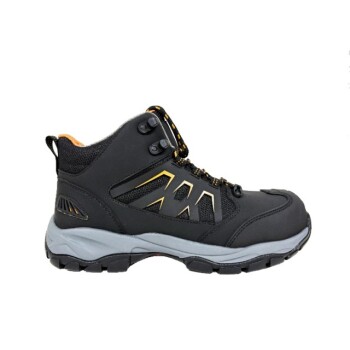
Occupations that prioritize mobility, electrical safety, and all-day comfort are the most common adopters of composite toe boots. These roles include electricians, engineers, architects, and project managers who require certified protection but need to avoid the weight and electrical conductivity of traditional steel caps.
The choice between composite and steel toe boots is not about which is "better," but which is right for the specific hazards and demands of your job. Composite toes excel in environments where weight, electrical risks, and temperature are the primary concerns, not the constant threat of extreme impact from heavy machinery.

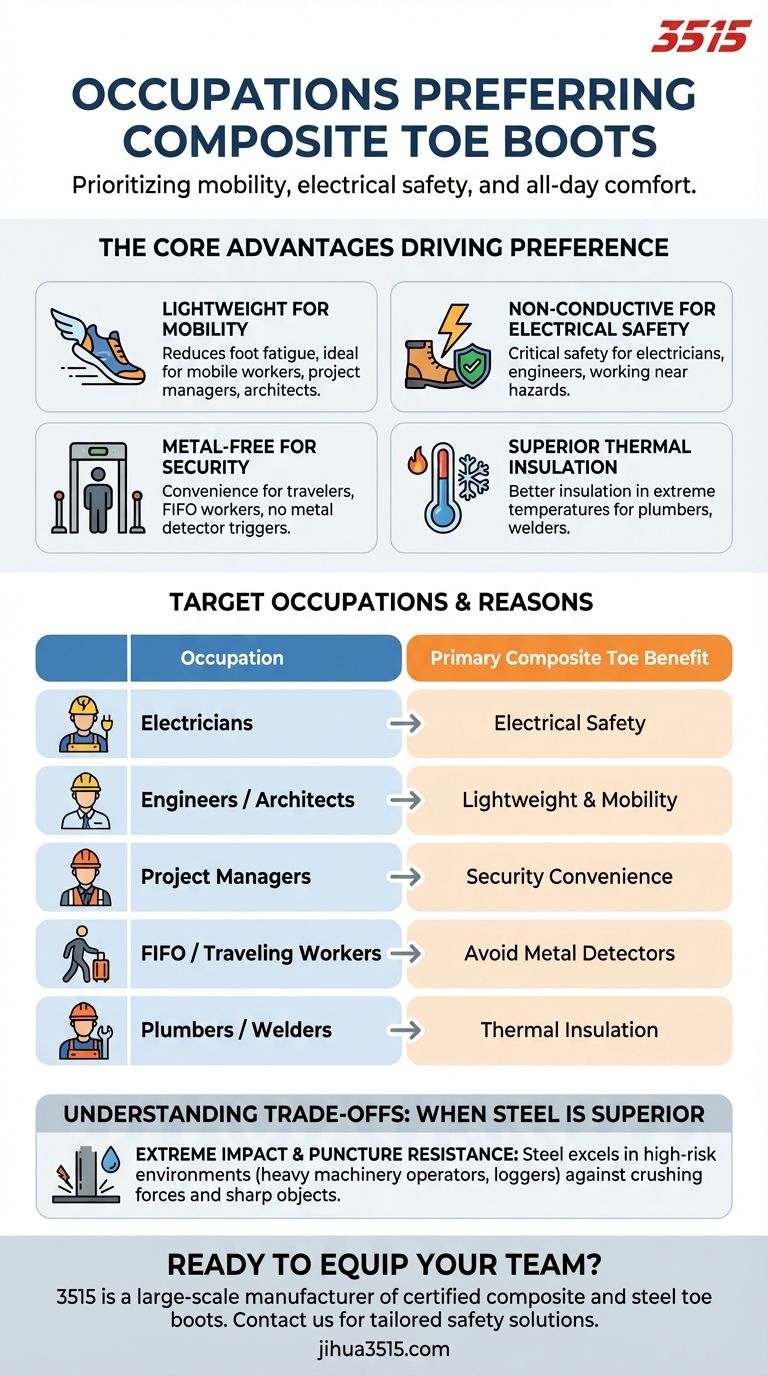
The Core Advantages Driving Composite Toe Preference
The decision to choose composite materials like fiberglass, carbon fiber, or Kevlar stems from a specific set of operational needs. These materials provide distinct advantages over steel in certain work environments.
Lightweight for Mobility and Reduced Fatigue
Composite toe caps are significantly lighter than steel. This reduction in weight minimizes foot fatigue over long shifts.
This makes them ideal for mobile workers, project managers, and architects who spend hours walking across job sites but are not directly operating heavy machinery.
Non-Conductive for Electrical Safety
The primary benefit for certain trades is that composite materials do not conduct electricity. This is a critical safety feature.
Electricians, engineers, and any professional working near potential electrical hazards gain an essential layer of protection by wearing non-metallic boots.
Metal-Free for Security and Convenience
Because they contain no metal, composite toe boots will not set off metal detectors.
This is a major convenience for frequent travelers, FIFO (Fly-In, Fly-Out) workers, or anyone who regularly passes through security checkpoints.
Superior Thermal Insulation
Composite materials are poor conductors of heat and cold. This means they offer better insulation in extreme temperature environments.
Workers exposed to very hot or cold conditions, such as some plumbers or welders, will find composite toe boots far more comfortable than steel toes, which can transfer ambient temperatures directly to the foot.
Understanding the Trade-offs: When Steel Is Superior
While composite toe boots meet the same ASTM safety standards for impact and compression as steel, there are scenarios where steel remains the superior choice. Trust and safety depend on understanding these limitations.
Extreme Impact and Puncture Resistance
Steel can often withstand a single, higher-impact force before being compromised. It is also inherently more resistant to being cut or punctured by sharp, heavy objects.
While a composite toe provides certified protection, it may crack under an extreme force that a steel toe would only dent.
Occupations Requiring Maximum Protection
For roles with a constant, high risk of crushing or falling objects, steel is the traditional and often preferred option.
Occupations like loggers, heavy machinery operators, construction laborers, and disaster relief workers benefit from the uncompromising strength of steel due to the nature of their daily hazards.
Making the Right Choice for Your Role
Your daily tasks and work environment should be the ultimate guide in your decision.
- If your primary focus is electrical safety and avoiding metal detectors: Composite toe boots are the definitive choice.
- If your primary focus is all-day comfort and reduced fatigue while walking: The lightweight nature of composite toes will serve you best.
- If your primary focus is maximum protection from heavy falling objects or crushing forces: You should choose traditional steel toe boots for their superior impact resistance.
Selecting the right protective footwear is a critical decision based on a clear-eyed assessment of your specific job hazards.
Summary Table:
| Occupation | Primary Reason for Composite Toe Preference |
|---|---|
| Electricians | Non-conductive for electrical safety |
| Engineers / Architects | Lightweight for mobility and reduced fatigue |
| Project Managers | Metal-free for convenience at security checkpoints |
| FIFO / Traveling Workers | Avoids setting off metal detectors |
| Plumbers / Welders | Superior thermal insulation in extreme temperatures |
Ready to equip your team with the right safety footwear?
As a large-scale manufacturer, 3515 produces a comprehensive range of certified composite toe and steel toe boots for distributors, brand owners, and bulk clients. Our production capabilities ensure you get the perfect balance of safety, comfort, and durability tailored to your specific occupational hazards.
Contact 3515 today for a consultation and discover how we can support your safety and procurement needs.
Visual Guide
Related Products
- Wholesale Durable Safety Boots Manufacturer Customizable Steel Toe Work Boots
- Durable Leather Moc Toe Work Boots for Wholesale & Custom Manufacturing
- Durable Moc-Toe Wedge Work Boots | Wholesale Manufacturing for Brands
- Wholesale Mesh Steel Toe Safety Shoes with Dial Closure Factory Production
- Wholesale Durable Breathable Safety Boots Custom OEM Manufacturer
People Also Ask
- What are the pros and cons of steel toe work boots? A Guide to Maximum Protection vs. Comfort
- What are the different types of steel toe work boots? Choose the Right Boot for Your Job
- What is the history of steel toe work boots? From German Invention to Modern Safety Standard
- How much weight can steel toe work boots withstand? Unpacking the 3,372 lb. Safety Standard
- What are some common myths about steel toe work boots? Debunked for Modern Workers