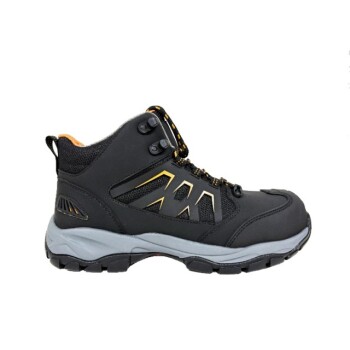
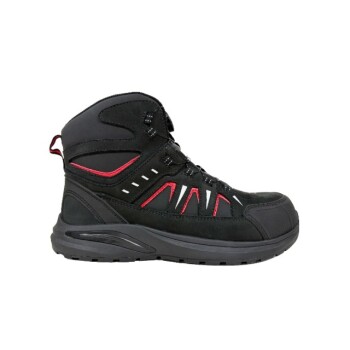
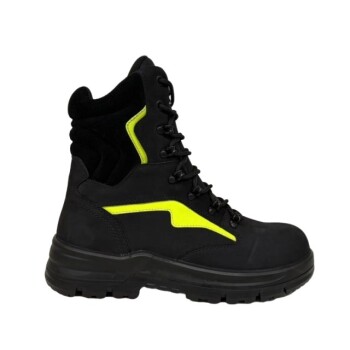
In any environment where foot safety is a priority, steel toe boots are the established standard. They are most commonly used in industries like construction, manufacturing, and logistics, where workers are consistently exposed to hazards that can cause serious foot injuries. These boots provide essential protection against impact from falling objects and compression from heavy equipment.
The use of steel toe boots is not determined by job title alone, but by a direct assessment of workplace hazards. If there is a tangible risk of heavy objects falling on or rolling over the foot, this type of protective footwear is considered essential.
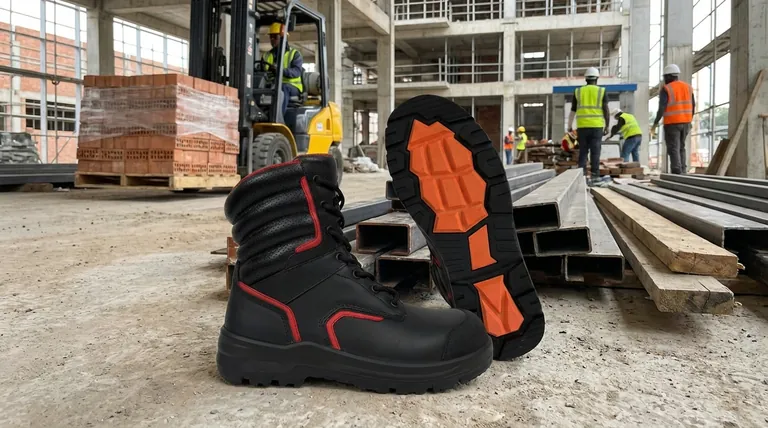
The Core Industries Requiring Steel Toe Protection
While the need for safety footwear is dictated by specific job site risks, several major industries mandate steel toe boots as a baseline requirement due to the nature of their work.
Construction and Trades
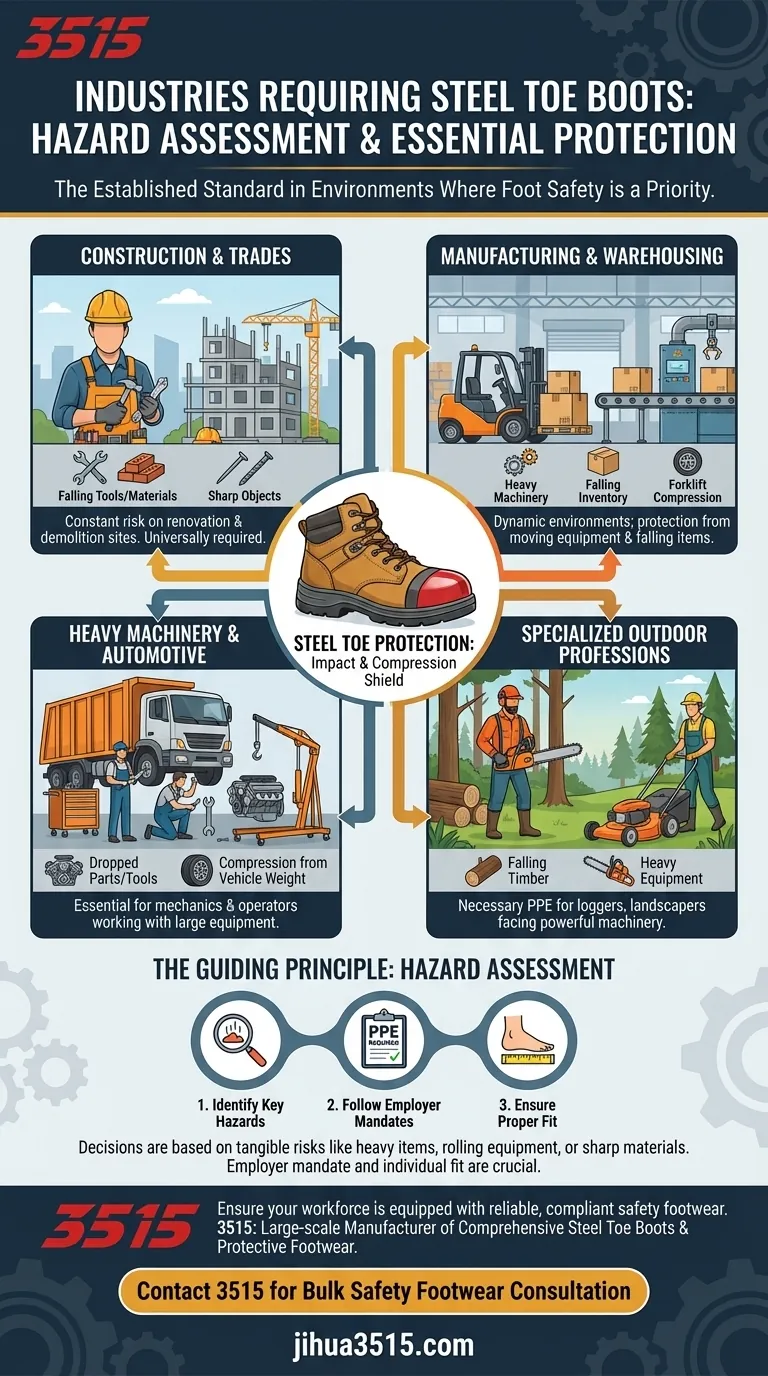
On construction, renovation, and demolition sites, the risk of foot injury is constant. Hazards include falling tools or building materials and sharp objects like nails and rebar on the ground. For this reason, builders and other trade professionals almost universally require them.
Manufacturing and Warehousing
Factories and warehouses are dynamic environments with heavy machinery, moving pallets, and industrial vehicles like forklifts. Steel toe boots are critical for protecting feet from falling inventory and compression accidents involving heavy equipment.
Heavy Machinery and Automotive
Occupations that involve working with or around large equipment demand robust foot protection. Mechanics, heavy machinery operators, and auto repair technicians rely on steel toe boots to shield them from dropped parts, tools, and the immense weight of vehicles.
Specialized and Outdoor Professions
Certain outdoor jobs also present significant foot hazards. Loggers, for instance, face risks from falling timber and heavy equipment, while landscapers may work with powerful machinery, making steel toe boots a necessary piece of personal protective equipment (PPE).
The Guiding Principle: Hazard Assessment
Understanding which industries use steel toe boots is useful, but the more fundamental question is why. The decision to mandate this footwear is based on a clear assessment of risk in the work environment.
Identifying Key Hazards
Employers and safety regulators like OSHA require protective footwear in any environment characterized by specific risks. These include the presence of heavy items that could fall, large machinery, rolling equipment, or sharp materials on the floor.
Following Employer Mandates
If you work in an area designated as a PPE-required zone, safety footwear is not optional. Your employer is responsible for assessing workplace hazards and mandating the appropriate level of protection for all employees.
Ensuring Proper Fit
Protection is only effective if the equipment is worn correctly. It is important that footwear is tailored to the individual, which is why some manufacturers produce boots designed for the unique anatomical and fit requirements of different workers.
How to Determine Your Need for Steel Toe Boots
Use the following guidelines to assess whether steel toe boots are right for your work environment.
- If your primary focus is construction or manufacturing: Steel toe boots are the industry standard and almost certainly a requirement for your role.
- If your primary focus is operating or working near heavy equipment: Protection from impact and compression is paramount, making this footwear essential.
- If your primary focus is avoiding job site hazards in a warehouse or logistics hub: The risk from moving equipment and falling objects makes them a critical safety measure.
- If you are unsure about your workplace requirements: Always consult your employer’s official Personal Protective Equipment (PPE) guidelines to ensure you are compliant and safe.
Ultimately, choosing to wear steel toe boots is a foundational step in taking control of your personal safety on the job.
Summary Table:
| Industry | Primary Hazards Addressed |
|---|---|
| Construction & Trades | Falling tools/materials, sharp objects (nails, rebar) |
| Manufacturing & Warehousing | Heavy machinery, falling inventory, forklift compression |
| Heavy Machinery & Automotive | Dropped parts/tools, compression from vehicle weight |
| Specialized Outdoor Professions | Falling timber, heavy equipment (logging, landscaping) |
Ensure your workforce is equipped with reliable, compliant safety footwear.
As a large-scale manufacturer, 3515 produces a comprehensive range of steel toe boots and other protective footwear for distributors, brand owners, and bulk clients. Our production capabilities encompass all types of safety shoes and boots, designed to meet the rigorous demands of high-risk industries.
We help you protect your team with durable, comfortable footwear that meets safety standards, reducing workplace injuries and enhancing productivity.
Contact 3515 today for a consultation on your bulk safety footwear needs.
Visual Guide
Related Products
- Durable Steel Toe Safety Boots Wholesale & Custom Manufacturing
- Wholesale Durable Breathable Safety Boots Custom OEM Manufacturer
- Wholesale Durable 6-Inch Work Boots | Custom & Private Label Manufacturer
- Puncture-Resistant Velcro Safety Boots for Wholesale & Custom Manufacturing
- Premium Sport Style Safety Boots for Bulk Orders
People Also Ask
- Why are industrial safety boots with steel toes necessary for machine operators? Essential Foot Protection for Safety
- Why is it mandatory to wear safety shoes with steel toe protection during metal loading? Prevent Crushing Injuries
- What are the main materials used in steel toe safety shoes? A Guide to Protective Footwear Construction
- What are the characteristics of steel toe safety boots? Maximum Protection, Key Trade-offs
- Is it true that steel toes can cause toes to get cut off? Debunking the Dangerous Myth