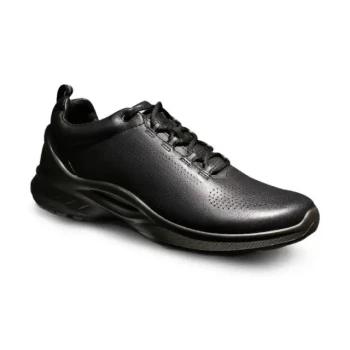
At their core, hiking shoes are a specialized hybrid designed to balance the ruggedness of a traditional boot with the agility of a lighter shoe. They are defined by their low-cut design, stiff and grippy outsoles for traction, and a focus on stability and foot protection for varied trails.
A hiking shoe is engineered to be a versatile workhorse for the trail. It sacrifices the heavy ankle support of a full boot to gain significant advantages in flexibility, weight, and comfort, making it the optimal choice for a wide range of outdoor adventures.
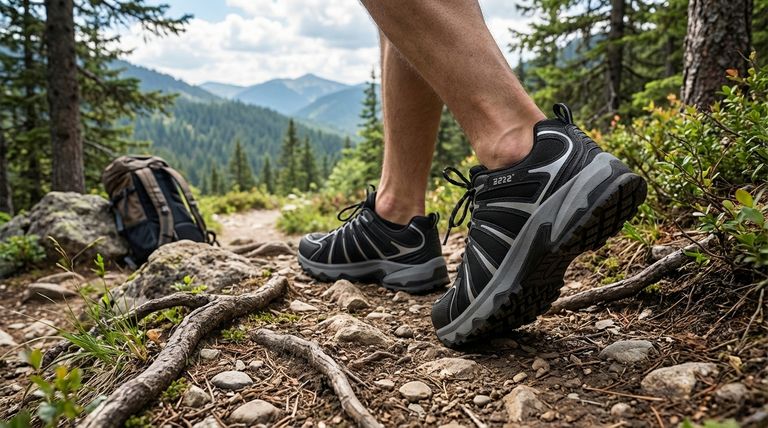
Deconstructing the Modern Hiking Shoe
To truly understand hiking shoes, you must look at how their individual components work together to handle the demands of the trail. They are purpose-built, with each feature serving a critical function.
The Foundation: Traction and Durability
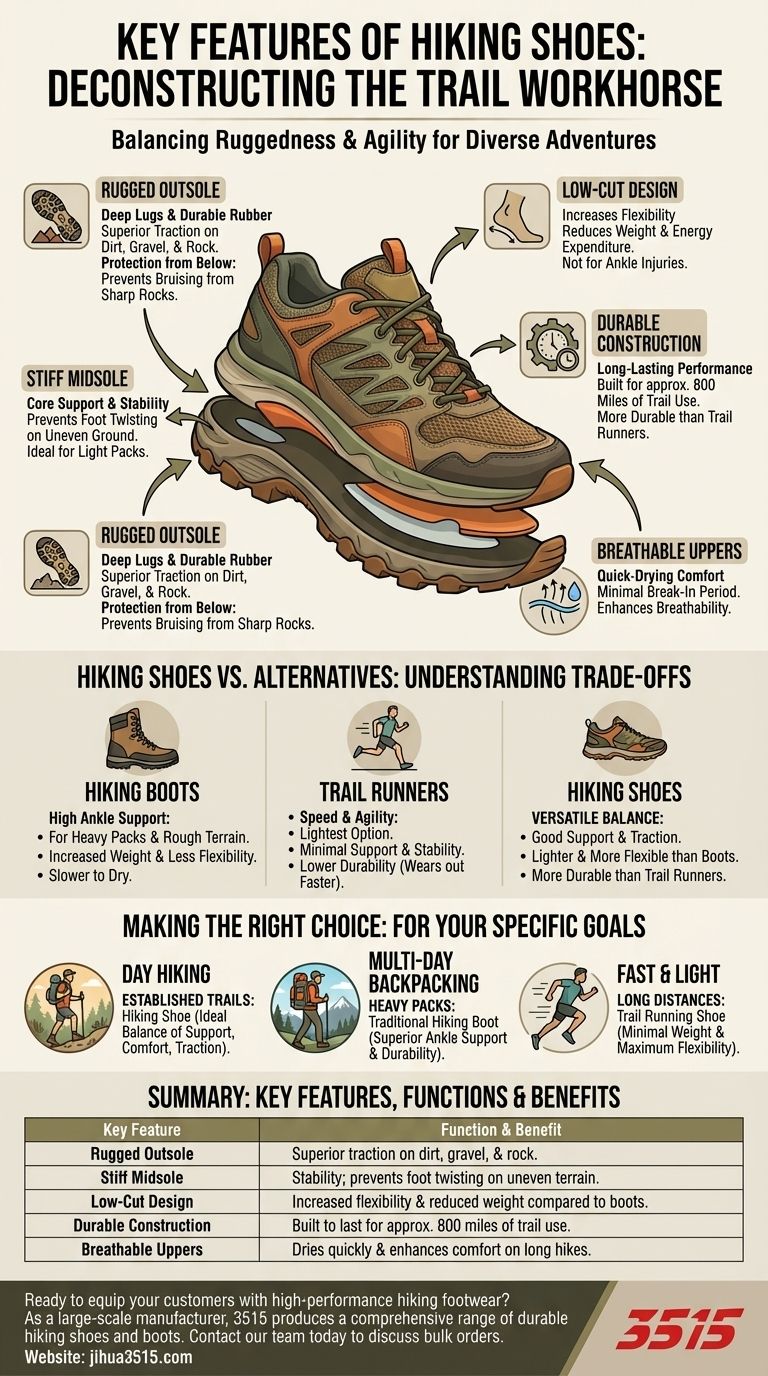
The most critical feature is the rugged outsole. This is the part of the shoe that contacts the ground. It is made of durable rubber and features deep lugs, or patterns, designed to grip diverse surfaces like dirt, gravel, and rock.
This construction also provides essential protection from below. The stiffness of the outsole prevents sharp rocks or roots from bruising the bottom of your feet.
Hiking shoes are also built for longevity. They are designed to last longer than trail running shoes, often providing reliable performance for around 800 miles of use.
The Core: Support and Stability
While they are low-cut and do not cover the ankle, hiking shoes provide stability through a stiff midsole. This structure prevents your foot from twisting on uneven ground.
This design offers far more support and stability than a standard sneaker or a minimalist trail runner. It's a deliberate choice for hikers who carry light packs on maintained trails.
The Feel: Comfort and Weight
Compared to traditional hiking boots, hiking shoes are significantly lighter and more flexible. This reduces the energy you expend with every step, making long days on the trail feel less strenuous.
They are also more breathable and dry more quickly than bulky leather boots. Many hiking shoes require little to no break-in period, meaning they are comfortable right out of the box.
Hiking Shoes vs. The Alternatives
Choosing the right footwear is about understanding the specific job each type of shoe is designed for. The primary trade-offs are between weight, support, and protection.
Against Hiking Boots
The most obvious difference is the cut. Hiking boots extend above the ankle, providing maximum ankle support. This is crucial for hikers carrying heavy packs or traversing very rough, unstable terrain.
This support comes at the cost of increased weight and reduced flexibility. Boots are also less breathable and take much longer to dry if they get wet.
Against Trail Runners
Trail running shoes are the lightest option, prioritizing speed and agility above all else. They have very flexible soles that allow for a natural foot-fall.
However, they offer less protection and stability than hiking shoes. Their durability is also lower, and they will wear out more quickly under the strain of hiking with a pack.
Understanding the Trade-offs
No single piece of footwear is perfect for every situation. The versatility of the hiking shoe comes with specific limitations you must be aware of.
The Ankle Support Question
The primary drawback is the lack of ankle support. The low-cut design means they are not the best choice for hikers with a history of ankle injuries or for those planning to tackle exceptionally rugged and unpredictable terrain.
The Protection Limit
While they protect the bottom of your feet, the low-cut design leaves your ankles exposed to scrapes, snakes, or insects. They also allow more trail debris like sand and pebbles to get inside your shoe.
The Weight Penalty
Although lighter than boots, hiking shoes are still heavier and more rigid than trail running shoes. For ultralight backpackers or fast-packers, this extra weight can be a significant factor over very long distances.
Making the Right Choice for Your Hike
Your footwear choice should be dictated by your specific goals, the terrain you plan to cover, and the weight you intend to carry.
- If your primary focus is day hiking on established trails: A hiking shoe is the ideal choice, offering a perfect balance of support, comfort, and traction.
- If your primary focus is multi-day backpacking with a heavy pack: A traditional hiking boot is a safer choice for its superior ankle support and durability.
- If your primary focus is moving fast and light over long distances: A trail running shoe may be preferable for its minimal weight and maximum flexibility.
Ultimately, understanding these key features empowers you to select the precise tool you need to move confidently and comfortably on your next adventure.
Summary Table:
| Key Feature | Function & Benefit |
|---|---|
| Rugged Outsole | Deep lugs provide superior traction on dirt, gravel, and rock. |
| Stiff Midsole | Offers stability and prevents foot twisting on uneven terrain. |
| Low-Cut Design | Increases flexibility and reduces weight compared to boots. |
| Durable Construction | Built to last for approximately 800 miles of trail use. |
| Breathable Uppers | Dries quickly and enhances comfort on long hikes. |
Ready to equip your customers with high-performance hiking footwear?
As a large-scale manufacturer, 3515 produces a comprehensive range of durable hiking shoes and boots for distributors, brand owners, and bulk clients. Our production capabilities ensure you get the perfect balance of traction, support, and comfort for your market.
Contact our team today to discuss your manufacturing needs and place a bulk order.
Visual Guide
Related Products
- Durable Rubber Sole Outdoor Shoes Wholesale & Custom Manufacturing
- Wholesale High-Traction Camo Boots - Custom Manufacturer for Brands
- Wholesale Durable Camouflage Canvas Shoes with High-Traction Cleated Rubber Sole
- Wholesale Durable Camo Canvas Shoes with High-Traction Rubber Soles
- Premium Lightweight Safety Shoes for Wholesale & Bulk Orders
People Also Ask
- What is the function of the sole in outdoor shoes? Find the Perfect Grip and Support
- What role do outdoor shoes and sneakers play in navigating external terrains? Engineered Stability for Every Surface
- How is AI utilized in the design of outdoor and safety footwear? Harnessing Big Data for Market-Driven Shoe Innovation
- Why is durability important when selecting outdoor shoes? A Guide to Safety & Long-Term Value
- What are the key components of outdoor shoes that affect comfort and sturdiness? A Guide to Durable, High-Performance Footwear