In short, hiking boots are purpose-built tools for protection and stability. Their core advantages over other footwear are superior ankle support, robust defense against environmental hazards, and greater durability, making them the definitive choice for rugged terrain, heavy loads, and unpredictable conditions.
The central question is not whether hiking boots are "better," but when they are the right tool for the job. Their unparalleled protection and support come with a trade-off in weight and flexibility, making the ideal choice entirely dependent on your specific terrain, pack weight, and personal comfort.
The Core Pillars of a Hiking Boot
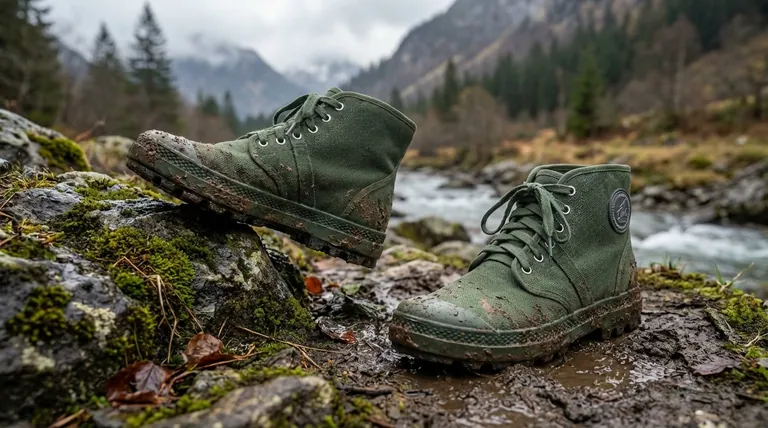
A hiking boot is an integrated system designed to protect your feet and provide a stable platform. Each feature serves a distinct purpose that becomes critical as the trail becomes more demanding.
Unmatched Stability and Ankle Support
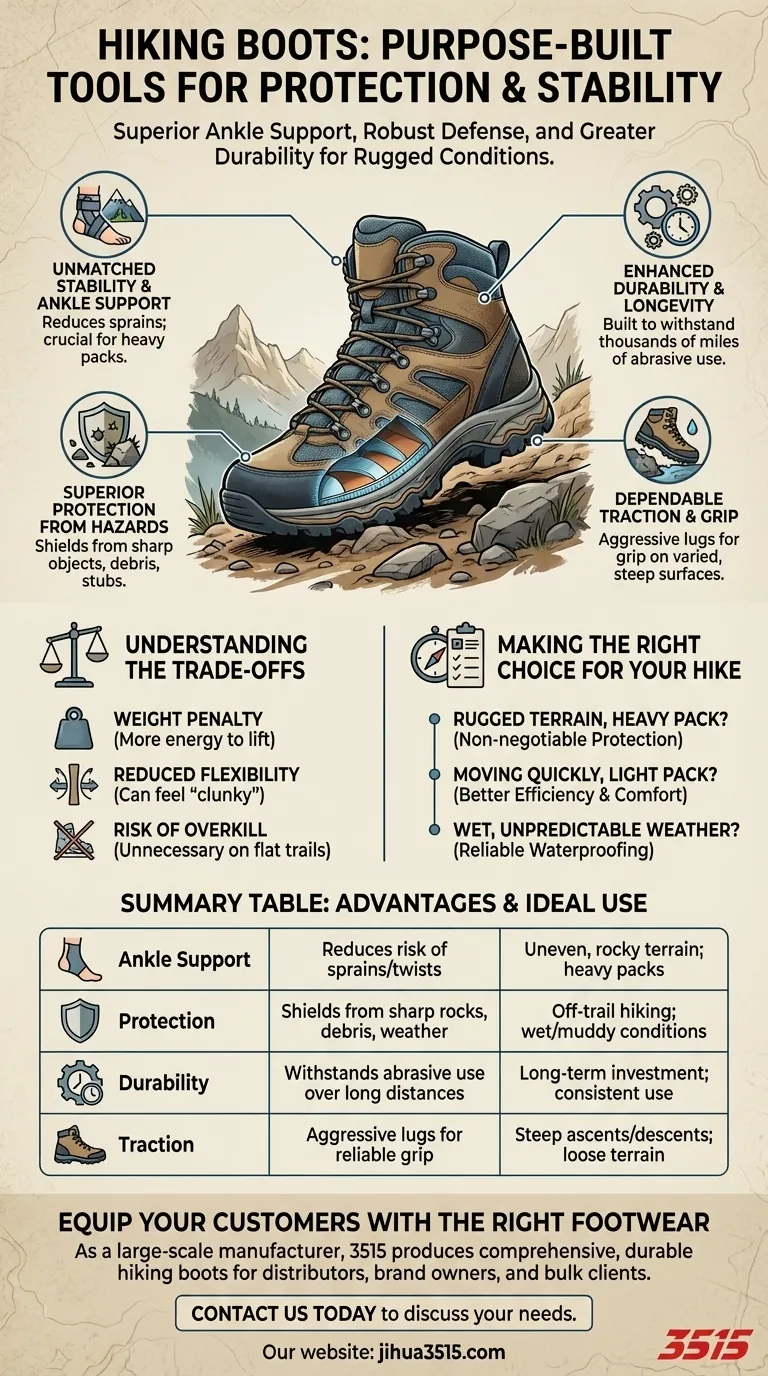
The high cuff of a hiking boot is its most recognizable feature. This design physically braces your ankle, significantly reducing the risk of sprains and twists on uneven or rocky ground.
This support becomes especially crucial when you are carrying the extra weight of a heavy pack, which can alter your center of gravity and increase strain on your joints.
Superior Protection from Hazards
Boots create a formidable barrier around your feet. The thick materials and rigid construction shield you from sharp rocks, errant branches, and thorns that could easily injure you in lighter footwear.
This protective shell also prevents trail debris like stones and twigs from getting inside, a common source of discomfort and blisters. The reinforced toe box protects you from painful stubs on rocks and roots.
Enhanced Durability and Longevity
Hiking boots are built from durable materials, often including leather, designed to withstand thousands of miles of abrasive use. Their construction is focused on longevity.
While lighter shoes may wear out after a season or two of hard use, a well-made pair of boots is a long-term investment that can handle consistent punishment.
Dependable Traction and Grip
The outsoles of hiking boots feature deep, aggressive lugs made from specialized rubber compounds. This design provides a more reliable grip on a wide variety of surfaces, from loose dirt and mud to wet rock.
This superior traction is fundamental for safety, ensuring stable footing during steep ascents and descents where a slip could be dangerous.
Understanding the Trade-offs
Choosing a hiking boot means accepting a specific set of compromises. Understanding these trade-offs is key to avoiding common pitfalls and selecting the right footwear.
The Weight Penalty
Protection and durability come at the cost of weight. Hiking boots are significantly heavier than trail runners or walking shoes, which requires more energy to lift with every step.
Over a long day of hiking, this added weight can contribute to fatigue, making them less efficient for hikers focused on covering long distances quickly on moderate terrain.
Reduced Flexibility
The same rigidity that provides support also limits the natural flex of your foot. This can make boots feel "clunky" compared to more minimalist footwear.
For some, this lack of flexibility can feel less comfortable and may even increase the likelihood of blisters if the boot does not fit perfectly.
The Risk of Overkill
On a well-maintained, dry, and relatively flat trail, a heavy-duty hiking boot is often unnecessary. The protection it offers may not be required, and its weight simply becomes a liability.
In these conditions, a lighter walking shoe or trail runner often provides a more comfortable and efficient experience without sacrificing the necessary level of protection.
Making the Right Choice for Your Hike
Your decision should be guided by an honest assessment of your intended use. Match the tool to the task for the best possible outcome in terms of both safety and comfort.
- If your primary focus is rugged terrain, off-trail hiking, or carrying a heavy pack: The superior support, protection, and durability of a hiking boot are non-negotiable.
- If your primary focus is moving quickly on well-maintained trails with a light pack: A lighter hiking shoe or trail runner will provide better comfort, less fatigue, and greater efficiency.
- If your primary focus is hiking in wet, muddy, or unpredictable weather: The waterproofing and robust construction of a hiking boot offer the most reliable protection against the elements.
Ultimately, you should choose your footwear not for the hike you imagine, but for the one you will actually take.
Summary Table:
| Advantage | Key Benefit | Ideal For |
|---|---|---|
| Ankle Support | Reduces risk of sprains and twists | Uneven, rocky terrain; heavy packs |
| Protection | Shields from sharp rocks, debris, and weather | Off-trail hiking; wet/muddy conditions |
| Durability | Built to withstand abrasive use over long distances | Long-term investment; consistent use |
| Traction | Aggressive lugs for reliable grip on varied surfaces | Steep ascents/descents; loose terrain |
Ready to equip your customers with the right footwear for the trail?
As a large-scale manufacturer, 3515 produces a comprehensive range of durable hiking boots and outdoor footwear for distributors, brand owners, and bulk clients. Our production capabilities ensure superior quality, support, and protection tailored to any terrain.
Contact us today to discuss your footwear needs and explore our extensive catalog.
Visual Guide
Related Products
- Wholesale High-Traction Camo Boots - Custom Manufacturer for Brands
- Durable Rubber Sole Outdoor Shoes Wholesale & Custom Manufacturing
- Durable Spiked Camouflage Boots Wholesale & Factory Production
- Wholesale Lightweight Tactical Boots Custom Manufacturer for Desert & Combat Use
- Durable Goodyear Welt Leather Work Boots for Wholesale & Private Label
People Also Ask
- What are the key features of the new line of camo boots? Built for Extreme Cold & Rugged Terrain
- Are camo boots necessary for hunting success? Prioritize Performance Over Pattern
- What is the technical logic behind using closed-eye testing for tactical boots? Unlocking Peak Footwear Stability
- How does the Rank Score Test identify the primary causes of premature failure in tactical and work boots? Key Insights
- What shoes to wear for a security job? Durable, Protective Footwear for Long Shifts