
In short, a good walking shoe combines five critical elements: cushioning, stability, appropriate heel drop, a flexible sole, and a proper fit. These features work together to provide comfort, absorb impact, and prevent injuries during your walk, ensuring the shoe supports your foot's natural motion rather than fighting against it.
The central goal is not to find a single "best" shoe, but to understand the key components so you can choose a shoe that matches your specific foot mechanics, walking style, and comfort preferences.
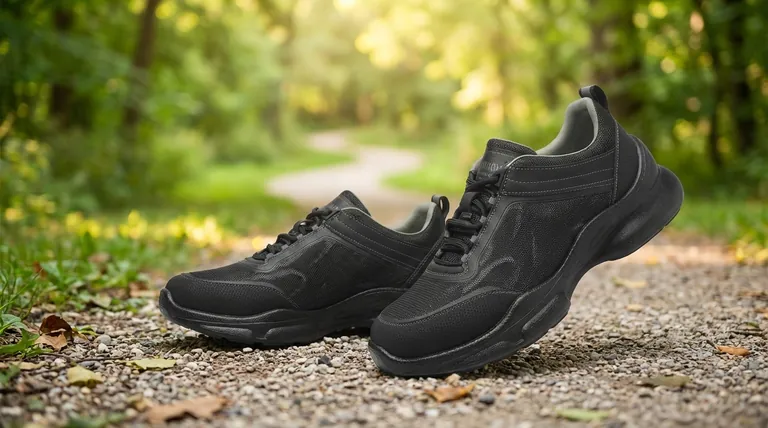
Deconstructing the Ideal Walking Shoe
A walking shoe is more than just a piece of footwear; it's a piece of equipment engineered for a specific motion. Unlike running shoes, which are built for high-impact forward propulsion, walking shoes are designed to support a gentler, heel-to-toe rolling motion.
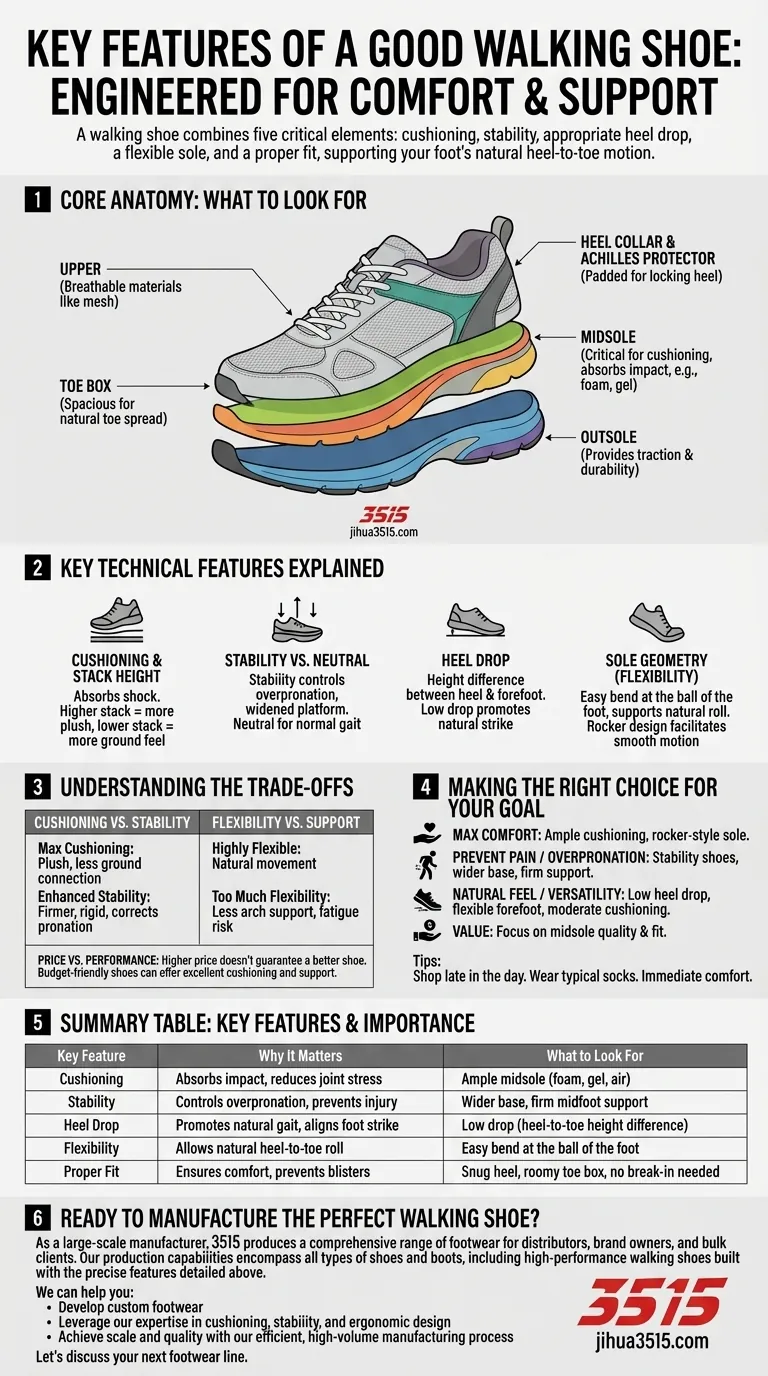
Core Anatomy: What to Look For
- Midsole: This is the most critical feature for comfort. It's the layer between the insole and the outsole, typically made of foam, gel, or air pockets, responsible for cushioning and reducing impact.
- Outsole: This is the bottom of the shoe that contacts the ground. A good outsole provides traction and durability without being overly stiff.
- Upper: This is the fabric or material part of the shoe that holds your foot. Look for breathable materials like mesh or synthetics to keep your feet comfortable.
- Heel Collar & Achilles Protector: These are the padded areas around the ankle. They lock your heel in place to prevent slipping and reduce stress on the Achilles tendon.
- Toe Box: This is the front part of the shoe where your toes sit. It must be spacious enough for your toes to wiggle and spread out naturally.
Key Technical Features Explained
- Cushioning & Stack Height: Cushioning absorbs the shock of each step. It can be soft or firm, based on preference. Stack height refers to the amount of material between your foot and the ground—higher stacks offer more cushioning, while lower stacks provide more ground feel.
- Stability vs. Neutral: Stability shoes have features (like a widened platform or denser foam) to help control overpronation (when your foot rolls too far inward). Neutral shoes are for those with a normal gait.
- Heel Drop: This is the height difference between the heel and the forefoot. Most walking shoes have a low heel drop, which promotes a more natural midfoot or forefoot strike, aligning with the walking gait. -- Sole Geometry (Flexibility): A walking shoe should bend easily at the ball of the foot, not the arch. This flexibility is crucial for allowing the natural roll of your foot from heel to toe. Some shoes use a "rocker" design to help facilitate this motion smoothly.
Understanding the Trade-offs
Choosing a shoe involves balancing competing priorities. There is no single shoe that excels in every category for every person.
Cushioning vs. Stability
- Maximum cushioning often feels plush and comfortable, but it can sometimes reduce your foot's connection to the ground and feel less stable.
- Enhanced stability features, designed to correct pronation, can make a shoe feel firmer and more rigid, which may not be comfortable for those with a neutral gait.
Flexibility vs. Support
- A highly flexible shoe allows for natural foot movement, which is excellent for walking.
- However, too much flexibility can mean less arch support, which may lead to fatigue or strain for individuals who need it.
Price vs. Performance
- A higher price doesn't always guarantee a better shoe for you.
- Many budget-friendly shoes offer excellent cushioning and support by focusing on core features and using slightly less premium materials for the upper.
Making the Right Choice for Your Goal
When you shop, remember to do so late in the day when your feet are slightly swollen. Wear the type of socks you typically walk in to ensure a true fit. The shoe should feel comfortable immediately without needing a "break-in" period.
- If your primary focus is maximum comfort for long walks: Prioritize a shoe with ample midsole cushioning and a rocker-style sole to make each step feel smoother.
- If your primary focus is preventing foot pain or managing overpronation: Look specifically for "stability" shoes with a wider base and firm support through the midsole.
- If your primary focus is a natural feel and versatility: Choose a shoe with a low heel drop, a flexible forefoot, and a moderate amount of cushioning.
- If your primary focus is value: Focus on the midsole quality and overall fit, as these impact comfort more than expensive upper materials.
Ultimately, the best walking shoe is the one that disappears on your foot, allowing you to focus on the walk itself.
Summary Table:
| Key Feature | Why It Matters | What to Look For |
|---|---|---|
| Cushioning | Absorbs impact, reduces joint stress | Ample midsole (foam, gel, air) |
| Stability | Controls overpronation, prevents injury | Wider base, firm midfoot support |
| Heel Drop | Promotes natural gait, aligns foot strike | Low drop (heel-to-toe height difference) |
| Flexibility | Allows natural heel-to-toe roll | Easy bend at the ball of the foot |
| Proper Fit | Ensures comfort, prevents blisters | Snug heel, roomy toe box, no break-in needed |
Ready to Manufacture the Perfect Walking Shoe?
As a large-scale manufacturer, 3515 produces a comprehensive range of footwear for distributors, brand owners, and bulk clients. Our production capabilities encompass all types of shoes and boots, including high-performance walking shoes built with the precise features detailed above.
We can help you:
- Develop custom footwear tailored to your brand and target market.
- Leverage our expertise in cushioning, stability, and ergonomic design.
- Achieve scale and quality with our efficient, high-volume manufacturing process.
Let's discuss your next footwear line. Contact our team today to get started.
Visual Guide
Related Products
- Durable Rubber Sole Outdoor Shoes Wholesale & Custom Manufacturing
- Wholesale Durable Camouflage Canvas Shoes with High-Traction Cleated Rubber Sole
- Advanced KPU Athletic Safety Shoe with Steel Toe Cap Anti-Slip Rotary Lacing System
- Premium Suede Sport Safety Shoes for Wholesale & Bulk Orders
- Wholesale Comfortable Business Casual Shoes Custom Manufacturing
People Also Ask
- What is the function of the sole in outdoor shoes? Find the Perfect Grip and Support
- What role do outdoor shoes and sneakers play in navigating external terrains? Engineered Stability for Every Surface
- How is AI utilized in the design of outdoor and safety footwear? Harnessing Big Data for Market-Driven Shoe Innovation
- Why is durability important when selecting outdoor shoes? A Guide to Safety & Long-Term Value
- What are the key components of outdoor shoes that affect comfort and sturdiness? A Guide to Durable, High-Performance Footwear



















