
For professions that require extensive standing, the best shoes are those that successfully blend job-specific safety features with fundamental principles of ergonomic support. While features like steel toes or chemical resistance are critical for certain environments, the core elements of a proper fit, slight heel elevation, and adequate room for natural foot swelling are universally essential for preventing pain and fatigue.
The ideal work shoe is not a single model but a careful balance of two distinct needs: the specific safety requirements of your job and the non-negotiable ergonomic support required to protect your body from the strain of standing all day.
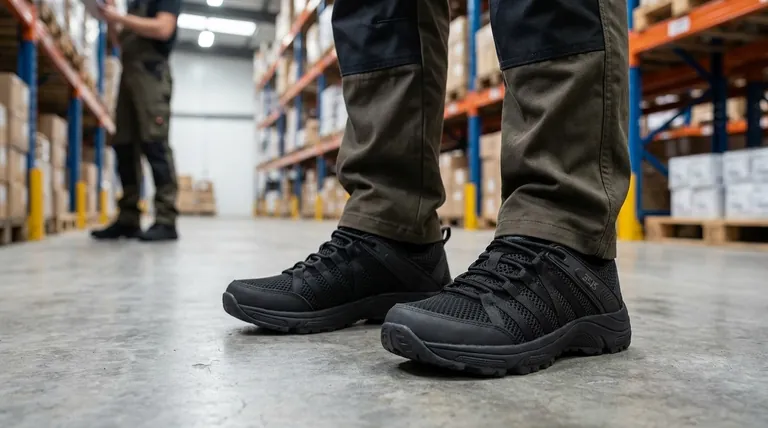
The Two Pillars of a Proper Work Shoe
To make an informed decision, you must evaluate footwear based on two separate but equally important criteria. Neglecting either one can lead to discomfort, decreased productivity, or serious injury.
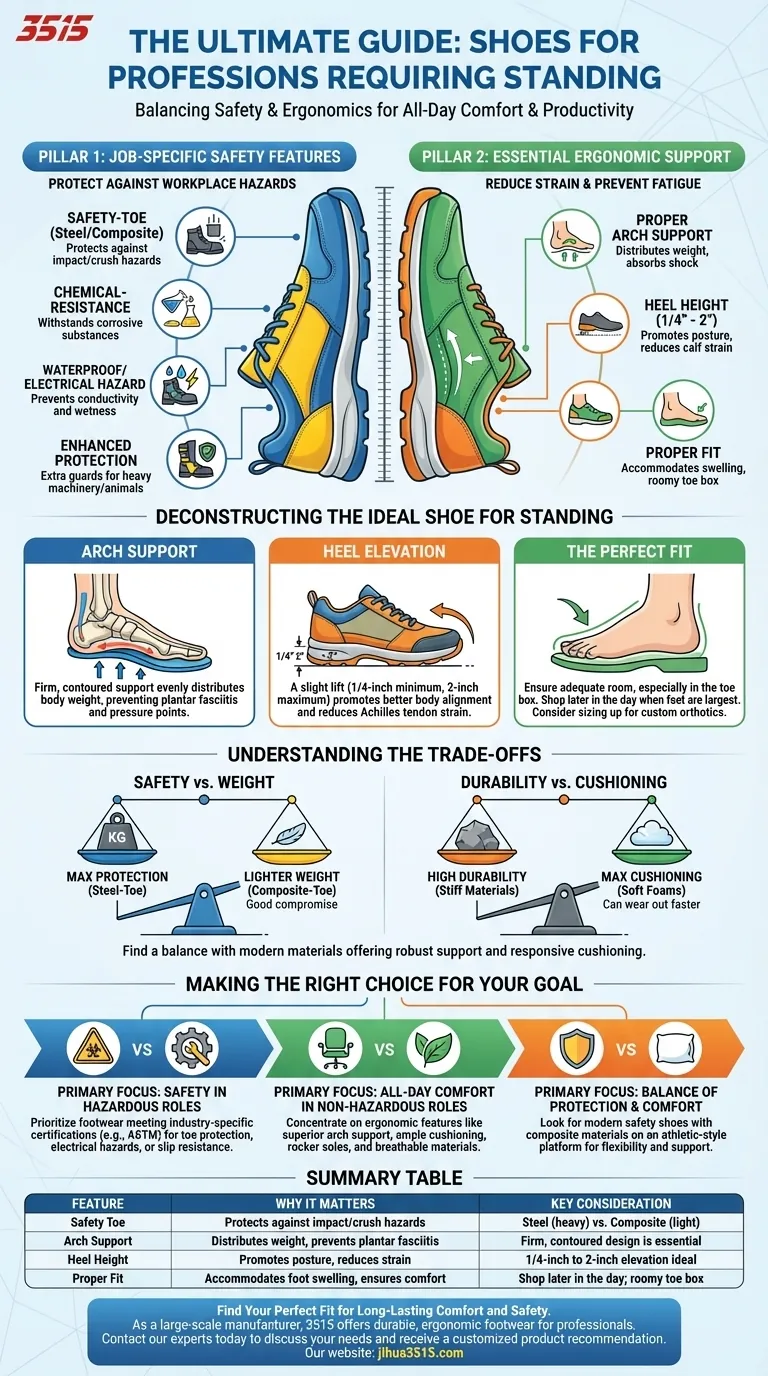
Pillar 1: Job-Specific Safety Features
Your work environment dictates the necessary protective elements of your shoes. These are non-negotiable features designed to mitigate specific workplace hazards.
Key examples include:
- Safety-Toe: Steel or composite-toe caps are essential in roles with a risk of falling objects or crushing incidents.
- Chemical-Resistance: Professionals in laboratory or industrial settings need boots made from materials that can withstand exposure to corrosive substances.
- Waterproof Construction: This is critical for electrical workers to prevent conductivity and for anyone working in wet conditions.
- Enhanced Protection: Roles involving large animals or heavy machinery may require extra metatarsal guards or reinforced toe boxes.
Pillar 2: Essential Ergonomic Support
This pillar focuses on the shoe's structure and how it supports your body's alignment and comfort over a long day. These principles apply to every professional who stands, regardless of their industry.
A shoe with proper ergonomic support actively works to reduce muscle strain, prevent foot pain, and minimize fatigue in your legs and lower back.
Deconstructing the Ideal Shoe for Standing
Beyond broad categories, the specific construction of the shoe is what determines its long-term comfort and viability. Pay close attention to these structural details.
The Importance of Proper Arch Support
The arch of your foot acts as a natural shock absorber. A shoe with firm, contoured arch support helps distribute your body weight evenly across your foot, reducing pressure points and preventing conditions like plantar fasciitis.
Why Heel Height Matters
An ideal shoe for standing should have a slight heel-to-toe drop. The references suggest a heel height that is at least 1/4-inch elevated but no more than two inches high.
This slight elevation promotes better posture and reduces strain on the Achilles tendon and calf muscles compared to a completely flat shoe.
The Critical Role of a Proper Fit
A shoe that is too tight can restrict circulation and cause significant pain, especially as your feet naturally swell throughout the workday.
Always ensure there is adequate room in the toe box. It is often recommended to shop for work shoes later in the day when your feet are at their largest. If you use custom orthotics, consider buying a half-size larger to accommodate them without crowding your foot.
Understanding the Trade-offs
Choosing the right shoe often involves balancing competing priorities. It's crucial to understand the potential compromises.
Safety vs. Weight
Maximum protection often comes with a cost: weight. Traditional steel-toe boots offer incredible protection but can be heavy, leading to increased leg fatigue by the end of a shift.
Lighter composite-toe alternatives can provide certified protection with less weight, offering a good compromise for many roles.
Durability vs. Cushioning
Highly durable outsole materials, designed to resist abrasion and chemicals, can sometimes be stiff and less forgiving. In contrast, shoes with maximum cushioning may use softer foams that can wear out more quickly.
The key is to find a shoe that uses modern materials to provide both robust support and responsive cushioning, avoiding the extremes of being rock-hard or overly soft.
Making the Right Choice for Your Goal
Your final decision should be guided by the unique demands of your profession and your personal comfort needs.
- If your primary focus is safety in a hazardous environment: Prioritize footwear that meets or exceeds your industry's specific safety certifications (e.g., ASTM ratings) for toe protection, electrical hazards, or slip resistance.
- If your primary focus is all-day comfort in a non-hazardous role: Concentrate on ergonomic features like superior arch support, ample cushioning, a rocker-style sole, and lightweight, breathable materials.
- If your primary focus is a balance of protection and comfort: Look for modern safety shoes that use composite materials for protection and are built on an athletic-style platform to provide both flexibility and support.
Ultimately, investing in the right footwear is a direct investment in your long-term health and your ability to perform your job effectively and without pain.
Summary Table:
| Feature | Why It Matters | Key Consideration |
|---|---|---|
| Safety Toe | Protects against impact/crush hazards | Steel (heavy) vs. Composite (light) |
| Arch Support | Distributes weight, prevents plantar fasciitis | Firm, contoured design is essential |
| Heel Height | Promotes posture, reduces strain | 1/4-inch to 2-inch elevation ideal |
| Proper Fit | Accommodates foot swelling, ensures comfort | Shop later in the day; roomy toe box |
Find Your Perfect Fit for Long-Lasting Comfort and Safety
As a large-scale manufacturer, 3515 produces a comprehensive range of footwear specifically designed for professionals who stand all day. We offer durable, ergonomic solutions for distributors, brand owners, and bulk clients—from safety-toe boots with advanced cushioning to lightweight athletic-style work shoes.
Let us help you equip your team with footwear that combines job-specific protection with all-day comfort. Contact our experts today to discuss your needs and receive a customized product recommendation.
Visual Guide
Related Products
- Wholesale Durable Camouflage Canvas Shoes with High-Traction Cleated Rubber Sole
- Premium Suede Sport Safety Shoes for Wholesale & Bulk Orders
- Durable Rubber Sole Outdoor Shoes Wholesale & Custom Manufacturing
- Advanced KPU Athletic Safety Shoe with Steel Toe Cap Anti-Slip Rotary Lacing System
- Custom OEM Training Shoes Wholesale Manufacturer Durable & Breathable
People Also Ask
- Why is the selection of high-strength fabric materials necessary in the production of canvas shoes and training shoes?
- What are the properties of canvas as a shoe material? A Guide to Lightweight Comfort & Style
- Can canvas shoes be worn in rainy conditions? The Truth About Water Resistance
- What are some examples of vulcanized shoes? Discover the Flexibility and Board Feel of Classic Sneakers
- What are the characteristics of canvas as a shoe material? A Guide to Lightweight, Breathable Footwear



















