
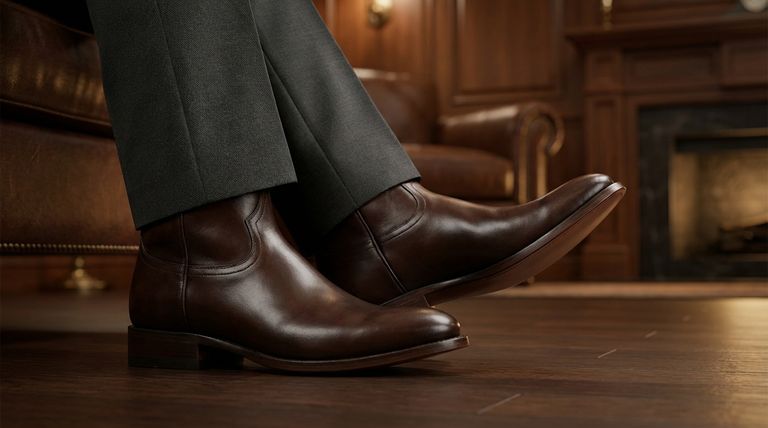
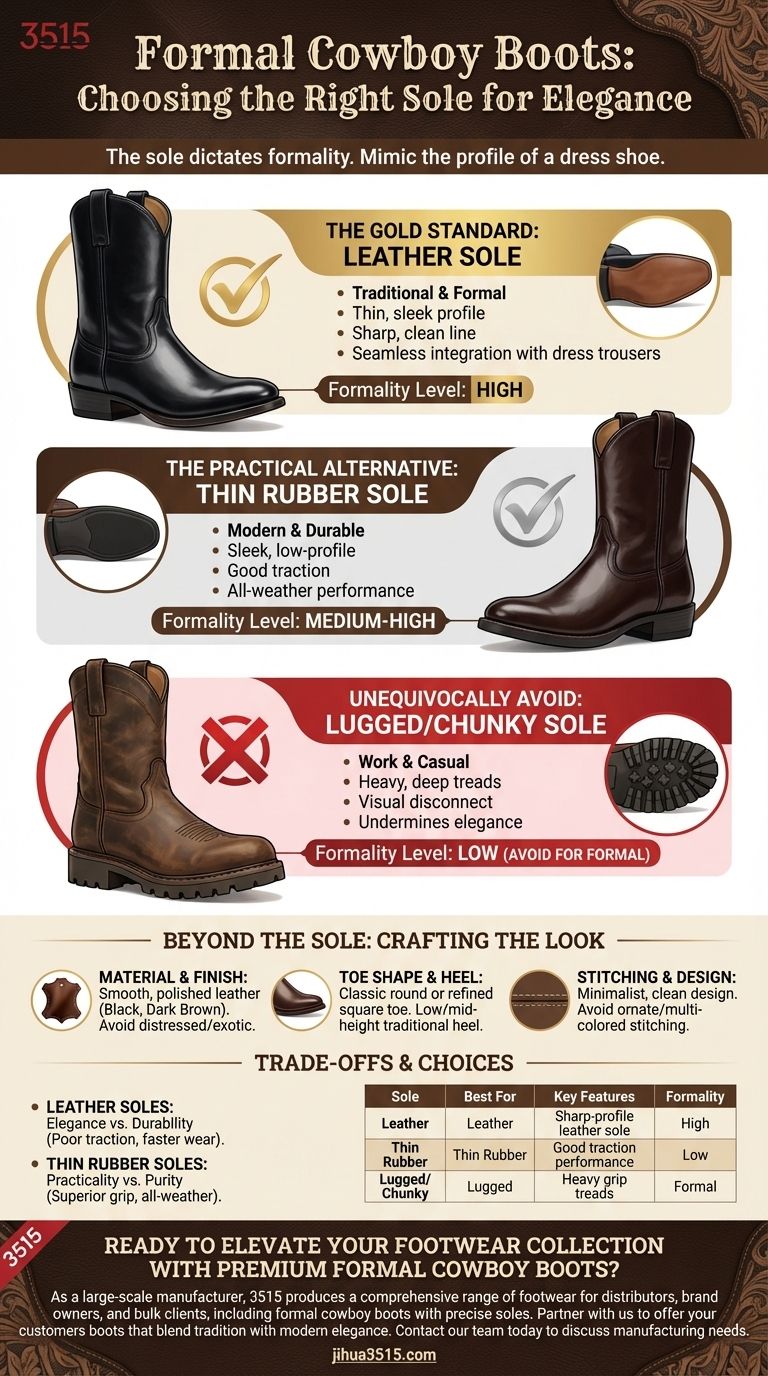
For formalwear, your cowboy boots must have a sleek, low-profile sole. The most appropriate and traditional choice is a classic leather sole. A thin, smooth rubber sole is an acceptable modern alternative, but you must avoid any sole that is chunky, heavy, or has deep treads, as these are hallmarks of casual or work boots.
The core principle is simple: to make a cowboy boot formal, its profile must mimic that of a dress shoe. A slim, elegant sole is the foundation for this transformation, shifting the boot's identity from rugged tool to refined accessory.
Why the Sole Dictates Formality
The sole is the literal foundation of the boot, and it defines its entire silhouette. A thick, heavy sole creates a utilitarian, grounded look, while a thin sole creates a sleeker, more elegant profile suitable for pairing with tailored clothing.
The Gold Standard: Leather Soles
A classic leather sole is the most traditional and formal option available. It's thin, light, and creates a sharp, clean line that integrates seamlessly with dress trousers or a suit. This is the cowboy boot equivalent of the sole on a high-quality dress shoe.
The Practical Alternative: Thin Rubber Soles
Modern bootmaking allows for very thin, durable rubber soles that do not add significant bulk. If you need better traction and weather resistance, a smooth, low-profile rubber sole can be an excellent and perfectly acceptable choice for formal settings. The key is that it remains discreet.
What to Unequivocally Avoid: Lugged Soles
Heavy, chunky, or lugged rubber soles are designed for work, mud, and uneven terrain. Their entire purpose is functional and rugged. Pairing this type of sole with formalwear creates a visual disconnect and undermines the intended elegance of your outfit.
Beyond the Sole: Crafting a Formal Look
A perfect sole is necessary, but it's not sufficient. The entire boot must align with a formal aesthetic to be successful.
Material and Finish
Choose boots made from smooth, polished leather, such as calfskin. Black is the most formal color, followed by dark brown. Avoid distressed finishes, exotic leathers, or rough-out textures, which read as more casual.
Toe Shape and Heel
A classic round toe or a refined square toe offers a more polished and versatile look than an overly pointed or snip toe. Stick to a low or mid-height heel with a traditional profile for stability and a classic appearance.
Stitching and Design
Minimalism is key. Opt for boots with simple, clean designs and minimal stitching. Ornate, multi-colored stitching is a hallmark of more casual or celebratory boots, not formal ones.
Understanding the Trade-offs
Choosing the right sole involves balancing classic style with modern practicality.
Leather Soles: Elegance vs. Durability
Leather offers unmatched elegance and a traditional aesthetic. However, it provides poor traction on wet or smooth surfaces and will wear down faster than rubber, requiring more maintenance and eventual resoling.
Thin Rubber Soles: Practicality vs. Purity
A thin rubber sole provides superior grip, durability, and all-weather performance. While a purist might favor leather, a well-made, sleek rubber sole offers undeniable functional benefits without significantly compromising the boot's formal appearance.
Making the Right Choice for Your Goal
Select your boot based on the specific demands of the occasion.
- If your primary focus is maximum formality and tradition (e.g., a formal wedding or "Western chic" gala): A polished black or dark brown boot with a classic leather sole is the definitive choice.
- If your primary focus is a blend of formality and all-day practicality (e.g., a business environment or an event with variable weather): A boot with a sleek, thin rubber sole provides confidence and comfort without sacrificing style.
- If you are attempting to dress up a work boot: This is not advisable, as fundamental design elements like a lugged sole are inherently casual and cannot be made formal.
Ultimately, choosing the right sole is the critical first step in elevating a cowboy boot from rugged wear to refined formalwear.
Summary Table:
| Sole Type | Best For | Key Features | Formality Level |
|---|---|---|---|
| Leather Sole | Maximum tradition & elegance | Thin, light, sharp profile | High |
| Thin Rubber Sole | Practicality & all-weather wear | Sleek, durable, good traction | Medium-High |
| Lugged/Chunky Sole | Work & casual settings | Heavy, deep treads, rugged | Low (Avoid for formal) |
Ready to Elevate Your Footwear Collection with Premium Formal Cowboy Boots?
As a large-scale manufacturer, 3515 produces a comprehensive range of footwear for distributors, brand owners, and bulk clients. Our production capabilities encompass all types of shoes and boots, including formal cowboy boots with the precise leather or thin rubber soles detailed in this guide. We ensure high-quality materials, expert craftsmanship, and styles that meet the demands of formal and business attire.
Partner with us to offer your customers boots that perfectly blend tradition with modern elegance. Contact our team today to discuss your manufacturing needs and elevate your product line.
Visual Guide
Related Products
- Wholesale High-Traction Camo Boots - Custom Manufacturer for Brands
- High-Traction Suede Tactical Boots Wholesale & Custom Manufacturing
- Wholesale Lightweight Tactical Boots Custom Manufacturer for Desert & Combat Use
- Durable Leather Tactical Boots Wholesale & Custom Manufacturing for Brands
- Wholesale Durable Mid-Cut Tactical Boots for Custom & Private Label Brands
People Also Ask
- What are the key features of the new line of camo boots? Built for Extreme Cold & Rugged Terrain
- Are camo boots necessary for hunting success? Prioritize Performance Over Pattern
- How does the Rank Score Test identify the primary causes of premature failure in tactical and work boots? Key Insights
- What is the technical logic behind using closed-eye testing for tactical boots? Unlocking Peak Footwear Stability
- What shoes to wear for a security job? Durable, Protective Footwear for Long Shifts


















