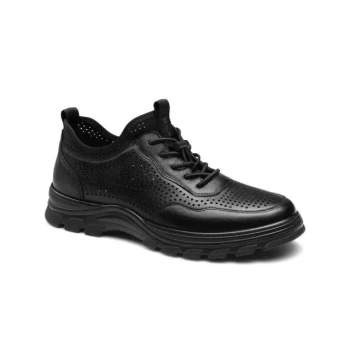
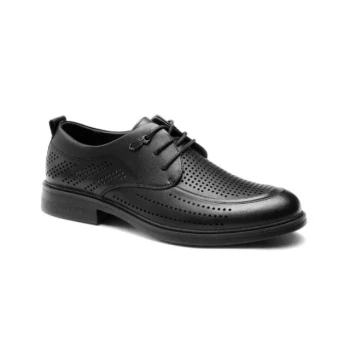
At its core, extending the lifespan of your dress shoes is about protecting an investment. More than just footwear, quality dress shoes represent a significant commitment to craftsmanship, personal comfort, and your professional image. Proper care ensures this investment maintains its value, appearance, and function for years, not just seasons.
The effort to maintain dress shoes is not merely cosmetic. It is a strategic practice that preserves their structural integrity, enhances long-term comfort, and reinforces the very professionalism they are designed to project.
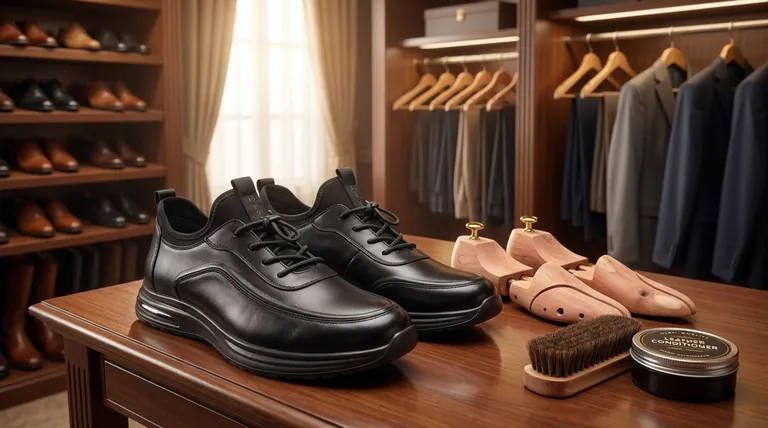
The True Value of a Well-Maintained Shoe
Understanding why preservation matters requires looking at a quality dress shoe as more than just an accessory. It's a foundational piece of your wardrobe and a tool for daily comfort.
An Investment in Craftsmanship
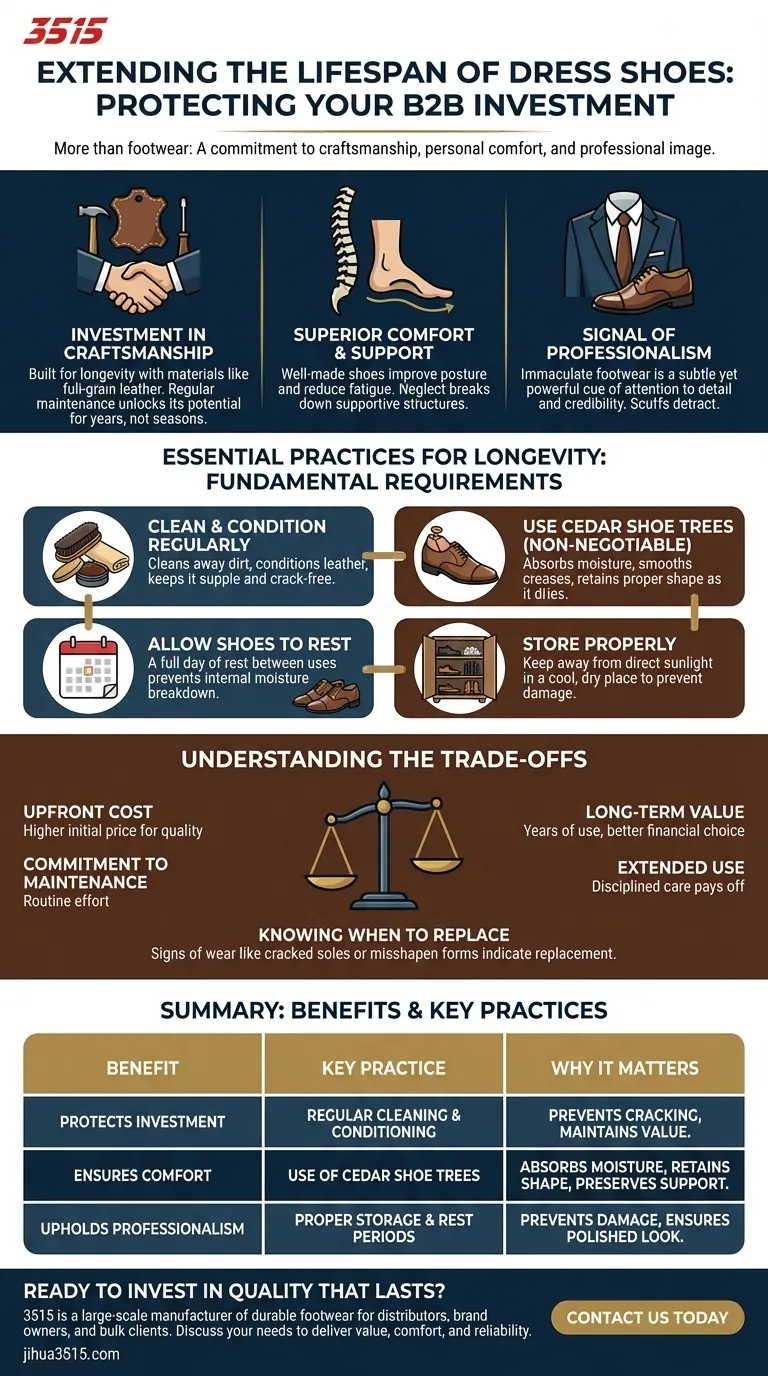
High-quality dress shoes are often made from materials like full-grain leather, which is durable but requires care to thrive. This craftsmanship is built for longevity, and regular maintenance is the key to unlocking that potential.
Superior Comfort and Support
Well-made shoes provide better support, which can improve posture and reduce fatigue throughout the day. Neglecting them allows the supportive structures to break down, diminishing the comfort you paid for.
A Signal of Professionalism
Your shoes are a subtle but powerful signal of your attention to detail. Scuffed, cracked, or misshapen shoes can detract from an otherwise polished appearance, while well-maintained footwear enhances your credibility.
Essential Practices for Longevity
A few simple, consistent habits are all that is required to dramatically extend the life of your footwear. These are not suggestions; they are fundamental requirements for protecting your investment.
Clean and Condition Regularly
Regular cleaning and polishing do more than just make shoes shine. This process cleans away damaging dirt and conditions the leather, keeping it supple and preventing it from cracking.
The Non-Negotiable Use of Shoe Trees
A cedar shoe tree is the single most important tool for shoe care. It absorbs damaging moisture, smooths out creases, and, most importantly, helps the shoe retain its proper shape as it dries.
Allow Shoes to Rest
Leather needs time to dry out completely after a day of wear. Giving your shoes a full day of rest between uses is critical to preventing moisture from breaking down the material from the inside out.
Store Them Properly
When not in use, keep your shoes in a cool, dry place away from direct sunlight. This simple step prevents moisture damage, mold, and deterioration of the materials.
Understanding the Trade-offs
While the benefits are clear, a realistic approach acknowledges the commitments involved.
The Upfront Cost vs. Long-Term Value
Quality shoes have a higher initial price. However, a few well-made pairs that last for years are a far better financial and practical choice than a cycle of buying and discarding numerous lower-quality options.
The Commitment to Maintenance
Preserving your shoes requires a routine. While the effort is minimal—a few minutes a week—it must be consistent. This discipline is the trade-off for years of extended use.
Knowing When to Replace Them
Even the best-cared-for shoes have a finite life. When you see significant signs of wear, such as cracked soles, warped shaping that shoe trees can't fix, or an exposed toe cap, it is time for a replacement.
How to Apply This to Your Goal
Your approach to shoe care should align with your primary motivation.
- If your primary focus is maximizing your financial investment: See shoe care as a non-negotiable routine that turns a significant purchase into a long-term asset, drastically lowering your cost-per-wear.
- If your primary focus is professional presence: Understand that immaculate footwear is a critical, non-verbal cue of your diligence and attention to detail.
- If your primary focus is personal comfort: Recognize that proper maintenance preserves the shoe's supportive structure, directly impacting your posture and reducing fatigue throughout the day.
Ultimately, caring for your dress shoes is a simple discipline that pays remarkable dividends in value, comfort, and confidence.
Summary Table:
| Benefit | Key Practice | Why It Matters |
|---|---|---|
| Protects Investment | Regular Cleaning & Conditioning | Prevents leather from cracking, maintaining value and appearance. |
| Ensures Comfort | Use of Cedar Shoe Trees | Absorbs moisture, retains shape, and preserves supportive structures. |
| Upholds Professionalism | Proper Storage & Rest Periods | Prevents damage, ensuring shoes always look polished and credible. |
Ready to invest in quality that lasts?
As a large-scale manufacturer, 3515 produces a comprehensive range of durable footwear for distributors, brand owners, and bulk clients. Our production capabilities encompass all types of professional shoes and boots, built with the craftsmanship that stands the test of time.
Contact us today to discuss your footwear needs and discover how we can deliver value, comfort, and reliability to your business.
Visual Guide
Related Products
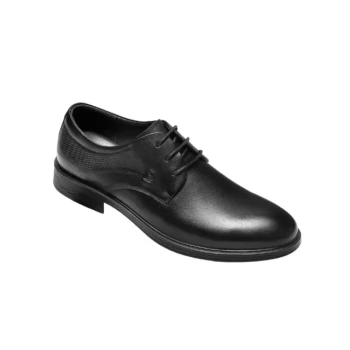
- Classic Leather Derby Dress Shoes Wholesale & Custom Manufacturing
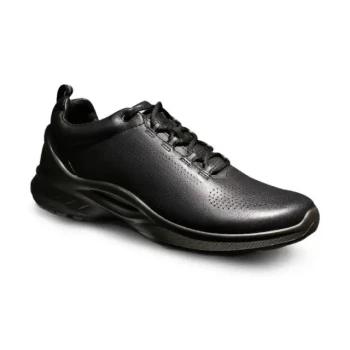
- Wholesale Comfort Dress Shoes with Dial Closure for Custom Manufacturing
- Wholesale Leather Derby Dress Shoes Custom Manufacturer for Brands
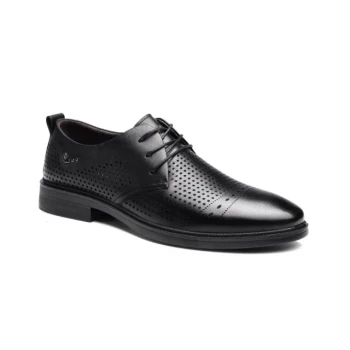
- Wholesale Perforated Comfort Dress Shoes | Custom Derby Shoe Manufacturer
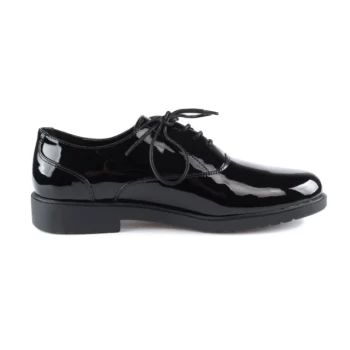
- Wholesale Patent Oxford Dress Shoes | Custom & Bulk Manufacturing
People Also Ask
- How often should leather dress shoes be cleaned and polished? A 3-Tier Care Guide for Longevity
- How can you remove salt stains from leather dress shoes? Save Your Shoes with a Simple Vinegar Solution
- What are the basic steps to clean leather dress shoes? A Guide to Preserving Your Investment
- How should you dry wet leather dress shoes? A Step-by-Step Guide to Save Your Investment
- What historical figure is associated with the Derby shoe? The Earl of Derby's Comfort Revolution