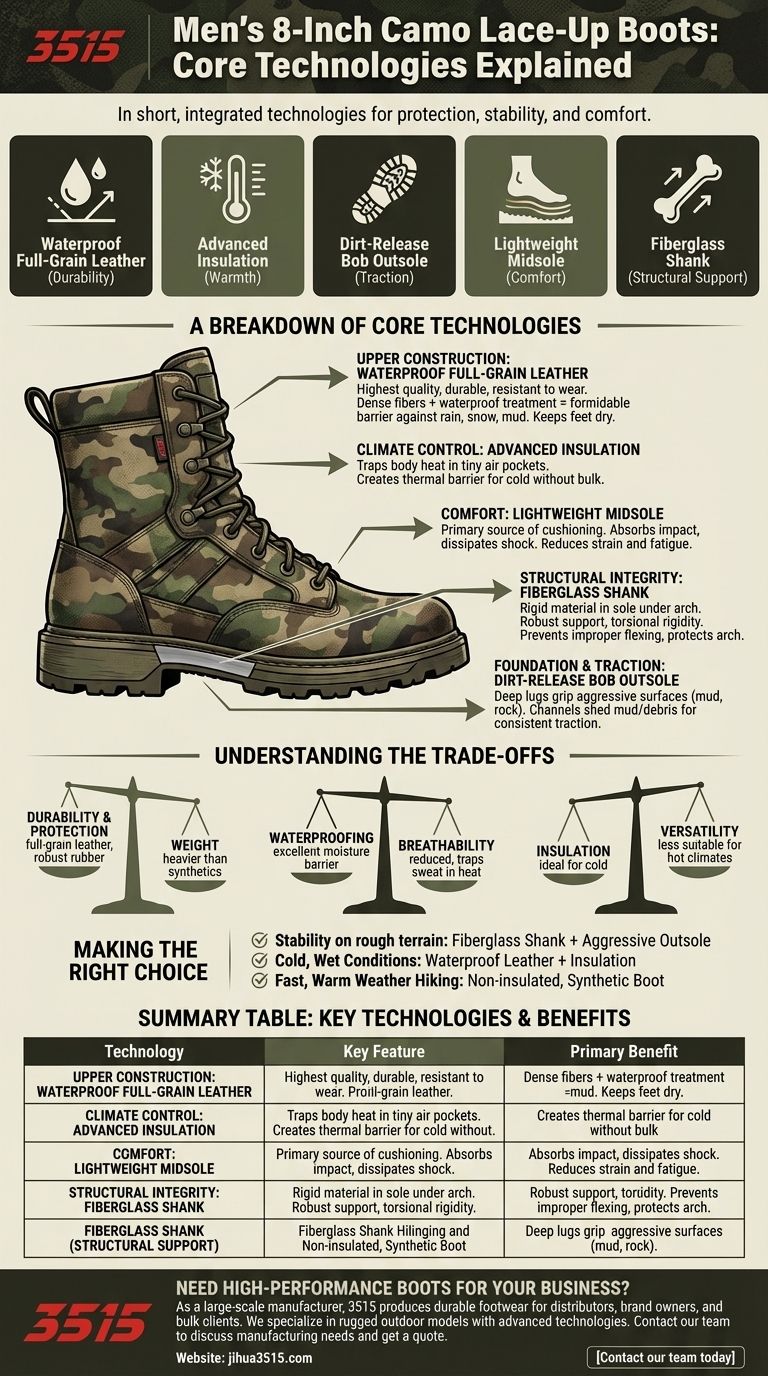
In short, these boots integrate five key technologies: They are constructed with waterproof full-grain leather, feature internal insulation for warmth, a dirt-release rubber bob outsole for traction, a lightweight midsole for cushioning, and a fiberglass shank for structural support.
The core principle behind this boot's design is not just a collection of materials, but an integrated system. Each technology works in concert to deliver protection, stability, and comfort in demanding outdoor environments.
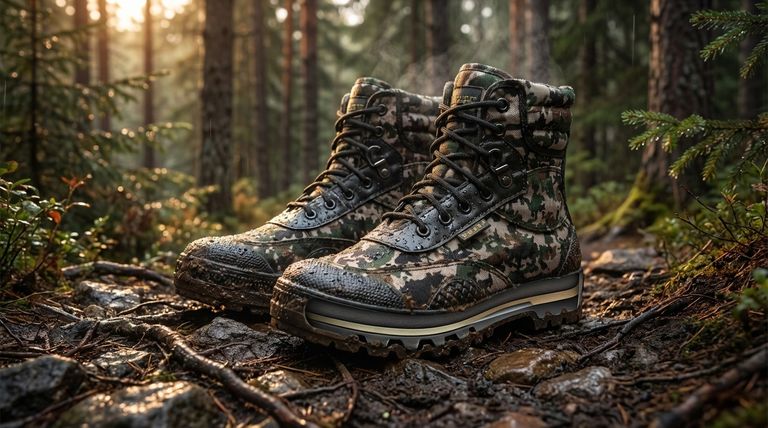
A Breakdown of the Core Technologies
Understanding how each component functions is key to appreciating the boot's overall performance. These technologies are designed to address specific challenges encountered in the field, from weather to terrain.
Upper Construction: Waterproof Full-Grain Leather
Full-grain leather is the highest quality grade of leather, known for its exceptional durability and resistance to wear.
Its dense fiber structure provides natural water resistance. When treated with modern waterproofing methods, it creates a formidable barrier against rain, snow, and mud, keeping your feet dry.
Climate Control: Advanced Insulation
The boot includes a dedicated insulation layer. This material works by trapping tiny pockets of air, which are then warmed by your body heat.
This creates a thermal barrier that prevents the cold from penetrating the boot, making it suitable for use in colder conditions without excessive bulk.
Foundation & Traction: The Dirt-Release Outsole
The outsole is the part of the boot that makes direct contact with the ground. A "bob" pattern features large, deep lugs designed to grip aggressively on soft or uneven surfaces like mud, dirt, and rock.
A dirt-release design means the channels between these lugs are shaped to shed mud and debris as you walk, maintaining consistent traction.
Comfort & Shock Absorption: The Lightweight Midsole
Situated between the outsole and your foot, the midsole is the primary source of cushioning.
Its purpose is to absorb impact and dissipate shock, reducing the strain on your feet and joints during long treks over hard terrain. Using a lightweight material is critical for minimizing fatigue.
Structural Integrity: The Fiberglass Shank
A shank is a rigid piece of material placed in the sole of the boot, typically under the arch of your foot.
Using fiberglass provides robust support and torsional rigidity without the weight of a traditional steel shank. This prevents the boot from flexing in the wrong places, protecting your arch from strain and sharp objects underfoot.
Understanding the Trade-offs
No single piece of equipment is perfect for every scenario. True expertise comes from knowing the inherent compromises in any design.
Durability vs. Weight
The use of full-grain leather and a robust rubber outsole provides maximum durability and protection. However, these materials are inherently heavier than the synthetic fabrics found in lighter trail boots or shoes.
Waterproofing vs. Breathability
A fully waterproof boot is excellent at keeping external moisture out. The trade-off is often reduced breathability, meaning it can trap sweat and heat in very warm or high-exertion conditions.
Insulation and Versatility
The inclusion of insulation makes these boots ideal for cool or cold weather. This same feature makes them less suitable for use in hot climates, where they can cause your feet to overheat.
Making the Right Choice for Your Goal
To determine if this boot's technology aligns with your needs, consider your primary use case.
- If your primary focus is stability on rough, uneven terrain: The combination of the fiberglass shank and the aggressive bob outsole provides the critical support and traction you need.
- If your primary focus is hunting or working in cold, wet conditions: The waterproof leather and dedicated insulation layer make this an excellent choice for keeping you warm and dry.
- If your primary focus is fast, lightweight hiking in warm weather: You may find a non-insulated boot with more synthetic, breathable materials to be a more comfortable option.
Ultimately, this boot is engineered as a specialized tool for navigating treacherous terrain with confidence and protection.
Summary Table:
| Technology | Key Feature | Primary Benefit |
|---|---|---|
| Upper Construction | Waterproof Full-Grain Leather | Durability & Weather Protection |
| Climate Control | Advanced Insulation | Warmth in Cold Conditions |
| Foundation & Traction | Dirt-Release Bob Outsole | Aggressive Grip & Mud Shedding |
| Comfort | Lightweight Midsole | Shock Absorption & Reduced Fatigue |
| Structural Integrity | Fiberglass Shank | Arch Support & Torsional Rigidity |
Need High-Performance Boots for Your Business?
As a large-scale manufacturer, 3515 produces a comprehensive range of durable footwear for distributors, brand owners, and bulk clients. Our production capabilities encompass all types of specialized boots, including rugged outdoor models built with the advanced technologies detailed above. We can help you deliver superior quality and performance to your customers.
Contact our team today to discuss your manufacturing needs and get a quote.
Visual Guide
Related Products
- Wholesale Durable Leather Work Boots | 8-Inch Goodyear Welt Manufacturer
- Wholesale High-Traction Camo Boots - Custom Manufacturer for Brands
- Wholesale Durable Camouflage Canvas Shoes with High-Traction Cleated Rubber Sole
- Wholesale Classic Leather Lace-Up Ankle Boots for Brand Manufacturing
- Premium Wholesale Tactical Style Safety Shoes Boots with Quick Lacing
People Also Ask
- What is the difference between full-grain and top-grain leather? Premium Material Guide for Boot Manufacturers
- What is the complete process for deep cleaning leather work boots? A Step-by-Step Guide to Preserve Your Investment
- Why is it important to waterproof leather work boots? Protect Your Investment and Performance
- What are the advantages of leather as an upper material for work boots? Unmatched Durability & Custom Comfort
- What are the key qualities of leather for work boots? Superior Durability, Breathability & Custom Fit