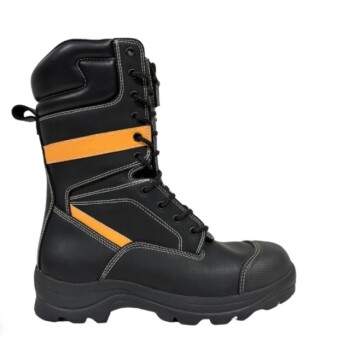
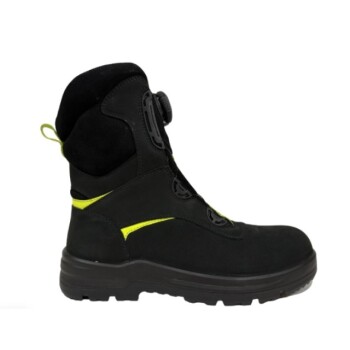
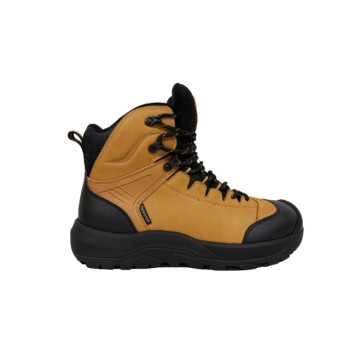
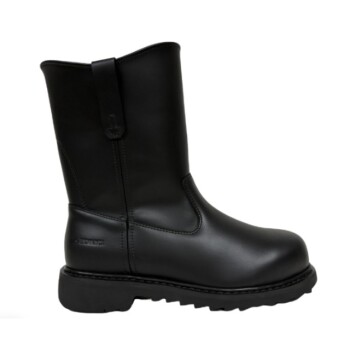
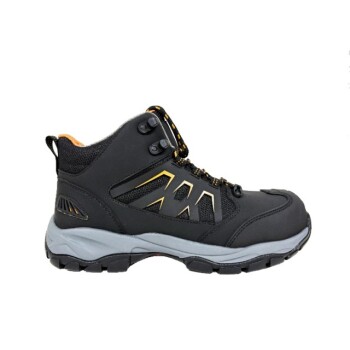
Scientific anti-slip tread patterns provide a critical safety advantage by utilizing specific lug arrangements to deliver multi-functional grip. These technical designs enhance performance through wide contact zones for adhesion on hard surfaces, linear structures for flexibility, and open patterns that self-clean to maintain stability on rugged terrain.
By strategically manipulating the friction coefficient between the boot and the ground, scientific tread patterns transform footwear from simple protective gear into active tools for postural balance and hazard mitigation.
The Engineering Behind Multi-Functional Grip
Maximizing Adhesion on Hard Surfaces
Scientific tread patterns incorporate wide contact zones within the outsole design.
These expanded areas increase the surface area available to touch the ground. This specific engineering improves adhesion, particularly when traversing rocky or solid surfaces where friction is paramount.
Enhancing Natural Mobility
Rigid safety boots can often impede walking mechanics, but scientific treads address this through linear lug arrangements.
This alignment allows the outsole to bend more naturally with the foot. The result is improved flexibility during movement, which reduces fatigue and maintains agility in high-pressure environments.
The Self-Cleaning Mechanism
One of the most distinct technical advantages is the use of an open tread structure.
Tightly packed treads often trap mud and debris, effectively smoothing out the sole and destroying traction. An open design allows debris to fall away, ensuring the pattern remains clear and capable of gripping the ground.
Friction and Stability Dynamics
Increasing the Friction Coefficient
The fundamental physics of these outsoles relies on raising the friction coefficient between the boot and the walking surface.
By optimizing this ratio, the footwear actively resists the lateral forces that cause slips. This is effective across various conditions, including moisture-laden floors or smooth industrial surfaces.
Improving Postural Balance
Beyond simple traction, these designs contribute to overall postural balance.
By mitigating micro-slips and providing a stable platform, the footwear reduces the physical effort required to stay upright. This turns the boot into a critical component of personal protective equipment (PPE) for injury prevention.
Understanding Design Trade-offs
Specificity vs. Universality
While scientific treads provide "multi-functional" grip, no single pattern is perfect for every single environment.
A tread highly optimized for self-cleaning in mud (wide, open lugs) may have less total surface area in contact with the ground compared to a flatter sole designed for dry warehouse concrete.
It is essential to match the specific "science" of the tread pattern—whether it prioritizes open clearing channels or wide contact patches—to the primary hazards you face.
Making the Right Choice for Your Goal
Select your tread pattern based on the specific environmental challenges of your operation.
- If your primary focus is stability on loose or muddy terrain: Prioritize open tread structures with self-cleaning capabilities to prevent debris build-up.
- If your primary focus is traction on rock or hard debris: Look for wide contact zones that maximize surface area adhesion.
- If your primary focus is agility and ease of movement: Ensure the outsole features linear lug arrangements to support natural bending and flexibility.
The right tread pattern does not just protect your feet; it secures your footing so you can focus on the mission.
Summary Table:
| Technical Feature | Mechanism | Safety Benefit |
|---|---|---|
| Wide Contact Zones | Maximizes surface area contact | Enhanced adhesion on hard, rocky, or solid surfaces |
| Linear Lug Layout | Aligns with foot's natural flexion | Improved mobility, reduced fatigue, and better agility |
| Open Tread Structure | Facilitates debris expulsion | Self-cleaning capability to maintain grip on mud/loose soil |
| High Friction Design | Increases friction coefficient | Resists lateral forces to prevent slips on smooth surfaces |
| Postural Support | Stabilizes the walking platform | Reduces physical strain and improves overall balance |
Elevate Your Fleet with Precision-Engineered Footwear
As a large-scale manufacturer serving global distributors and brand owners, 3515 offers industry-leading production capabilities for specialized safety footwear. Our fire safety boots utilize advanced scientific tread patterns to ensure maximum stability and durability in the most demanding environments.
Beyond our flagship Safety Shoes series, our extensive portfolio includes high-performance tactical boots, outdoor shoes, training sneakers, and professional dress shoes—all designed to meet rigorous bulk requirements.
Ready to enhance your product lineup? Contact us today to discuss custom manufacturing solutions and how our technical expertise can add value to your brand.
References
- Marianna Tomašková, Jozef Krajňák. Features and Sustainable Design of Firefighting Safety Footwear for Fire Extinguishing and Rescue Operations. DOI: 10.3390/su152015108
This article is also based on technical information from 3515 Knowledge Base .
Related Products
- High Performance Fire-Retardant Waterproof Safety Boots
- Premium Flame-Retardant Waterproof Safety Boots and Shoes
- Premium High-Cut Waterproof Safety Boots Manufacturing & Wholesale Solutions
- Premium Waterproof High-Cut Industrial Safety Boots for Wholesale and Bulk Orders
- Wholesale Durable Safety Boots | Custom Steel Toe & Puncture-Resistant Manufacturing
People Also Ask
- Why are waterproof safety boots recommended for certain work environments? Essential Protection for Wet & Hazardous Jobs
- What roles do 3D vision systems and industrial robots play in the manufacturing of fire safety boots? Smart Automation
- What is the difference between waterproof and water-resistant boots? Choose the Right Footwear for Any Condition
- What materials make waterproof boots durable? The Ultimate Guide to Long-Lasting Footwear
- How can you ensure your feet stay dry during winter walks? A Two-Part Defense System for Total Comfort