
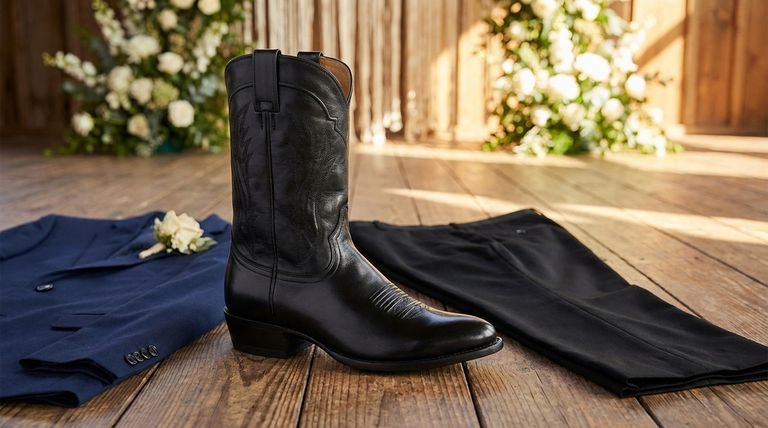
Yes, you can absolutely wear cowboy boots to a wedding, but the key is selecting a pair that functions as formal dress footwear, not casual or workwear. For men, this means polished dress boots in black or dark leather with subtle, tonal stitching. For women, elegant boots with refined embroidery or tasteful metallic accents can beautifully complement formal attire.
The core principle is to treat your cowboy boots like dress shoes. The goal is to elevate your outfit with a touch of personal style, not to make it look like you've just come from the ranch. Success depends entirely on choosing refined materials, a sleek profile, and a high level of polish.
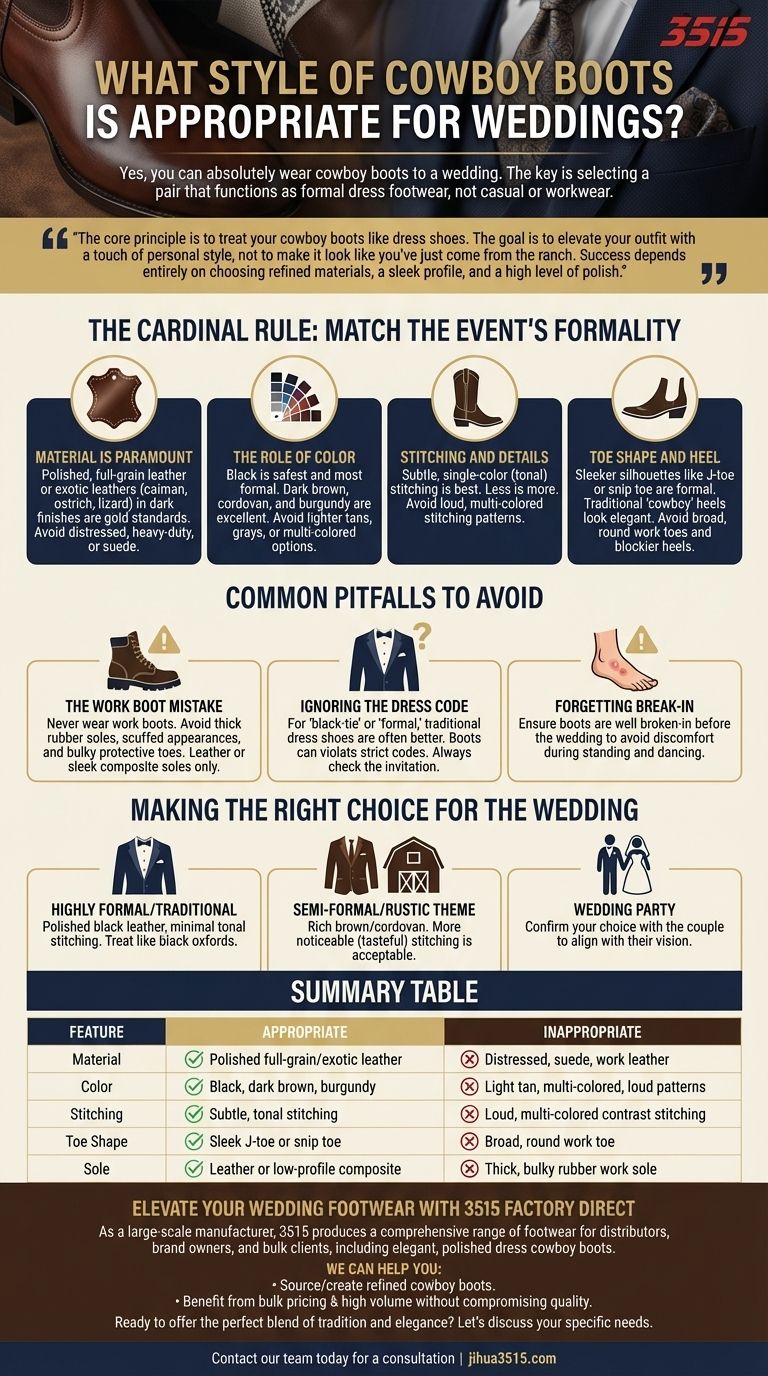
The Cardinal Rule: Match the Event's Formality
Choosing the right boot isn't about a specific brand or model; it's about respecting the occasion. A wedding is a formal event, and your footwear must reflect that.
Material is Paramount
The material of the boot is the single biggest indicator of its formality. Polished, full-grain leather in classic shades is the gold standard for a dress boot.
Exotic leathers like caiman, ostrich, or lizard in dark, polished finishes can also be exceptionally elegant and appropriate. Avoid distressed leather, heavy-duty work leather, or most suedes, which read as too casual.
The Role of Color
Color choice sends an immediate signal about formality. Black is the safest and most formal option, pairing seamlessly with dark suits and formal trousers.
Dark brown, cordovan, and deep burgundy are also excellent choices that convey a sophisticated, classic look. Lighter tans, grays, or multi-colored boots should be reserved for more rustic or semi-formal weddings.
Stitching and Details
For a formal wedding, less is more when it comes to decoration. Look for boots with subtle, single-color (tonal) stitching that adds texture without creating a loud contrast.
Loud, multi-colored stitching patterns are a hallmark of more casual, everyday boots and can clash with the elegance of a suit or formal dress.
Toe Shape and Heel
The boot's silhouette matters. A sleeker, more refined toe shape like a traditional J-toe (a slightly pointed round toe) or a modern snip toe looks more formal than a broad, round work toe.
Similarly, a traditional "cowboy" heel has a more elegant, angled profile than the lower, blockier heel found on more casual roper boots.
Common Pitfalls to Avoid
Making a successful choice is as much about avoiding mistakes as it is about picking the right features. A few missteps can undermine an otherwise well-put-together look.
The Work Boot Mistake
This is the most common error. Never wear work boots to a wedding. Any boot with a thick rubber sole, a scuffed appearance, or a bulky, protective toe is entirely inappropriate for a formal event. The sole should be leather or a sleek, low-profile composite.
Ignoring the Dress Code
Always check the invitation for a dress code. If the event is specified as "black-tie" or "formal," it is almost always better to opt for traditional dress shoes. Cowboy boots, even the finest ones, can be seen as a violation of a strict formal dress code.
Forgetting the Break-In Period
A brand-new pair of leather boots can be stiff and uncomfortable. A wedding involves a lot of standing, walking, and dancing. Ensure your boots are well broken-in beforehand to avoid discomfort.
Making the Right Choice for the Wedding
Your final decision should be guided by the specific tone of the event and your role in it.
- If the wedding is highly formal or traditional: Choose polished black leather dress boots with minimal, tonal stitching. Treat them exactly as you would a pair of black oxford dress shoes.
- If the wedding is semi-formal or has a rustic theme: You have more flexibility. Rich brown or cordovan leathers are excellent, and boots with more noticeable (but still tasteful) stitching can work well.
- If you are part of the wedding party: Always confirm your footwear choice with the couple. Their vision for the day's aesthetic is paramount, and your attire should align with it.
Ultimately, wearing the right pair of cowboy boots shows confidence and personality while still honoring the significance of the day.
Summary Table:
| Feature | Appropriate for Formal Wedding | Inappropriate for Formal Wedding |
|---|---|---|
| Material | Polished full-grain or exotic leather | Distressed leather, suede, work leather |
| Color | Black, dark brown, burgundy | Light tan, multi-colored, loud patterns |
| Stitching | Subtle, tonal stitching | Loud, multi-colored contrast stitching |
| Toe Shape | Sleek J-toe or snip toe | Broad, round work toe |
| Sole | Leather or low-profile composite | Thick, bulky rubber work sole |
Elevate Your Wedding Footwear with 3515 Factory Direct
As a large-scale manufacturer, 3515 produces a comprehensive range of footwear for distributors, brand owners, and bulk clients. Our production capabilities encompass all types of shoes and boots, including the elegant, polished dress cowboy boots perfect for formal occasions.
We can help you:
- Source or create the perfect refined cowboy boots for your clients or wedding party.
- Benefit from bulk pricing and high-volume production without compromising on quality or sophisticated style.
Ready to offer your customers the perfect blend of tradition and elegance? Let's discuss your specific needs.
Contact our team today for a consultation
Visual Guide
Related Products
- Wholesale High-Traction Camo Boots - Custom Manufacturer for Brands
- High-Traction Suede Tactical Boots Wholesale & Custom Manufacturing
- Wholesale Lightweight Tactical Boots Custom Manufacturer for Desert & Combat Use
- Durable Leather Tactical Boots Wholesale & Custom Manufacturing for Brands
- Wholesale Durable Mid-Cut Tactical Boots for Custom & Private Label Brands
People Also Ask
- What are the key features of the new line of camo boots? Built for Extreme Cold & Rugged Terrain
- Are camo boots necessary for hunting success? Prioritize Performance Over Pattern
- What is the technical logic behind using closed-eye testing for tactical boots? Unlocking Peak Footwear Stability
- How does the Rank Score Test identify the primary causes of premature failure in tactical and work boots? Key Insights
- What shoes to wear for a security job? Durable, Protective Footwear for Long Shifts

















