
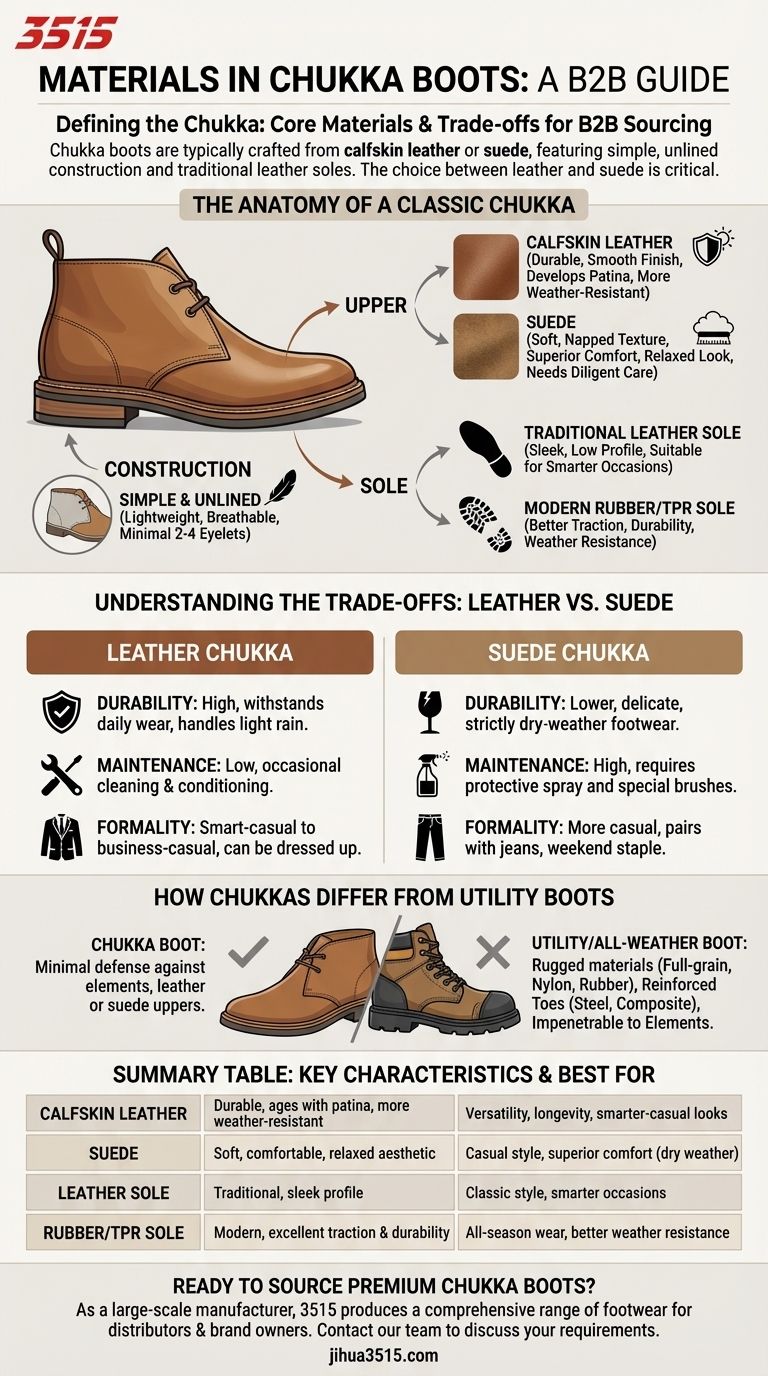
At their core, chukka boots are defined by their materials. They are almost always crafted from either calfskin leather or suede, each offering a distinct character. This choice of material, combined with their simple, unlined construction and traditional leather soles, creates their signature minimalist profile.
The decision between leather and suede is the most critical choice when selecting a chukka boot. Leather offers rugged durability and ages gracefully, while suede provides a softer, more casual comfort that demands more diligent care.

The Anatomy of a Classic Chukka
A true chukka is distinguished by its minimalist construction. Unlike more complex boots, its identity is built on a few key material choices that prioritize simplicity and a clean aesthetic.
The Upper: Leather vs. Suede
The upper is the most visible part of the boot and is overwhelmingly made from one of two materials.
Calfskin leather is the traditional, durable choice. It's known for its smooth finish, resilience against scuffs, and ability to develop a rich patina over time.
Suede is essentially leather that has been finished to create a soft, napped texture. It offers superior comfort and a more relaxed, casual look but is more susceptible to water damage and staining.
The Sole: The Traditional Foundation
Classic chukka boots, as defined by footwear historians, feature thin leather soles. This contributes to their sleek, low profile and makes them suitable for smarter occasions.
However, many modern interpretations now use rubber or thermoplastic rubber (TPR) outsoles. These materials offer significantly better traction, durability, and weather resistance than traditional leather.
Construction: Simple and Unlined
The chukka's design philosophy is "less is more." They typically feature an unlined construction, which makes them lightweight and breathable. This is paired with a minimal lacing system of just two to four pairs of eyelets.
Understanding the Trade-offs
The material you choose directly impacts how you will wear and care for your boots. Understanding these differences is crucial to avoiding disappointment.
Durability and Weather Resistance
Leather is the clear winner for longevity. It withstands daily wear far better than suede and can handle light rain without issue.
Suede is delicate. It can be easily damaged by water, which can stain the material and alter its texture permanently. It is strictly a dry-weather footwear choice.
Maintenance and Care
Leather boots are relatively low-maintenance, requiring occasional cleaning and conditioning to keep the material supple.
Suede requires proactive care. It should be treated with a protective spray before its first wear and requires special brushes to clean and restore its napped texture.
Formality and Style
A well-polished leather chukka can be dressed up with trousers or chinos for a smart-casual or business-casual environment.
Suede chukkas are inherently more casual. Their soft texture pairs perfectly with jeans and relaxed outfits, making them a weekend staple.
How Chukkas Differ from Utility Boots
To fully appreciate the chukka, it helps to understand what it is not. Its material choices clearly separate it from more specialized, rugged boot categories.
Not a Work Boot
Utility and safety boots are built for protection. Their uppers use rugged materials like full-grain leather, ballistic nylon, and engineered mesh. Their toe boxes are often reinforced with steel or composite materials, elements never found in a classic chukka.
Not an All-Weather Boot
Rain and snow boots prioritize elemental protection. They are made from impenetrable materials like rubber or insulated synthetics. The chukka's leather or suede construction offers minimal defense against harsh weather conditions.
Making the Right Choice for Your Needs
Your ideal material depends entirely on your intended use and lifestyle.
- If your primary focus is versatility and longevity: Choose a calfskin leather chukka. It can be dressed up or down and will withstand years of regular wear.
- If your primary focus is relaxed comfort and casual style: Opt for a suede chukka. Nothing matches its soft texture for a refined yet casual look, but be prepared for the necessary upkeep.
- If your primary focus is all-season traction: Look for a modern chukka variation with a durable rubber sole instead of traditional leather.
Ultimately, understanding the material is the key to selecting a chukka boot that aligns perfectly with your expectations and personal style.
Summary Table:
| Material | Key Characteristics | Best For |
|---|---|---|
| Calfskin Leather | Durable, ages with a patina, more weather-resistant | Versatility, longevity, smarter-casual looks |
| Suede | Soft, comfortable, relaxed aesthetic | Casual style, superior comfort (dry weather) |
| Leather Sole | Traditional, sleek profile | Classic style, smarter occasions |
| Rubber/TPR Sole | Modern, excellent traction & durability | All-season wear, better weather resistance |
Ready to Source Premium Chukka Boots?
As a large-scale manufacturer, 3515 produces a comprehensive range of footwear for distributors, brand owners, and bulk clients. Whether you need durable leather chukkas or stylish suede variations, our production capabilities ensure top quality and consistent supply.
Contact our team today to discuss your chukka boot requirements and discover how we can support your business.
Visual Guide
Related Products
- Premium Wholesale Tactical Style Safety Shoes Boots with Quick Lacing
- Wholesale Safety Boots Manufacturer for Custom & Private Label Orders
- Factory Direct Wholesale Rain Boots Durable Waterproof & Fully Customizable
- Wholesale High-Traction Camo Boots - Custom Manufacturer for Brands
- Durable Leather High-Ankle Tactical Boots for Wholesale & Custom Manufacturing
People Also Ask
- How are gait analysis research findings applied to the functional design of safety shoes and tactical boots?
- How does anthropomorphic design influence material selection? Enhance Footwear Performance through Biological Alignment
- Why is the synchronization of craftsmanship and UX development emphasized for bulk customization of safety shoes?
- How do quality certification standards for safety shoes reduce perceived risk? Buy Online with Technical Certainty
- How can specialized footwear mitigate safety risks? High-Volume OEM/ODM Solutions since 1951


















