
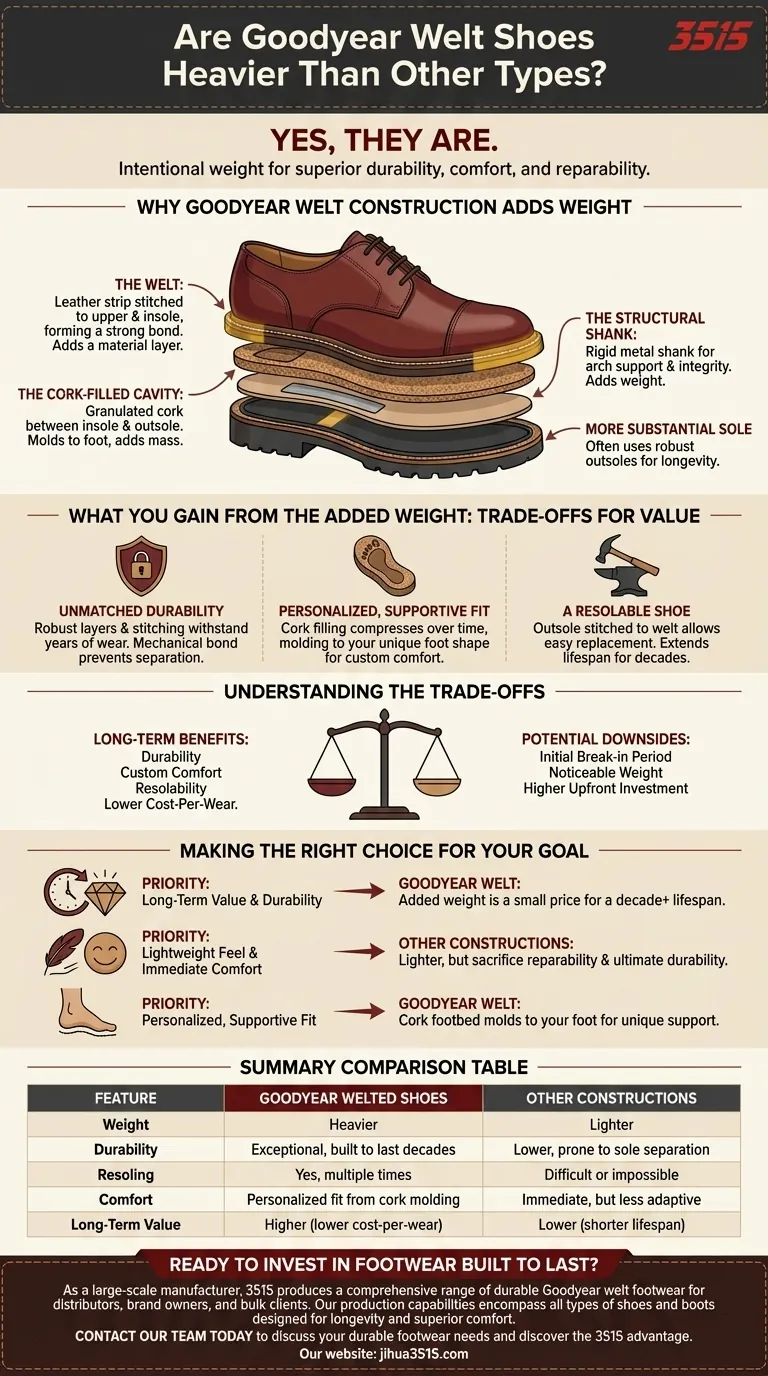
To be direct, yes. Goodyear welt shoes are generally heavier than most other common shoe constructions. This is an intentional result of the additional materials used in the process—specifically the leather welt, a cork filling, and often a more substantial sole—which are fundamental to this celebrated method.
The slight increase in weight is not a flaw, but a direct trade-off for the construction's primary benefits: exceptional durability, the ability to be resoled multiple times, and a personalized comfort that develops as the shoe molds to your foot.
Why Goodyear Welt Construction Adds Weight
The weight of a Goodyear welted shoe is a direct result of its robust, multi-layered anatomy. Each component contributes to a final product that is built for longevity rather than pure lightness.
The Role of the Welt
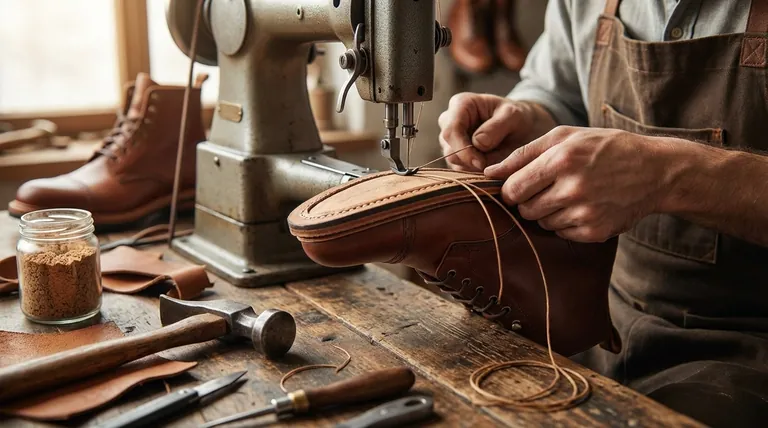
A welt is a strip of leather that is stitched to the shoe's upper and the insole. The outsole is then stitched to this welt. This extra component creates a strong, secure bond but adds a layer of material not found in simpler, glued (cemented) constructions.
The Cork-Filled Cavity
Between the insole and the outsole, a cavity is filled with a layer of granulated cork. This material is a key reason for the famed comfort of these shoes, but it also adds measurable mass to the shoe's core.
The Structural Shank
Most Goodyear welted shoes contain a metal shank embedded between the insole and outsole. This rigid piece provides crucial arch support and maintains the shoe's structural integrity, preventing it from flexing in the wrong places.
What You Gain from the Added Weight
The components that add weight are the very same ones that deliver the signature performance and value of a Goodyear welted shoe. This is not inefficient design; it is purposeful engineering.
Unmatched Durability and Longevity
The layered construction and robust stitching create an exceptionally durable shoe. Unlike a cemented shoe where the sole can delaminate, a Goodyear welt provides a mechanical bond built to withstand years of hard wear.
A Personalized, Supportive Fit
The cork filling is the shoe's secret weapon for comfort. Over time, your body heat and the pressure of your foot compress the cork, creating a custom impression. The shoe literally molds to the unique shape of your foot.
The Value of a Resolable Shoe
Because the outsole is stitched to the welt and not directly to the upper, a cobbler can easily remove the old sole and attach a new one. This reparability means that with proper care, a single pair of Goodyear welted shoes can last for decades, far outstripping the lifespan of cheaper alternatives.
Understanding the Trade-offs
Choosing a Goodyear welt is an exercise in prioritizing long-term benefits. Objectivity requires acknowledging the potential downsides that come with this construction.
The Initial Break-in Period
The same robust materials that provide durability can make the shoe feel stiff out of the box. A break-in period is almost always required as the thick leather and cork footbed soften and conform to your foot.
The Noticeable Weight
For someone accustomed to ultralight sneakers or loafers, the weight of a Goodyear welted shoe will be noticeable. This is a critical consideration if you prioritize a "barely there" feel for all-day wear.
Higher Upfront Investment
The complex construction and quality materials result in a higher initial purchase price. This cost is offset by the shoe's longevity and lower long-term cost-per-wear, but it represents a significant upfront investment.
Making the Right Choice for Your Goal
Your decision should be based on what you value most in footwear. There is no single "best" construction, only the best for a specific purpose.
- If your primary focus is long-term value and durability: The added weight is a small price for a shoe that can last a decade or more with proper care.
- If your primary focus is a lightweight feel and immediate comfort: You may prefer a Blake-stitched or cemented shoe, but you will sacrifice the reparability and ultimate durability of a Goodyear welt.
- If your primary focus is a personalized, supportive fit: The Goodyear welt's cork footbed offers a unique advantage, molding to your foot over time for unparalleled support.
Ultimately, understanding the weight of a Goodyear welt shoe is recognizing it as a direct indicator of its enduring quality and purposeful construction.
Summary Table:
| Feature | Goodyear Welted Shoes | Other Constructions (e.g., Cemented) |
|---|---|---|
| Weight | Heavier | Lighter |
| Durability | Exceptional, built to last decades | Lower, prone to sole separation |
| Resoling | Yes, multiple times | Difficult or impossible |
| Comfort | Personalized fit from cork molding | Immediate, but less adaptive |
| Long-Term Value | Higher (lower cost-per-wear) | Lower (shorter lifespan) |
Ready to invest in footwear built to last?
As a large-scale manufacturer, 3515 produces a comprehensive range of durable Goodyear welt footwear for distributors, brand owners, and bulk clients. Our production capabilities encompass all types of shoes and boots designed for longevity and superior comfort.
Contact our team today to discuss your durable footwear needs and discover the 3515 advantage.
Visual Guide
Related Products
- Durable Goodyear Welt Leather Work Boots for Wholesale & Private Label
- Wholesale Durable Leather Work Boots | 8-Inch Goodyear Welt Manufacturer
- Wholesale Durable & Breathable Training Shoes for Custom Brands
- Custom OEM Training Shoes Wholesale Manufacturer Durable & Breathable
- Lightweight Breathable Training Shoes for Wholesale & Custom OEM Manufacturing
People Also Ask
- What is the difference between full-grain and top-grain leather? Premium Material Guide for Boot Manufacturers
- What are the advantages of leather as an upper material for work boots? Unmatched Durability & Custom Comfort
- Why is it important to waterproof leather work boots? Protect Your Investment and Performance
- How should new leather work boots be broken in? A Guide to Comfort and Durability
- What are the advantages of leather uppers in work boots? Unmatched Durability & Protection



















