
Securing the correct fit for long riding boots or gaiters is a straightforward process based on three critical measurements. You will need your foot size, the circumference of the widest part of your calf, and the height from the crease of your knee down to your heel. These measurements are then compared against a specific manufacturer's size guide to find the perfect match.
The goal is not just to find a boot that you can zip up, but to achieve a second-skin fit that enhances leg stability, prevents rubbing, and ensures rider safety. A precise measurement process is the foundation for performance and protects your investment from premature wear.
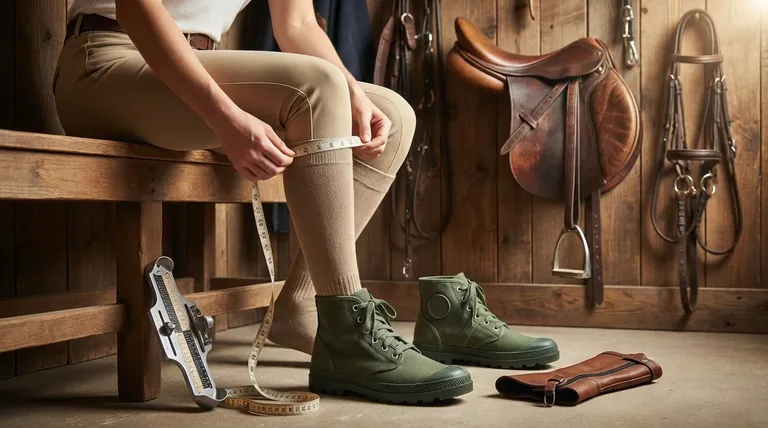
The Foundation of a Proper Fit: Key Measurements
A successful fit begins with accurate data. Before you start, put on the riding breeches and socks you typically wear, as they add volume that must be accounted for. For best results, measure at the end of the day when your legs may be slightly swollen.
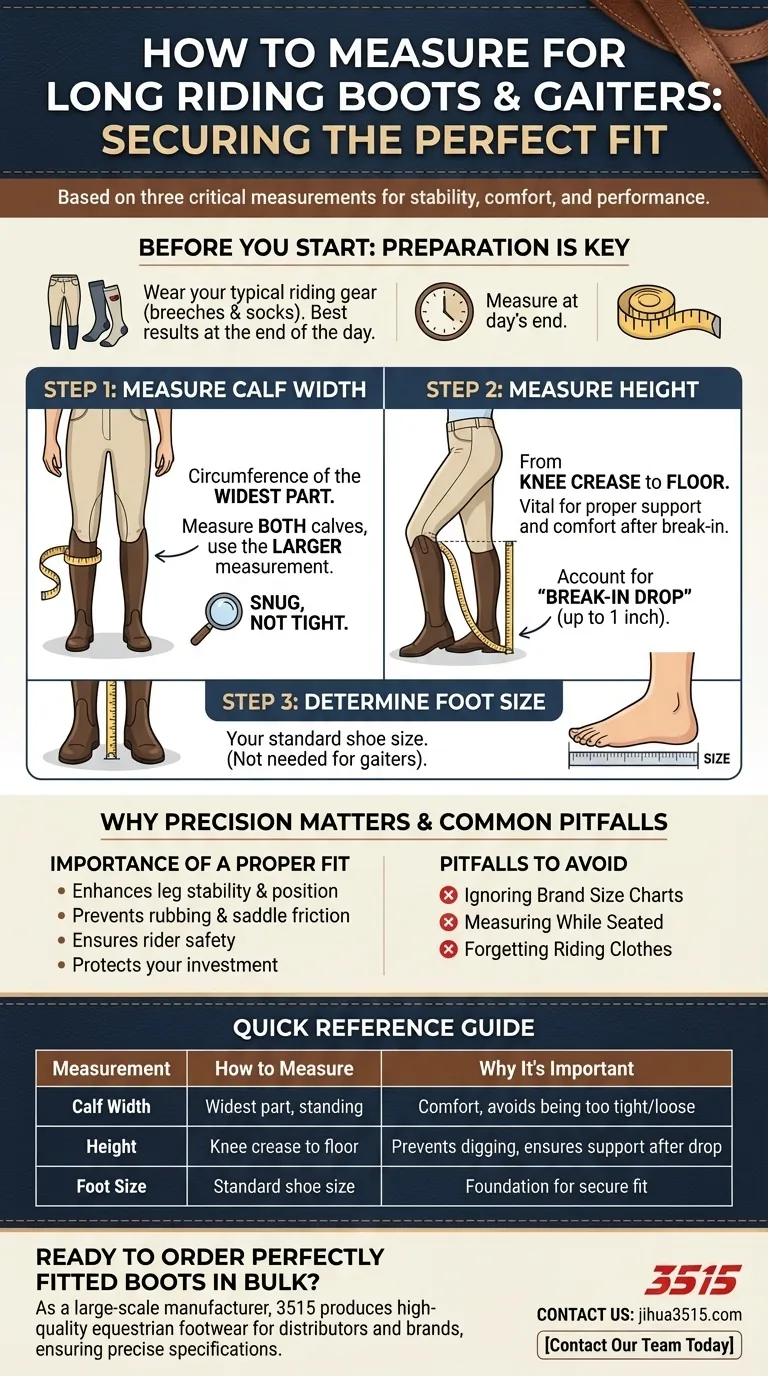
Step 1: Measure Calf Width
While standing straight with your feet flat on the floor, have someone use a flexible fabric tape measure to find the circumference of the widest part of your calf.
Ensure the tape is snug but not tight. It's crucial to measure both calves and use the larger of the two measurements when consulting a size chart, as most people have slight size differences between their legs.
Step 2: Measure Height
Remain standing with a slight bend in your knee, as if you were in the saddle. Measure from the crease directly behind your knee straight down to the floor at the back of your heel.
This height measurement is vital. A boot that is too short will not offer proper support, while a boot that is too tall will painfully dig into the back of your knee when you ride.
Step 3: Determine Your Foot Size
For long riding boots, this is simply your standard, everyday shoe size. If you are measuring for gaiters, which are worn over short paddock boots, this measurement is not needed for the gaiter itself.
Why Precision is Non-Negotiable
Getting these measurements right is about more than just comfort. The function of a tall boot is to provide support, stabilize the lower leg, and protect you from the friction of the saddle.
The Impact on Leg Position
A properly fitted boot acts as a supportive structure, helping to keep your leg in the correct, quiet position. If a boot is too loose, your leg will shift, undermining your stability and cues to the horse.
The "Break-In" Drop
New leather boots are designed to be slightly taller than needed. Over the first few weeks of wear, the leather will soften and "drop" around the ankle by up to an inch.
You must account for this drop. A boot that feels perfectly tall when brand new will likely become too short once it's broken in. Always check the manufacturer's recommendation, but a good fit often feels a bit too high at first.
Common Pitfalls to Avoid
Even with the right numbers, small mistakes can lead to a poor purchase. Being aware of these common errors is key to getting the fit right the first time.
Ignoring the Brand's Sizing Chart
There is no universal standard for boot sizing. A "regular calf" in one brand may be a "slim calf" in another. Your measurements are useless until you compare them directly to the specific chart for the boot you intend to buy.
Measuring While Seated
Always measure your calf width and height while standing. Sitting relaxes the muscles and can lead to inaccurate, smaller measurements, resulting in boots that are too tight.
Forgetting to Wear Riding Clothes
Measuring on a bare leg will not account for the space taken up by your breeches and socks. This can easily lead you to purchase boots that are a full size too small in the calf.
Making the Right Choice for Your Goal
With your accurate measurements in hand, you can now select a boot that aligns with your specific riding discipline and needs.
- If your primary focus is Dressage: You need a stiff, formal dress boot, so ensuring the height measurement accounts for the break-in drop is critical for a polished look.
- If your primary focus is Show Jumping or Hunting: You'll likely use a softer, laced field boot, so focus on a snug fit that still allows for deep ankle flexion over fences.
- If you need versatility or are on a budget: A combination of paddock boots and well-fitted gaiters offers an excellent and cost-effective solution for daily training.
A precise measurement is the first and most important step toward performance, comfort, and safety in the saddle.
Summary Table:
| Measurement | How to Measure | Why It's Important |
|---|---|---|
| Calf Width | Circumference of the widest part of the calf while standing. | Ensures the boot zips comfortably without being too tight or loose. |
| Height | From the knee crease to the floor at the back of the heel. | Prevents the boot from digging into the knee or being too short after break-in. |
| Foot Size | Your standard shoe size. | Provides the foundation for a secure and stable fit. |
Ready to order perfectly fitted riding boots in bulk?
As a large-scale manufacturer, 3515 produces a comprehensive range of equestrian footwear for distributors, brand owners, and bulk clients. Our expertise ensures you receive high-quality boots and gaiters that meet precise sizing specifications, protecting your investment and enhancing rider performance.
Contact our team today to discuss your manufacturing needs and request a quote.
Visual Guide
Related Products
- Durable High-Ankle Tactical Boots Wholesale Manufacturer for Custom & Bulk Orders
- Wholesale High-Traction Camo Boots - Custom Manufacturer for Brands
- Durable High-Ankle Tactical Boots for Wholesale & Custom Manufacturing
- Wholesale Tactical Boots High-Traction & Reflective for Bulk & Brand Orders
- Durable Leather Tactical Boots Wholesale & Custom Manufacturing for Brands
People Also Ask
- What specialized protections do tactical boots offer? Maximize Endurance with High-Performance Footwear
- How do tactical boots protect against injuries? Discover the Integrated Safety System
- What are the ideal use cases for tactical boots? Empower Your Performance in Demanding Scenarios
- Can tactical boots be stylish for everyday wear? Yes, with the right styling and features.
- What are the primary benefits of wearing tactical boots for everyday use? Get All-Day Comfort & Durability



















