
Proper cowboy boot care is a disciplined cycle of cleaning, conditioning, protecting, and storing. For most leather boots, this means a deep clean and condition every 3 to 6 months, with daily brushing to remove surface dirt and proper storage to maintain their shape.
The goal of a care routine is not just to clean your boots, but to systematically preserve the leather's natural oils and structure. This preventative maintenance is what transforms a simple purchase into a long-term investment that can last for years, if not decades.
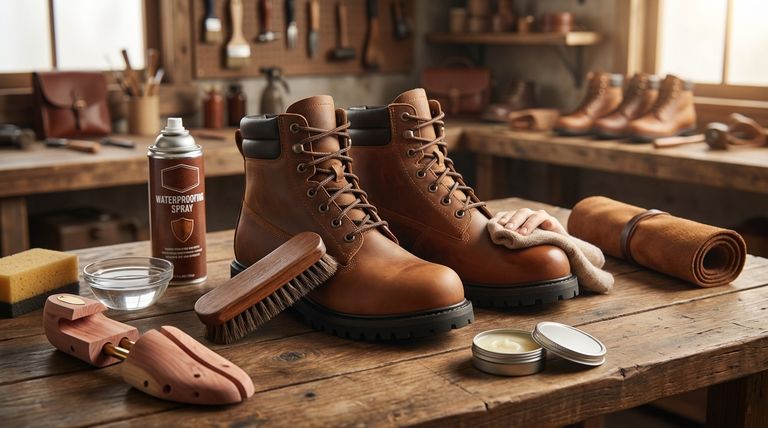
The Core Care Routine: A Step-by-Step Guide
A consistent routine is the most effective way to protect your boots from the elements and the stress of regular wear.
Step 1: Clean the Surface
After each wear, use a horsehair brush to gently remove any loose dirt, dust, and grime. This simple habit prevents buildup that can abrade the leather over time.
This quick, daily cleaning dramatically reduces the effort needed during more intensive conditioning sessions.
Step 2: Deep Clean and Condition (Every 3-6 Months)
Start with a dedicated leather cleaner applied with a soft cloth to remove embedded dirt and old polish. Always test cleaners on a small, inconspicuous area first.
Once the boot is clean and completely dry, apply a quality leather conditioner. Use your fingers or a soft cloth to work a small amount into the leather, paying special attention to seams and creases.
Conditioner replenishes the essential oils in the leather, keeping it supple and preventing it from drying out and cracking.
Step 3: Protect From the Elements
After conditioning, consider applying a water-resistant protective spray. This creates a barrier against moisture and stains without sealing the leather's pores entirely.
This is especially critical if you expect your boots to be exposed to rain, snow, or wet conditions.
Proper Storage and Handling
How you store your boots between wears is just as important as how you clean them. Poor storage can permanently damage their shape and integrity.
The Importance of Rest
Leather needs time to breathe and dry out fully from the moisture absorbed from your feet. Avoid wearing the same pair of boots on consecutive days.
Allowing boots a full day of rest lets moisture evaporate, which extends the life of the leather and reduces odor.
Using Boot Trees
When not in use, insert cedar boot trees. These are essential tools that help the boots maintain their proper shape, prevent the vamp from collapsing, and absorb any lingering moisture and odor.
Managing Saturated Boots
If your boots become soaked, stuff them loosely with paper towels or newspaper to draw out the initial moisture.
Afterward, remove the paper and let them air dry slowly at room temperature. Never place them near a heater, fireplace, or in direct sunlight.
Common Pitfalls to Avoid
Mistakes in boot care can cause irreversible damage. Understanding what not to do is critical for preserving your investment.
Conditioner vs. Oil
Be aware that while many products nourish leather, oils tend to darken its color. A cream-based conditioner is generally best for maintaining the original hue. Always check the product label.
The Dangers of Direct Heat
Applying direct heat to wet leather is the fastest way to ruin your boots. It cooks the leather, drawing out its natural oils rapidly and causing it to become brittle and crack.
Ignoring Manufacturer Guidance
Different leathers, especially exotics like snakeskin or ostrich, may require specialized care products. Always default to the care instructions provided by the boot's manufacturer.
Making the Right Choice for Your Goal
Your care routine should adapt to how you use your boots.
- If your primary focus is durability for work or daily wear: Prioritize regular cleaning and the application of a water-resistant protective spray.
- If your primary focus is preserving the look of dress boots: Emphasize proper storage with cedar boot trees and conditioning every 6 months to keep the leather supple.
- If you own vintage or exotic leather boots: Seek out specialist advice or products specifically designed for that material to avoid costly damage.
Ultimately, a thoughtful care routine ensures your boots will not only last but also develop the unique character that only comes with time and wear.
Summary Table:
| Care Step | Frequency | Key Action |
|---|---|---|
| Surface Cleaning | After each wear | Brush with a horsehair brush to remove dirt. |
| Deep Conditioning | Every 3-6 months | Clean and apply conditioner to replenish oils. |
| Protection | As needed/after conditioning | Apply water-resistant spray for weather protection. |
| Proper Storage | After every wear | Use cedar boot trees and allow 24 hours of rest. |
Ready to build a boot collection that lasts a lifetime? As a large-scale manufacturer, 3515 produces a comprehensive range of durable footwear for distributors, brand owners, and bulk clients. Our production capabilities encompass all types of work, western, and casual boots, built with quality materials that respond well to proper care. Let's discuss your footwear needs.
Contact our experts today to explore our catalog and partnership opportunities.
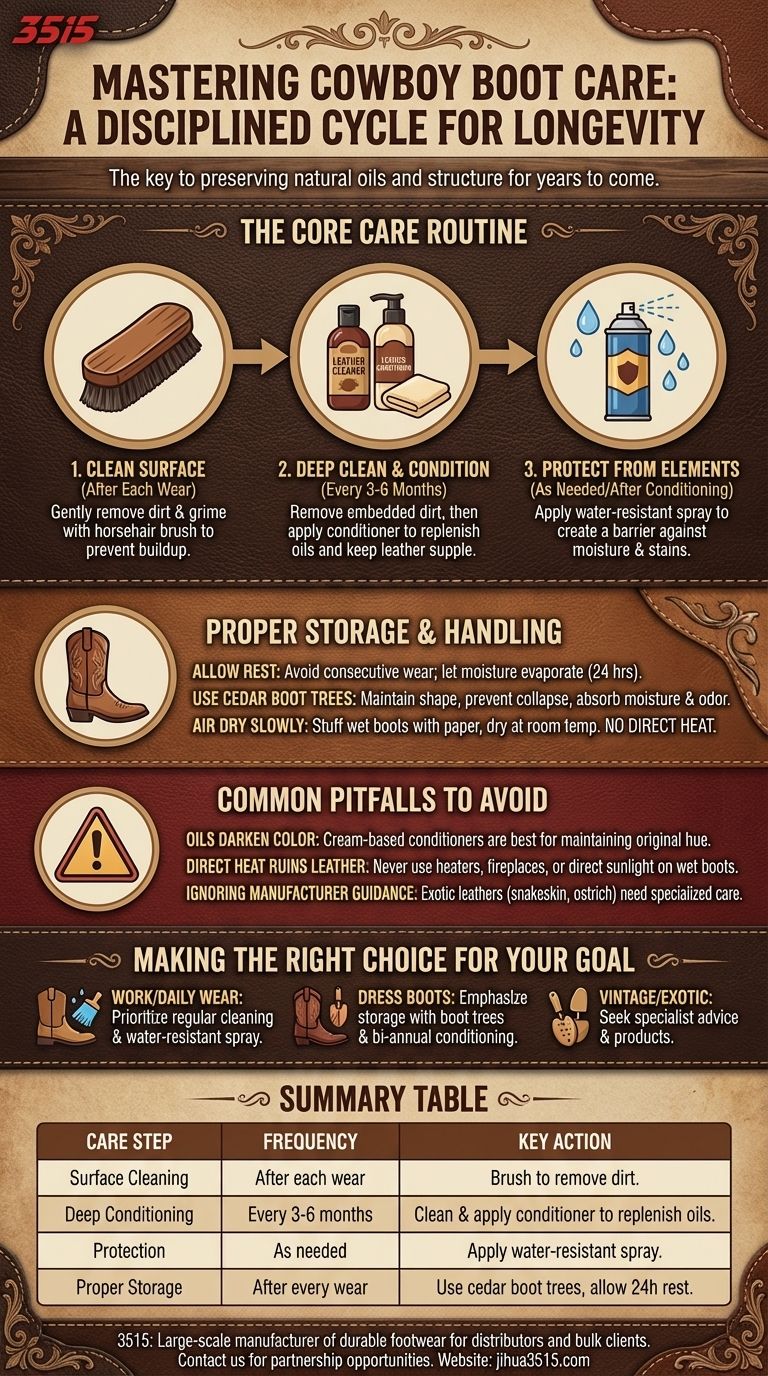
Visual Guide
Related Products
- Wholesale High-Traction Camo Boots - Custom Manufacturer for Brands
- High-Traction Suede Tactical Boots Wholesale & Custom Manufacturing
- Wholesale Lightweight Tactical Boots Custom Manufacturer for Desert & Combat Use
- Durable Leather Tactical Boots Wholesale & Custom Manufacturing for Brands
- Wholesale Durable Mid-Cut Tactical Boots for Custom & Private Label Brands
People Also Ask
- What are the key features of the new line of camo boots? Built for Extreme Cold & Rugged Terrain
- Are camo boots necessary for hunting success? Prioritize Performance Over Pattern
- How does the Rank Score Test identify the primary causes of premature failure in tactical and work boots? Key Insights
- What is the technical logic behind using closed-eye testing for tactical boots? Unlocking Peak Footwear Stability
- What shoes to wear for a security job? Durable, Protective Footwear for Long Shifts

















