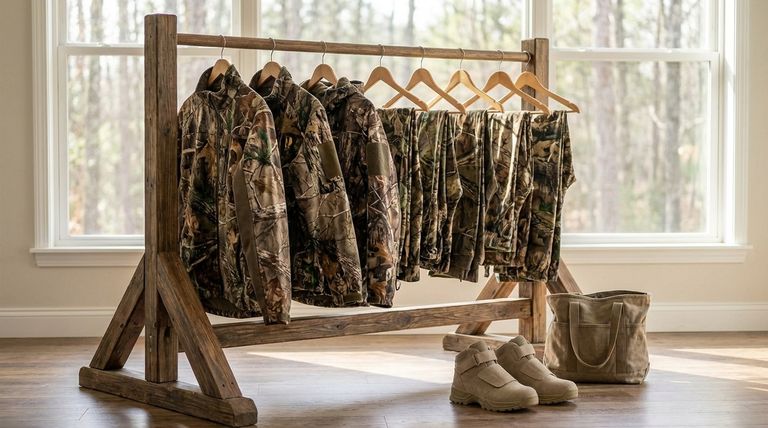
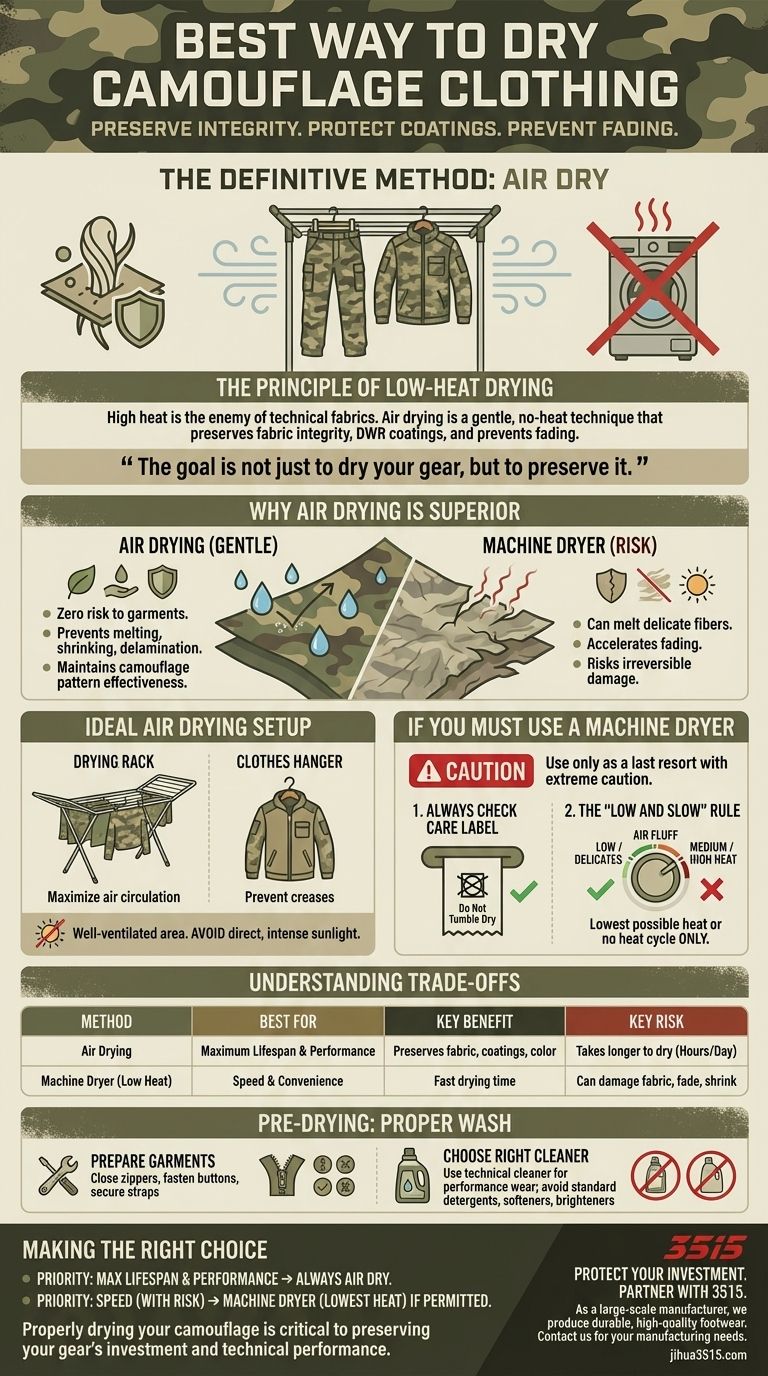
The definitive method for drying camouflage clothing is to air dry it. This simple, no-heat technique is the most effective way to preserve the fabric's integrity, protect specialized coatings like DWR (Durable Water Repellent), and prevent the fading that compromises its effectiveness in the field.
The core principle is simple: high heat is the enemy of technical fabrics. While a machine dryer offers speed, it risks permanently damaging the color, fit, and performance of your investment. The goal is not just to dry your gear, but to preserve it.
The Principle of Low-Heat Drying
Modern camouflage is often made from technical synthetic fabrics with specific coatings and properties. Exposing these materials to high heat can degrade them rapidly, leading to costly and premature replacement.
Why Air Drying is Superior
Air drying is a gentle process that poses zero risk to your garments. A conventional machine dryer, even on medium settings, can melt delicate synthetic fibers, shrink fabric, and delaminate the waterproof membranes common in hunting and tactical outerwear.
Furthermore, the high heat and tumbling action can accelerate the fading of camouflage patterns, reducing their effectiveness.
The Ideal Setup for Air Drying
For best results, spread your clothing over a drying rack or clotheshorse to maximize air circulation. To prevent creases in jackets and shirts, place them on a clothes hanger first.
Position the rack in a well-ventilated area. While tempting, avoid placing it in direct, intense sunlight for extended periods, as UV exposure can also cause colors to fade over time.
What If You Must Use a Machine Dryer?
In situations where time is critical, a machine dryer can be used, but only with extreme caution and as a last resort.
Always Check the Care Label First
This is the most critical step. The manufacturer's care tag provides the definitive instructions for your specific garment. If it says "Do Not Tumble Dry," follow that advice without exception.
The "Low and Slow" Rule
If the tag permits machine drying, always use the lowest possible heat setting. This is often labeled as "Tumble Dry Low," "Delicates," or an "Air Fluff" (no heat) cycle. Never use medium or high heat.
Understanding the Trade-offs
Choosing a drying method involves balancing the needs of your gear against the need for convenience.
Air Drying: Time vs. Preservation
The primary drawback of air drying is time. It can take several hours, or even a full day, for heavier garments to dry completely. However, this patience is rewarded with maximum garment lifespan and sustained performance.
Machine Drying: Convenience vs. Risk
The obvious benefit of a machine dryer is speed. The trade-off is the significant risk of irreversible damage. Even repeated use of low-heat settings can slowly degrade elastic fibers and coatings over the long term.
Pre-Drying: The Importance of a Proper Wash
How you wash your camouflage has a direct impact on its condition before it ever reaches the drying rack. A proper wash preserves the features you're trying to protect during the drying phase.
Preparing Your Garments
Before washing, always prepare your gear to prevent damage. Close all zippers, fasten any buttons or snaps on pockets, and secure loose straps. This minimizes snagging and abrasion during the wash cycle.
Choosing the Right Cleaner
Standard laundry detergents can contain softeners and optical brighteners that strip water-repellent coatings and can even make you more visible to certain animals. Use a technical cleaner specifically designed for performance wear, such as those from NikWax or Granger's, to clean the fabric without harming its specialized properties.
Making the Right Choice for Your Gear
Your drying method should align directly with your priority for the garment.
- If your primary focus is maximum garment lifespan and performance: Always air dry your camouflage in a well-ventilated space away from direct sunlight.
- If your primary focus is speed and you accept the risk: Use a machine dryer only on the lowest heat or no-heat setting after confirming the care label allows it.
Properly drying your camouflage is a critical step in preserving the investment and technical performance of your gear.
Summary Table:
| Drying Method | Best For | Key Benefit | Key Risk |
|---|---|---|---|
| Air Drying | Maximum lifespan & performance | Preserves fabric, coatings, and color | Takes longer to dry |
| Machine Dryer (Low Heat) | Speed & convenience | Fast drying time | Can damage fabric, fade color, shrink garment |
Protect your investment in performance wear. Just as proper care extends the life of your tactical gear, partnering with the right manufacturer ensures you get durable, high-quality products from the start. As a large-scale manufacturer, 3515 produces a comprehensive range of footwear for distributors, brand owners, and bulk clients. Our production capabilities encompass all types of shoes and boots, built to last. Contact our team today to discuss your manufacturing needs and ensure your products are built with the same care you show your gear.
Visual Guide
Related Products
- Wholesale High-Traction Camo Boots - Custom Manufacturer for Brands
- Wholesale Durable Camouflage Canvas Shoes with High-Traction Cleated Rubber Sole
- Wholesale Durable Camo Canvas Shoes with High-Traction Rubber Soles
- Men's Breathable Perforated Loafers Wholesale & OEM Manufacturing
People Also Ask
- What are the key features of the new line of camo boots? Built for Extreme Cold & Rugged Terrain
- Are camo boots necessary for hunting success? Prioritize Performance Over Pattern
- What is the technical logic behind using closed-eye testing for tactical boots? Unlocking Peak Footwear Stability
- How does the Rank Score Test identify the primary causes of premature failure in tactical and work boots? Key Insights
- What shoes to wear for a security job? Durable, Protective Footwear for Long Shifts