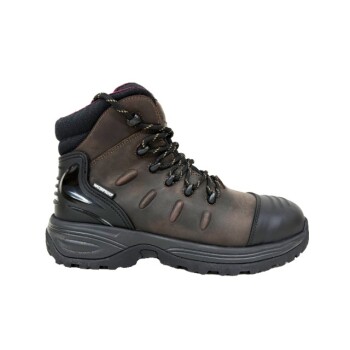
At its core, police footwear is enhanced with special features designed for safety, rapid response, and environmental resilience. These include side zips for quick wear, waterproofing to keep feet dry, insulation for cold climates, and protective elements like safety toes and slip-resistant outsoles.
The goal isn't to find a boot with every possible feature, but to match the right set of features to the specific demands of an officer's environment and daily duties.
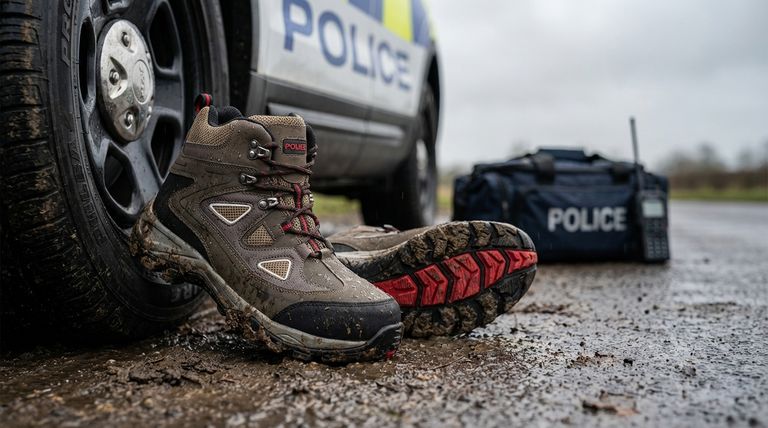
Deconstructing the Modern Police Boot
To understand special features, we must first understand the foundation they are built upon. A police boot is a system of three core components, each serving a distinct purpose.
The Upper: Your First Line of Defense
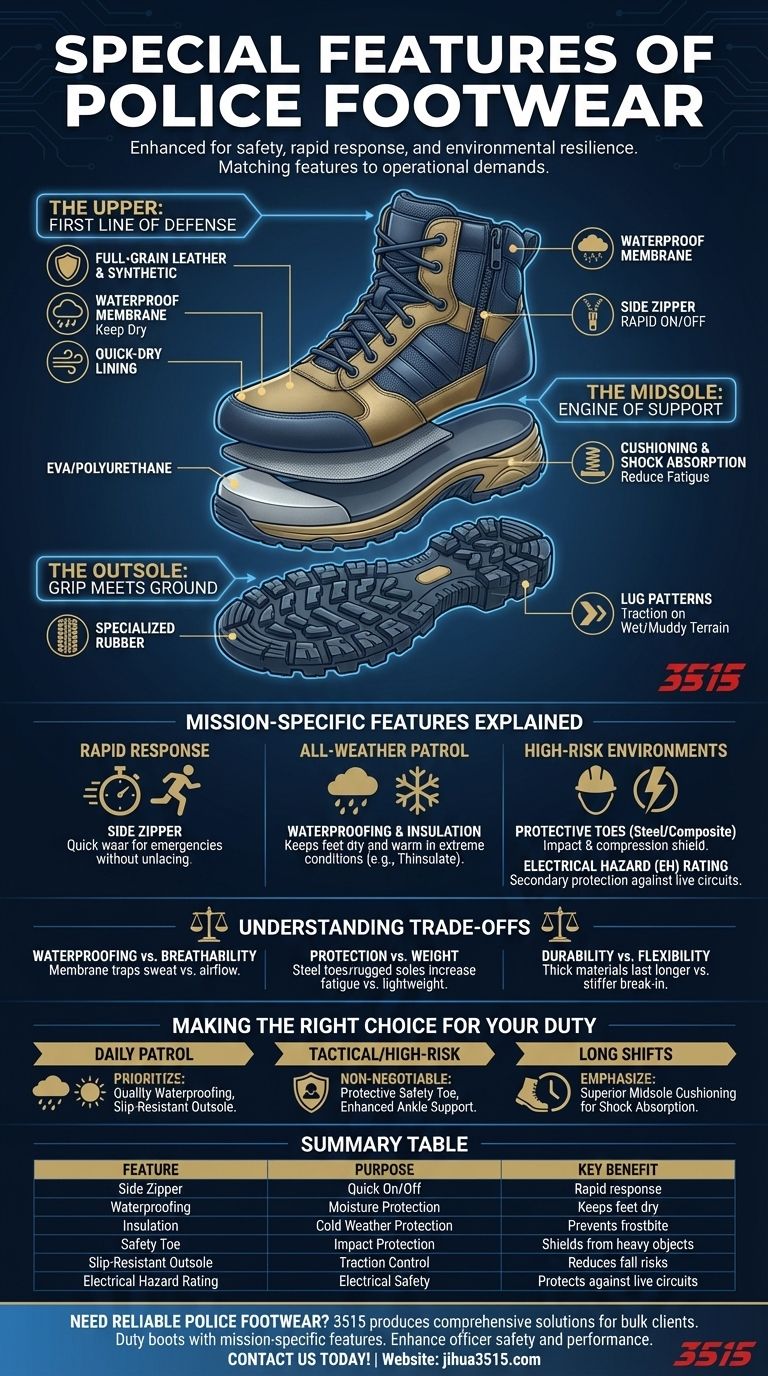
The upper is the material that wraps your foot and ankle. It's often made from durable materials like full-grain leather, lighter suede, or modern synthetic fabrics. This is where features like waterproofing membranes and quick-dry linings are integrated.
The Midsole: The Engine of Support
Positioned between your foot and the outsole, the midsole provides critical cushioning and shock absorption. Materials like EVA or polyurethane are used here to reduce fatigue during long shifts on hard surfaces.
The Outsole: Where Grip Meets Ground
This is the part of the boot that makes contact with the ground. Modern outsoles are engineered for traction and durability, often using specialized rubber compounds like Vibram. The design of the lug patterns—the deep grooves in the sole—is crucial for maintaining grip on wet, muddy, or uneven terrain.
Mission-Specific Features Explained
Beyond the basic construction, specialized features adapt the boot for specific operational needs, enhancing an officer's safety and effectiveness.
For Rapid Response: The Side Zipper
A side zipper is a simple but critical feature for any officer who needs to don their gear quickly. It allows for rapid on-and-off capability without having to unlace the boot, saving valuable time during an emergency call-out.
For All-Weather Patrol: Waterproofing and Insulation
Waterproofing is essential for keeping feet dry and comfortable in rain or wet conditions. For cold climates, insulation materials like Thinsulate are added to provide warmth without excessive bulk, protecting against frostbite and discomfort.
For High-Risk Environments: Protective Toes
A safety toe protects against impact and compression hazards. Steel toes offer maximum protection, while lighter composite toes provide similar safety ratings without conducting electricity or cold. This is a vital feature for tactical teams or officers working in unpredictable environments.
For Specialized Hazards: Electrical Protection
Some boots carry an Electrical Hazard (EH) rating. This indicates the outsole is designed to provide a secondary source of protection against accidental contact with live electrical circuits, a crucial feature for officers working in industrial areas or accident scenes.
Understanding the Trade-offs
Selecting features always involves balancing competing priorities. Understanding these trade-offs is key to making an informed choice.
Waterproofing vs. Breathability
A highly effective waterproof membrane can sometimes trap sweat, making feet feel damp in warm weather. Many manufacturers balance this with breathable materials, but a compromise is often necessary.
Protection vs. Weight
Features like steel toes and thick, rugged outsoles add significant protection but also increase the boot's weight. This can lead to faster fatigue over a long patrol compared to a lighter, more flexible boot.
Durability vs. Flexibility
Tough, durable materials like thick leather offer maximum longevity and protection. However, they often require a break-in period and may feel stiffer than boots made from more flexible synthetic fabrics.
Making the Right Choice for Your Duty
Your selection should be guided by the primary demands of your role.
- If your primary focus is daily patrol in varied weather: Prioritize a quality waterproof membrane and a versatile, slip-resistant outsole.
- If your primary focus is tactical or high-risk entry: A protective safety toe and enhanced ankle support are non-negotiable.
- If your primary focus is long shifts on foot: Emphasize a boot with superior midsole cushioning for shock absorption and fatigue reduction.
Choosing the right footwear is a critical investment in your safety and performance on every shift.
Summary Table:
| Feature | Purpose | Key Benefit |
|---|---|---|
| Side Zipper | Quick On/Off | Rapid response during emergencies |
| Waterproofing | Moisture Protection | Keeps feet dry in wet conditions |
| Insulation | Cold Weather Protection | Prevents frostbite in low temperatures |
| Safety Toe | Impact Protection | Shields feet from heavy objects |
| Slip-Resistant Outsole | Traction Control | Reduces fall risks on slippery surfaces |
| Electrical Hazard Rating | Electrical Safety | Protects against live circuit contact |
Need reliable police footwear for your team? As a large-scale manufacturer, 3515 produces comprehensive footwear solutions for distributors, brand owners, and bulk clients. Our production capabilities cover all types of duty boots and shoes—equipped with mission-specific features like side zips, waterproofing, and safety toes. Let us help you enhance officer safety and performance. Contact us today to discuss your requirements!
Visual Guide
Related Products
- Wholesale Durable Mid-Cut Tactical Boots for Custom & Private Label Brands
- Durable High-Ankle Tactical Boots for Wholesale & Custom Manufacturing
- Durable Mid-Cut Tactical Boots for Wholesale & Private Label
- High-Traction Suede Tactical Boots Wholesale & Custom Manufacturing
- Durable Leather Tactical Boots Wholesale & Custom Manufacturing for Brands
People Also Ask
- What are the main construction similarities between tactical boots and tactical sneakers? Built for Performance & Durability
- Can tactical boots be stylish for everyday wear? Yes, with the right styling and features.
- What are the general characteristics of tactical boots? Lightweight, Agile Footwear for Professionals
- How should tactical boots be stored to maintain their condition? Protect Your Gear Investment
- What are some key features of top-tier tactical boots for 2023? Find the Perfect Boot for Your Mission