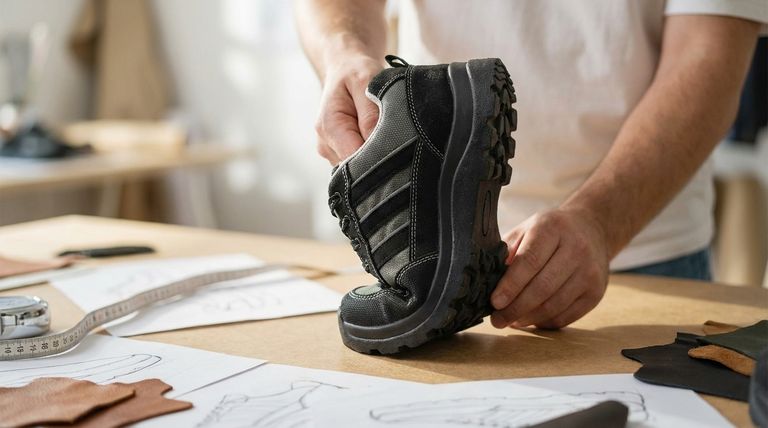
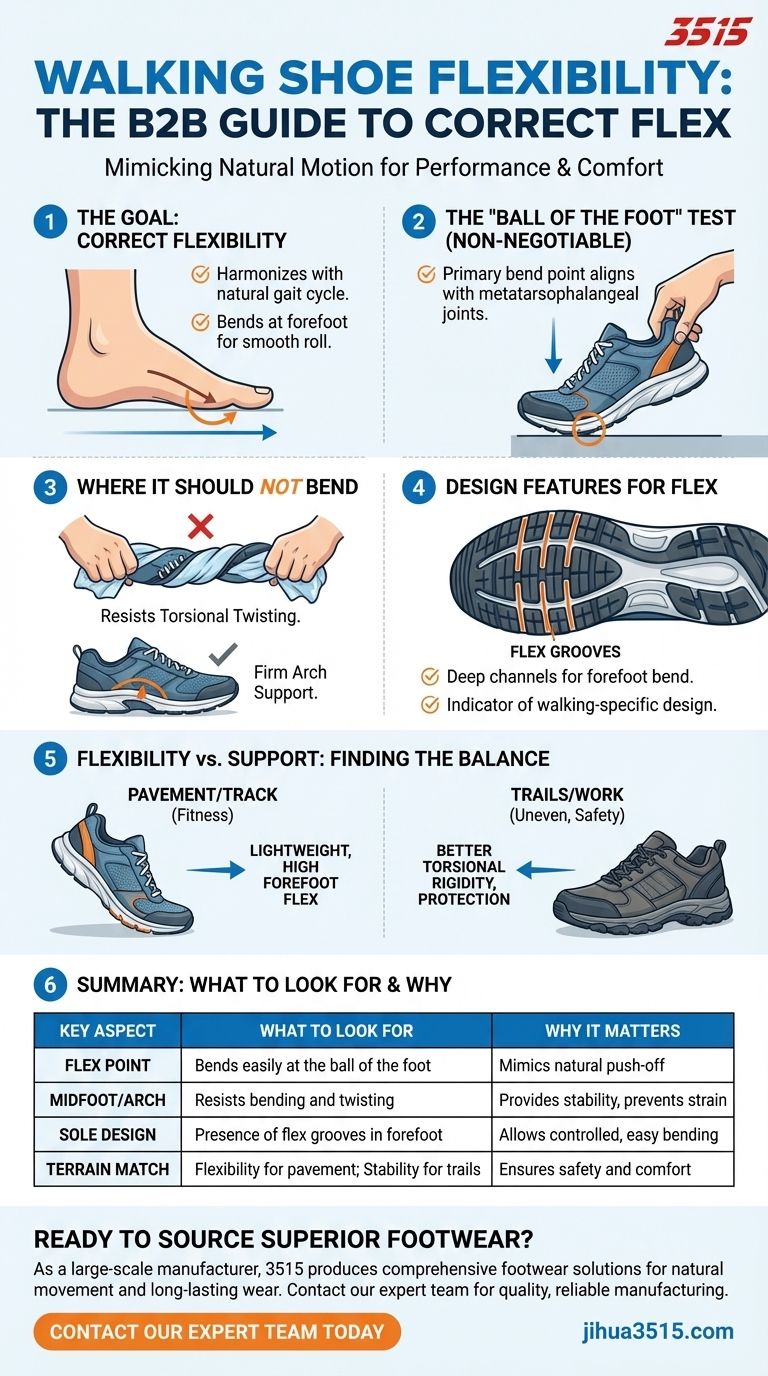
To assess flexibility in walking shoes, you should ensure the shoe bends easily at the ball of the foot, mimicking your foot's natural movement. The ideal shoe is not completely floppy; it should offer resistance in the arch area and flex primarily in the forefoot. A simple test is to hold the shoe by the heel and press the toe against a surface—it should bend where your toes connect to the rest of your foot.
The goal is not maximum flexibility, but correct flexibility. A good walking shoe works in harmony with your foot's natural gait cycle, bending at the forefoot to allow a smooth roll from heel to toe while remaining stable through the midfoot.
Why the Right Flex Point is Non-Negotiable
A walking shoe's primary job is to facilitate the natural mechanics of your foot. Understanding how it should move is key to selecting the right footwear.
Mimicking Your Foot's Natural Motion
The act of walking is a smooth, rolling motion. Your heel strikes the ground first, your foot rolls forward through the arch, and you push off from the ball of your foot and toes.
A shoe that is too stiff prevents this natural roll. A shoe that is too flexible in the wrong places fails to provide necessary support.
The "Ball of the Foot" Test
This is the single most important test for flexibility. When you attempt to bend the shoe from heel to toe, the primary bend point should align with the widest part of the shoe.
This corresponds directly to the metatarsophalangeal joints—the joints where your toes connect to your foot. This is the precise location where your foot needs to bend when you push off the ground.
Identifying Key Design Features
Look at the bottom of the shoe. Flex grooves, which are deep channels cut into the outsole, are intentionally placed to allow the shoe to bend more easily in the forefoot.
Their presence is a good indicator that the manufacturer has designed the shoe specifically for the mechanics of walking.
Flexibility vs. Support: A Critical Balance
Many people mistakenly believe that more support means a stiffer shoe, or that a flexible shoe is inherently unsupportive. The reality is more nuanced.
Where a Shoe Should Not Bend
A shoe should have good torsional stability, meaning it resists twisting. If you can easily wring the shoe out like a wet towel, it likely lacks the midfoot support needed to prevent arch strain and fatigue over long distances.
Flexibility in the arch is a sign of poor construction, not a desirable feature.
The Role of Cushioning and Sole Thickness
Comfort is paramount, but more cushioning is not always better. Some research suggests that thinner, more flexible soles can actually put less stress on your knees.
This is because a highly flexible sole allows your foot to function more naturally, absorbing impact as it was designed to.
The Myth of Over-Correction
For most people with healthy feet, a neutral, flexible walking shoe is the best option.
Research indicates that trying to correct for natural foot pronation or supination with highly structured shoes does not necessarily prevent more injuries than wearing a neutral shoe.
Understanding the Trade-offs
No single shoe is perfect for every situation. Choosing the right level of flexibility often involves balancing competing needs.
Flexibility vs. Terrain
For smooth surfaces like pavement or a track, a highly flexible shoe is ideal.
However, if you walk on uneven trails or gravel, a slightly stiffer shoe with better torsional rigidity will provide more protection and stability against rocks and unexpected twists.
Work and Safety Requirements
For occupational use, specific safety features may take priority over pure walking flexibility.
Shoes with reinforced toecaps or slip-resistant outsoles might be inherently stiffer, but this is a necessary trade-off for safety in certain environments. Comfort and proper fit remain crucial, as these shoes are worn for extended periods.
Making the Right Choice for Your Goal
Ultimately, the shoe must match your primary activity and foot type. Before buying, always test the fit and feel, ensuring there is about a half-inch of space between your longest toe and the end of the shoe.
- If your primary focus is fitness walking on pavement: Prioritize a lightweight shoe that passes the "ball of the foot" test with ease.
- If your primary focus is all-day comfort for work or travel: Seek a balance between forefoot flexibility and firm arch support to prevent fatigue.
- If your primary focus is walking on trails or varied ground: Choose a shoe with prominent flex grooves for traction but stronger torsional stability to protect your foot.
Choose the shoe that allows your foot to move as intended, providing a seamless extension of your natural stride.
Summary Table:
| Key Aspect | What to Look For | Why It Matters |
|---|---|---|
| Flex Point | Bends easily at the ball of the foot | Mimics your foot's natural push-off motion |
| Midfoot/Arch | Resists bending and twisting | Provides stability and prevents arch strain |
| Sole Design | Presence of flex grooves in the forefoot | Allows for controlled, easy bending |
| Terrain Match | More flexibility for pavement, more stability for trails | Ensures safety and comfort for your activity |
Ready to step into superior comfort and performance?
As a large-scale manufacturer, 3515 produces a comprehensive range of footwear for distributors, brand owners, and bulk clients. Whether you need highly flexible fitness walkers, durable all-day comfort shoes, or stable trail options, our production capabilities encompass all types of shoes and boots designed for natural movement and long-lasting wear.
Contact our expert team today to discuss your specific footwear needs and discover how we can support your business with quality, reliable manufacturing.
Visual Guide
Related Products
- Wholesale Durable Camouflage Canvas Shoes with High-Traction Cleated Rubber Sole
- Durable Rubber Sole Outdoor Shoes Wholesale & Custom Manufacturing
- Premium Suede Sport Safety Shoes for Wholesale & Bulk Orders
- Durable Goodyear Welt Leather Work Boots for Wholesale & Private Label
- Wholesale Comfortable Business Casual Shoes Custom Manufacturing
People Also Ask
- Why is the selection of high-strength fabric materials necessary in the production of canvas shoes and training shoes?
- What are the properties of canvas as a shoe material? A Guide to Lightweight Comfort & Style
- Can canvas shoes be worn in rainy conditions? The Truth About Water Resistance
- What are some examples of vulcanized shoes? Discover the Flexibility and Board Feel of Classic Sneakers
- What are the characteristics of canvas as a shoe material? A Guide to Lightweight, Breathable Footwear