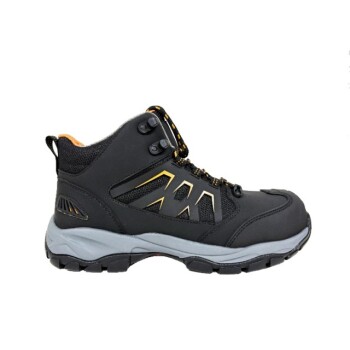
Choosing the right safety footwear is a critical decision that goes far beyond simply meeting a workplace requirement. For women, the most important considerations are to first identify the specific hazards of your work environment, and then to select footwear that offers the correct protection rating while providing a proper, secure fit designed for a woman's foot.
The most effective safety footwear is not just the one with the highest protection rating, but the one that correctly matches the specific risks of your job with a fit that ensures comfort and stability throughout the entire workday.
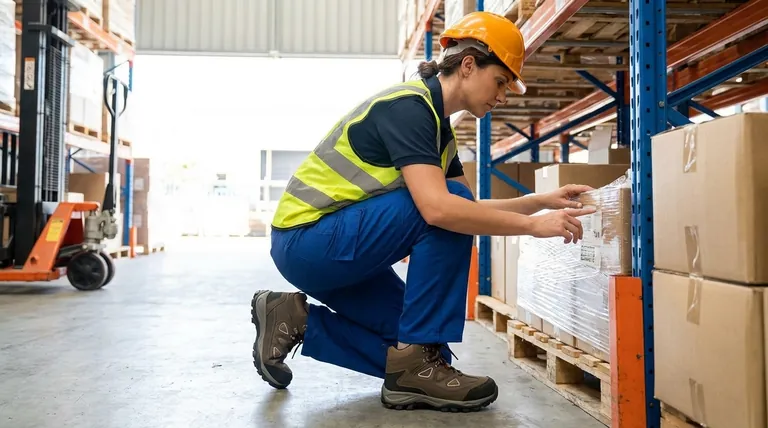
Deconstructing Your Workplace Hazards
The foundation of any safety footwear decision is a clear understanding of the risks you face daily. This analysis ensures you are selecting protection that is relevant and effective for your specific role.
Start with Your Employer's Mandate
The first and most important step is to consult your employer. Your workplace safety plan is the definitive source for the minimum protection standards required for your job.
This plan will specify mandatory features, such as the need for steel toes or boots with a specific rating for electrical hazards.
Analyze Your Physical Environment
Look at the surfaces you walk and work on. Are they consistently wet, muddy, or slippery? Do you spend long hours standing on hard, unforgiving concrete?
Different outsoles are designed to handle these specific conditions, providing critical slip resistance or cushioning to reduce fatigue.
Identify Job-Specific Risks
Consider the direct threats to your feet. If your role involves lifting or moving heavy objects, impact protection from a safety toe is non-negotiable.
If you work near live electrical circuits, you will likely need EH-rated (Electrical Hazard) boots. Conversely, environments with sensitive electronics may require SD-rated (Static Dissipative) footwear to prevent static discharge.
The Critical Importance of a Proper Fit
Protection is only effective if the footwear is worn correctly and consistently. A poor fit not only causes discomfort but can create new safety risks.
Why "Unisex" Often Isn't Enough
Historically, many safety boots were designed on a man's footwear last and simply sized down. However, women's feet typically have a different structure, often being narrower in the heel and wider in the forefoot.
Choosing footwear specifically designed for a woman's foot provides better heel lock, arch support, and overall stability, preventing your foot from sliding inside the boot.
The Impact of an Improper Fit
Footwear that is too loose can be a tripping hazard, while footwear that is too tight can cause blisters, bunions, and long-term foot pain.
Discomfort leads to fatigue, which can reduce focus and increase the risk of accidents on the job.
Understanding Safety Toe Options
The safety toe is the most recognized feature of protective footwear, but the material used has significant implications for weight and comfort.
Steel Toes: The Traditional Standard
Steel toes have long been the industry standard for providing maximum protection against impact and compression.
Many job sites with severe overhead or rolling object hazards explicitly mandate steel toe boots as the minimum safety requirement.
Non-Steel Toes: The Modern Alternative
Composite or alloy safety toes are a lighter-weight alternative that still meets ASTM safety standards for impact and compression.
These are often preferred for their comfort over long shifts and because they do not conduct cold or heat as readily as steel. They also eliminate issues when passing through metal detectors.
Understanding the Trade-offs
Choosing the right footwear involves balancing competing priorities. Understanding these trade-offs empowers you to make a more informed decision.
Protection vs. Weight
Heavier, more robust protection often comes at the cost of increased weight. A steel toe boot might offer maximum impact resistance but can lead to greater leg fatigue over a 10-hour shift compared to a lighter composite toe.
Mandated Requirements vs. Personal Comfort
Your employer’s rules set the baseline. While you must meet these non-negotiable standards, you still have choices regarding fit, cushioning, and materials that can significantly impact your daily comfort.
Specialized Features vs. Overall Cost
Boots with highly specific features like electrical hazard ratings, waterproofing, or advanced cushioning systems typically come at a higher price. It's crucial to invest in the features you truly need for your environment.
Making the Right Choice for Your Role
Your final decision should be a direct reflection of your job's demands and your personal need for comfort and stability.
- If your primary focus is meeting strict site rules for impact protection: Confirm your employer's mandate and choose a steel toe boot that meets the required safety standard while offering a gender-specific fit.
- If your primary focus is all-day comfort while working around electrical hazards: Prioritize a lightweight, EH-rated boot with a composite toe and excellent cushioning designed for a woman's foot.
- If your primary focus is navigating varied and slippery environments: Select a boot with a highly-rated, slip-resistant outsole and consider waterproof features if you frequently work in wet conditions.
Ultimately, protecting your feet is a foundational element of your personal safety at work.
Summary Table:
| Key Consideration | What to Look For |
|---|---|
| Workplace Hazards | Slip resistance, electrical hazard (EH) rating, impact protection (steel or composite toe) |
| Proper Fit | Footwear designed for a woman's foot shape, secure heel lock, adequate arch support |
| Safety Toe Options | Steel toe (maximum protection) vs. composite toe (lightweight, non-conductive) |
| Comfort & Durability | Cushioning, waterproofing, materials suited to your work environment and shift length |
Need reliable, high-quality safety footwear for your team?
As a large-scale manufacturer, 3515 produces a comprehensive range of safety shoes and boots designed to meet the specific needs of distributors, brand owners, and bulk clients. Our production capabilities encompass all types of protective footwear, including models with advanced safety features and ergonomic designs tailored for women. We ensure durability, compliance with safety standards, and competitive pricing for bulk orders.
Let us help you equip your workforce with the right protection. Contact us today to discuss your requirements and request a quote!
Visual Guide

Related Products
- Premium Safety Shoes with Rotating Buckle Safety Sneakers
- Premium Suede Sport Safety Shoes for Wholesale & Bulk Orders
- Safety Footwear Wholesale Manufacturer for Custom OEM/ODM Production
- Premium Lightweight Safety Shoes for Wholesale & Bulk Orders
- Premium Wholesale Tactical Style Safety Shoes Boots with Quick Lacing
People Also Ask
- How Specialized Footwear Impacts Side-Cutting Performance and Injury Risk Assessment
- How do specialized safety shoes protect against battery maintenance injuries? Prevent Impact and Chemical Burns
- What are the main safety features of S1-S5 shoes? The 3 Essential Protections Explained
- What role do specialized safety shoes play in preventing falls? Engineering Stability in Industrial Environments
- What are the primary functions of professional safety shoes? Maximize Safety in Water Supply Confined Spaces