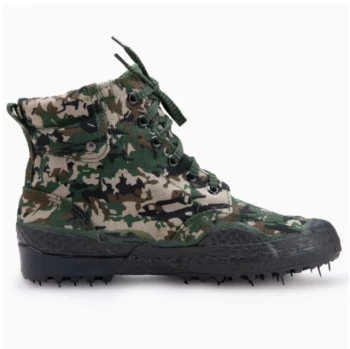
For any outdoor adventure, walkers must prioritize function over fashion. The ideal footwear is a purpose-built tool that keeps your feet dry, comfortable, and protected from the specific terrain you will encounter.
The choice between hiking boots and walking shoes isn't about which is universally "better," but about correctly matching the level of support, waterproofing, and weight to the demands of your specific journey.
Why Your Footwear Choice is Mission-Critical
The right pair of shoes is the most fundamental piece of equipment for any walker. It directly impacts your physical endurance, safety, and overall enjoyment of the outdoors.
Beyond Appearance: The Primacy of Function
While style has its place, it is a secondary concern for outdoor adventures. Functional footwear is essential for activities involving prolonged walking, as inappropriate shoes can quickly lead to discomfort, aches, and even injury.
The Foundation of Endurance and Safety
Proper footwear protects you from the environment and supports your body. This allows you to walk farther with less fatigue and significantly reduces the risk of twists, sprains, and blisters that can derail an entire trip.
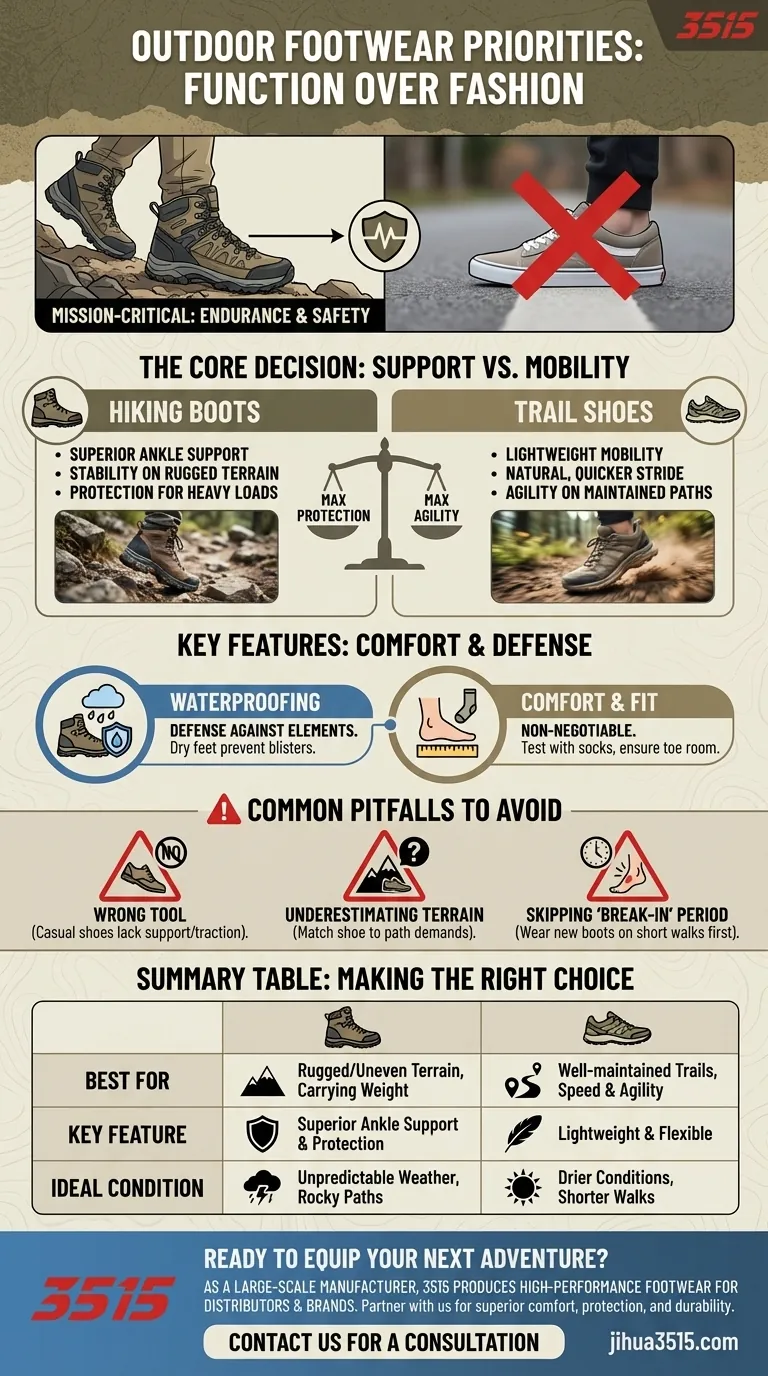
The Core Decision: Support vs. Mobility
Your primary decision will be choosing between the ankle support of a boot and the lightweight agility of a shoe. This choice should be guided by the nature of your planned activities.
The Case for Hiking Boots
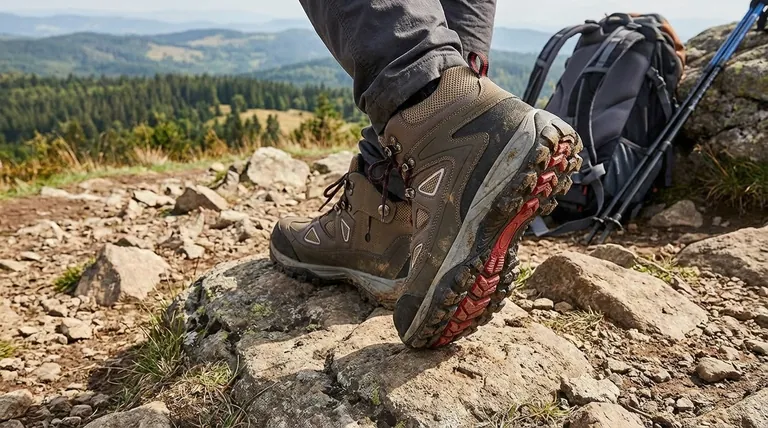
Hiking boots are engineered for maximum protection. Their high-cut design provides superior ankle support, which is critical when navigating uneven, rocky, or unpredictable terrain.
This added stability helps prevent injuries, especially when carrying a backpack, and offers a more robust barrier against rocks, roots, and water.
The Case for Trail Shoes or Sneakers
Trail shoes or walking sneakers prioritize lightweight mobility. They are less restrictive than boots, allowing for a more natural and quicker stride.
This makes them an excellent choice for well-maintained trails, shorter walks, or situations where speed and agility are more important than maximum support.
Understanding the Key Features
Once you've decided on a type, focus on the features that deliver comfort and protection.
Waterproofing: Your Defense Against the Elements
Weather can change without warning. Footwear with a waterproof membrane is a crucial investment to keep your feet dry from rain, puddles, or stream crossings.
Dry feet are essential for comfort and preventing blisters, ensuring a pleasant experience even in poor conditions.
Comfort and Fit: The Non-Negotiable Element
No feature matters if the shoe doesn't fit correctly. Your footwear should feel supportive without being restrictive, with enough room for your toes to move. Always test footwear with the type of socks you plan to wear.
Common Pitfalls to Avoid
Making an informed choice also means understanding what not to do. Avoiding these common mistakes will save you from significant discomfort.
Choosing the Wrong Tool for the Job
Never wear casual sneakers or fashion-oriented footwear on a serious walk. They lack the necessary support, traction, and durability, leading to a high risk of injury and a ruined experience.
Underestimating the Terrain
Be realistic about your plans. A lightweight shoe that is perfect for a flat park trail is dangerously inadequate for a steep, rocky mountain path. Always choose footwear that slightly exceeds the demands of your expected terrain.
Forgetting the "Break-In" Period
Never take a brand-new pair of boots on a long hike. Wear them for shorter walks around your neighborhood first to allow the material to soften and conform to your feet, preventing painful blisters on the trail.
Making the Right Choice for Your Adventure
Select your footwear based on a clear-eyed assessment of your primary goal.
- If your primary focus is stability on rugged, unpredictable trails or when carrying weight: Prioritize hiking boots for their superior ankle support and robust protection.
- If your primary focus is speed and agility on well-maintained paths: Prioritize trail shoes or sneakers for their lightweight design and flexibility.
- If your primary focus is walking in wet or all-weather conditions: Prioritize a proven waterproof membrane, regardless of whether you choose a boot or a shoe.
Investing in the right footwear is investing in the success and enjoyment of your entire adventure.
Summary Table:
| Priority | Hiking Boots | Trail Shoes |
|---|---|---|
| Best For | Rugged, uneven terrain; carrying weight | Well-maintained trails; speed & agility |
| Key Feature | Superior ankle support & protection | Lightweight & flexible for natural movement |
| Ideal Condition | Unpredictable weather, rocky paths | Dryer conditions, shorter walks |
Ready to Equip Your Next Adventure with the Perfect Footwear?
As a large-scale manufacturer, 3515 produces a comprehensive range of high-performance footwear for distributors, brand owners, and bulk clients. Whether your customers need durable hiking boots for rugged trails or lightweight trail shoes for agile walks, our production capabilities encompass all types of shoes and boots.
Partner with us to offer footwear that combines superior comfort, protection, and durability. Let's discuss your needs and how we can support your business.
Contact us today for a consultation!
Visual Guide
Related Products
- Wholesale High-Traction Camo Boots - Custom Manufacturer for Brands
- Durable Rubber Sole Outdoor Shoes Wholesale & Custom Manufacturing
- Durable Spiked Camouflage Boots Wholesale & Factory Production
- Wholesale Lightweight Tactical Boots Custom Manufacturer for Desert & Combat Use
- Wholesale Waterproof Tactical Boots Custom Suede & High-Traction Soles
People Also Ask
- What are the key features of the new line of camo boots? Built for Extreme Cold & Rugged Terrain
- Are camo boots necessary for hunting success? Prioritize Performance Over Pattern
- What is the technical logic behind using closed-eye testing for tactical boots? Unlocking Peak Footwear Stability
- How does the Rank Score Test identify the primary causes of premature failure in tactical and work boots? Key Insights
- What shoes to wear for a security job? Durable, Protective Footwear for Long Shifts