To choose the perfect pair of cowboy boots, you must focus on four key areas: the fit, the materials, the style of the components (like the toe and heel), and your primary intended function for wearing them. A boot designed for ranch work will have different features than one made for a night out, and understanding these distinctions is critical.
The most common mistake is focusing on style before function. The perfect cowboy boot is not the one that looks the best on the shelf, but the one that aligns its specific construction—from the sole material to the heel height—with your foot's anatomy and your intended use.
The Foundation: Nailing the Perfect Fit
Getting the fit right is the most critical step. Cowboy boot sizing is often different from that of sneakers or dress shoes, and a proper fit feels counterintuitive at first.
Understanding Cowboy Boot Sizing
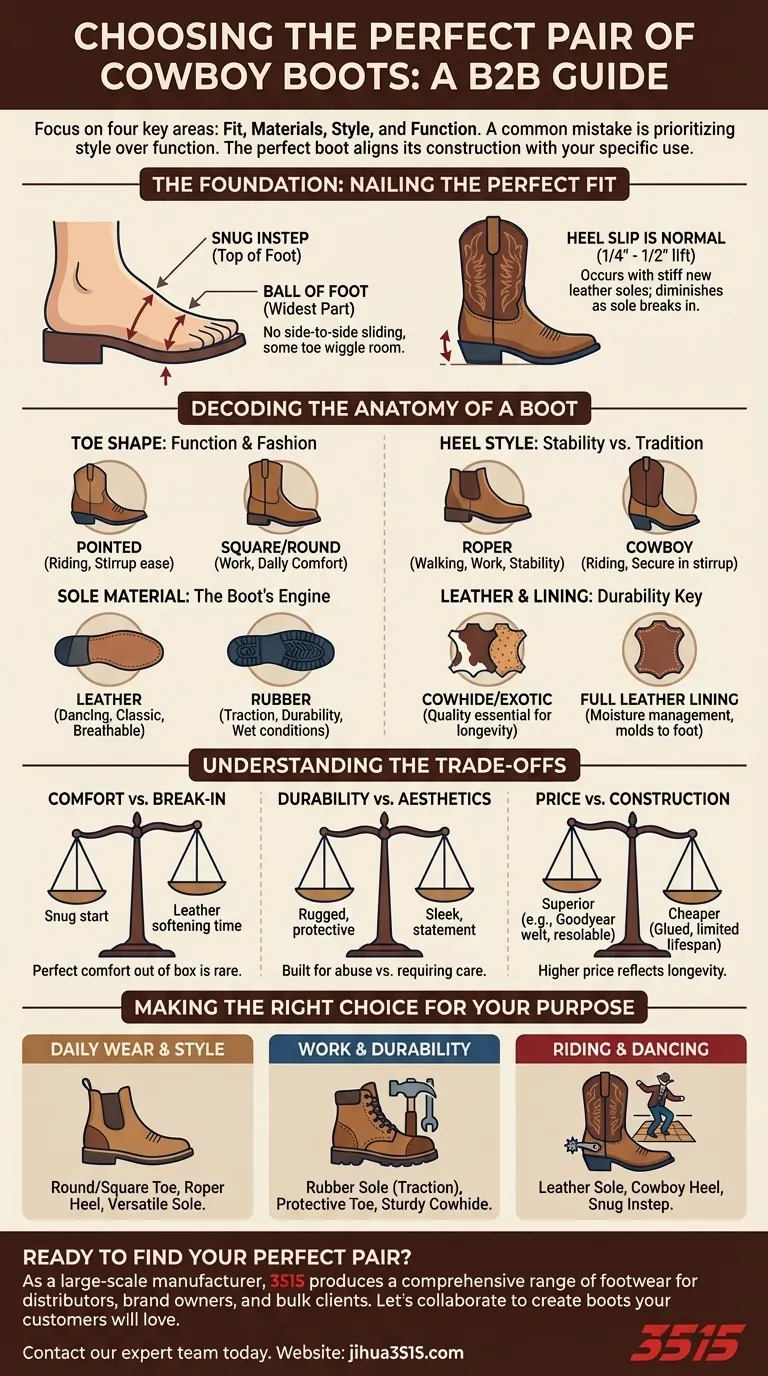
A new cowboy boot should feel snug across the instep, which is the top of your foot. This snugness is what holds the boot in place, as there are no laces to tighten.
The ball of your foot should sit at the widest part of the boot. You should have some room to wiggle your toes, but your foot should not slide from side to side.
What is "Heel Slip" and Why is it Normal?
When you walk in a new pair of boots, your heel should lift about a quarter to a half-inch. This is called heel slip, and it is a hallmark of a well-fitting boot.
This slip occurs because the leather sole is stiff when new. As you wear the boots, the sole will break in and flex with your foot, and the heel slip will diminish significantly.
Decoding the Anatomy of a Boot
Beyond fit, the individual components of the boot dictate its comfort, function, and overall look. Understanding these parts allows you to select a boot that truly meets your needs.
Toe Shape: From Function to Fashion
Toe shapes range from traditional pointed styles to broad square toes. A narrow toe was historically designed to slide easily into a stirrup.
A round or square toe offers more room and is often preferred for work boots or for those seeking maximum comfort for daily wear.
Heel Style: Stability vs. Tradition
The heel's design directly impacts stability and function. A shorter, blockier "roper" heel is very stable and excellent for walking or working.
A taller, angled "cowboy" heel is the traditional style, designed to lock into a stirrup securely while riding.
Sole Material: Leather vs. Rubber
The sole is the boot's engine. A leather sole is classic, breathable, and ideal for dancing as it allows you to glide smoothly.
A rubber sole offers superior traction, water resistance, and durability, making it the practical choice for work, walking on pavement, or wearing in wet conditions.
Leather and Lining: The Key to Durability
Most boots are made from cowhide, but exotic leathers like ostrich or caiman offer distinct looks and textures. Regardless of the type, quality leather is essential for longevity.
A full leather lining is a sign of a high-quality boot. It helps manage moisture, feels more comfortable against the skin, and will mold to your foot over time.
Understanding the Trade-offs
There is no single "best" boot, only the best boot for a specific purpose. Recognizing the inherent compromises is key to making a wise investment.
Comfort vs. Break-in Period
While a boot should feel snug and secure from the start, high-quality leather requires a break-in period. The promise of "perfect comfort out of the box" is rare; the leather needs time to soften and conform to your foot's unique shape.
Durability vs. Aesthetics
A rugged work boot with a thick rubber sole and a protective square toe is built for abuse, not for a formal event. Conversely, a sleek boot made of exotic leather is an aesthetic statement and requires more care.
Price vs. Construction
A higher price often reflects superior construction, such as a Goodyear welt, which allows the boot to be resoled multiple times. Cheaper boots may be glued together, limiting their lifespan significantly.
Making the Right Choice for Your Purpose
Match the boot's features to your primary goal to ensure satisfaction and long-term value.
- If your primary focus is daily wear and style: Choose a comfortable round or square toe, a stable roper-style heel, and consider a versatile sole that can handle various surfaces.
- If your primary focus is work and durability: Prioritize a rubber sole for traction, a protective toe, and sturdy, easy-to-maintain cowhide leather.
- If your primary focus is riding or dancing: Insist on a traditional leather sole, a taller cowboy heel to secure in a stirrup, and a snug fit at the instep.
Ultimately, choosing the right boot is about honestly assessing your needs and understanding how each part contributes to that purpose.
Summary Table:
| Feature | Key Consideration | Best For |
|---|---|---|
| Fit | Snug instep, heel slip is normal | Secure feel, prevents blisters |
| Toe Shape | Narrow (pointed) vs. Broad (round/square) | Riding vs. Work/Daily Comfort |
| Heel Style | Roper (low/stable) vs. Cowboy (tall/angled) | Walking/Work vs. Riding/Dancing |
| Sole Material | Leather (breathable) vs. Rubber (durable) | Style/Dancing vs. Work/Traction |
| Leather Type | Cowhide (durable) vs. Exotic (aesthetic) | Work vs. Fashion |
Ready to Find Your Perfect Pair of Cowboy Boots?
As a large-scale manufacturer, 3515 produces a comprehensive range of footwear for distributors, brand owners, and bulk clients. Our production capabilities encompass all types of shoes and boots, ensuring you get the perfect combination of fit, function, and style tailored to your market's needs.
Let's collaborate to create boots that your customers will love.
Contact our expert team today to discuss your specific requirements and discover how we can support your business with high-quality, purpose-built footwear.
Visual Guide
Related Products
- Durable Spiked Camouflage Boots Wholesale & Factory Production
- Wholesale High-Traction Camo Boots - Custom Manufacturer for Brands
- High-Traction Suede Tactical Boots Wholesale & Custom Manufacturing
- Wholesale Lightweight Tactical Boots Custom Manufacturer for Desert & Combat Use
- Durable Leather Tactical Boots Wholesale & Custom Manufacturing for Brands
People Also Ask
- How does boot height affect waterproofing? Choose the Right Height for Ultimate Protection
- What are the best types of shoes for different gardening conditions? Find Your Perfect Match.
- What role does camouflage play in hunting boots? It's More Than Just a Pattern
- What should you look for to ensure boots are fully waterproof? The Essential 2-Part System
- How does boot construction affect waterproofing? The Science Behind Truly Dry Feet