
To choose genuinely eco-friendly wellies, you must look beyond surface-level claims. The most critical factors are the core material, the manufacturer's ethical standards, the brand's overall sustainability policies, clear end-of-life options like recyclability, and transparent, third-party certifications that validate their claims.
The most sustainable choice isn't just a product, but a process. It involves selecting wellies made from responsibly sourced natural materials by a brand that is transparent about its ethical production and has a clear plan for what happens to the boots when you're done with them.
The Material Dilemma: Natural Rubber vs. Synthetics
The substance a welly is made from is the single largest factor in its environmental footprint. This is the first and most important checkpoint in your decision.
Why Natural Rubber is the Preferred Choice
Natural rubber is a renewable resource tapped from Hevea trees. Unlike synthetic alternatives, it is biodegradable and its production can support biodiversity when managed correctly.
This material offers excellent waterproofing and flexibility, making it functionally superior for high-quality wellington boots without relying on petroleum.
The Problem with PVC and Other Plastics
Most cheap wellies are made from polyvinyl chloride (PVC), a type of plastic derived from fossil fuels. Its production is energy-intensive and can release harmful toxins.
Furthermore, PVC is not biodegradable and is notoriously difficult to recycle, meaning most PVC boots end up in landfills for centuries.
Not All Natural Rubber is Created Equal
Simply choosing natural rubber is not enough. Unsustainable rubber plantations can lead to deforestation and habitat loss.
Look for brands that use rubber certified by the Forest Stewardship Council (FSC). This certification ensures the rubber comes from a plantation that is managed to preserve biological diversity and benefit the lives of local people and workers.
Beyond the Boot: Evaluating the Manufacturer
A sustainable product cannot come from an unsustainable company. Scrutinizing the brand's practices is just as important as analyzing the boot's materials.
The Role of Ethical Labor Practices
True sustainability includes a human element. Look for brands that are transparent about their supply chains and guarantee fair wages and safe working conditions for their employees.
Certifications like Fair Trade or being a Certified B Corporation are strong indicators that a company considers its social and environmental impact, not just profit.
Gauging a Brand's Overall Sustainability
Investigate the brand's website for a dedicated sustainability section. Do they publish an annual impact report? Do they outline clear goals for reducing waste, water usage, and carbon emissions?
Vague statements about "being green" are a red flag. Look for specific data, commitments, and transparency about their entire operation.
Planning for the End-of-Life
A truly eco-conscious brand considers the full lifecycle of its product. Check if the company offers a take-back or recycling program for their old boots.
This demonstrates a commitment to circularity and prevents their products from ending up in a landfill.
Understanding the Trade-offs and Pitfalls
No choice is perfect. Being an informed consumer means recognizing the complexities and avoiding common marketing traps that obscure the truth.
The Challenge of "Greenwashing"
"Greenwashing" is the practice of making misleading claims about a product's environmental benefits. Be wary of vague terms like "eco," "green," or "natural" without specific proof.
Always prioritize specifics and certifications over broad, unsupported marketing language. If a brand's claims seem too good to be true, they often are.
Durability is a Form of Sustainability
The most eco-friendly product is often the one you don't have to replace. A cheap, poorly made boot from "sustainable" materials that falls apart in one season has a worse impact than a durable boot that lasts for a decade.
Balance your material and brand analysis with an assessment of the product's quality, construction, and longevity.
Making the Right Choice for Your Goal
Use these principles to align your purchase with your priorities.
- If your primary focus is material impact: Prioritize wellies made from FSC-certified natural rubber from a brand that is transparent about its sourcing.
- If your primary focus is ethical production: Look for brands with certifications like B Corp or Fair Trade that disclose their factory locations and labor policies.
- If your primary focus is the full lifecycle: Choose a durable, high-quality boot from a brand that offers a clear recycling or take-back program.
Ultimately, a conscious purchase is an informed one that values transparency, quality, and a genuine commitment to environmental stewardship.
Summary Table:
| Factor | What to Look For | Why It Matters |
|---|---|---|
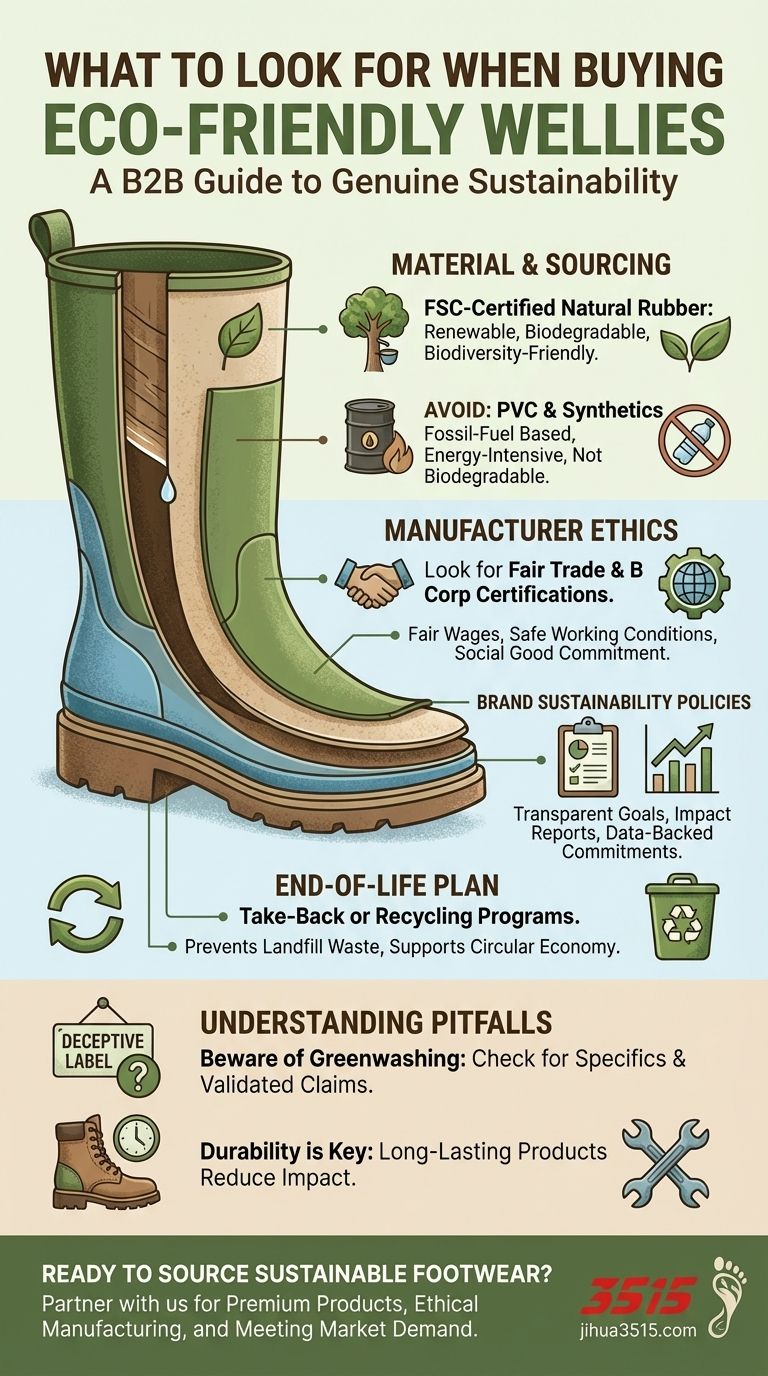
| Core Material | FSC-certified natural rubber | Renewable, biodegradable, avoids fossil-fuel-based plastics like PVC. |
| Manufacturer Ethics | Fair Trade, B Corp certifications | Ensures fair wages, safe conditions, and a commitment to social good. |
| Sustainability Policies | Transparent goals, impact reports | Shows a genuine, data-backed commitment beyond marketing claims. |
| End-of-Life Plan | Take-back or recycling programs | Prevents landfill waste and supports a circular economy. |
| Certifications | FSC, Fair Trade, B Corp | Third-party validation of environmental and ethical claims. |
Ready to Source Truly Sustainable Footwear?
As a large-scale manufacturer, 3515 produces a comprehensive range of footwear for distributors, brand owners, and bulk clients. We combine ethical production with high-quality materials to create durable, eco-friendly boots that meet the highest standards of sustainability.
Partner with us to:
- Access Premium Products: Our production capabilities encompass all types of shoes and boots, including wellies made with responsibly sourced materials.
- Ensure Ethical Manufacturing: We prioritize transparency and fair labor practices throughout our supply chain.
- Meet Market Demand: Supply your customers with verified, sustainable footwear they can trust.
Let's discuss your sustainable footwear needs. Contact our team today to start a conversation.
Visual Guide
Related Products
People Also Ask
- What are the main materials for waterproof rain boots? Choose the Right Material for Durability & Comfort
- What is the overall recommendation for choosing rain boot materials? A Guide to Rubber vs. PVC
- How does boot height affect waterproofing? Choose the Right Height for Ultimate Protection
- Why are rain boots more flexible and comfortable than snow boots? The Key Differences Explained
- What are the best types of shoes for different gardening conditions? Find Your Perfect Match.
