
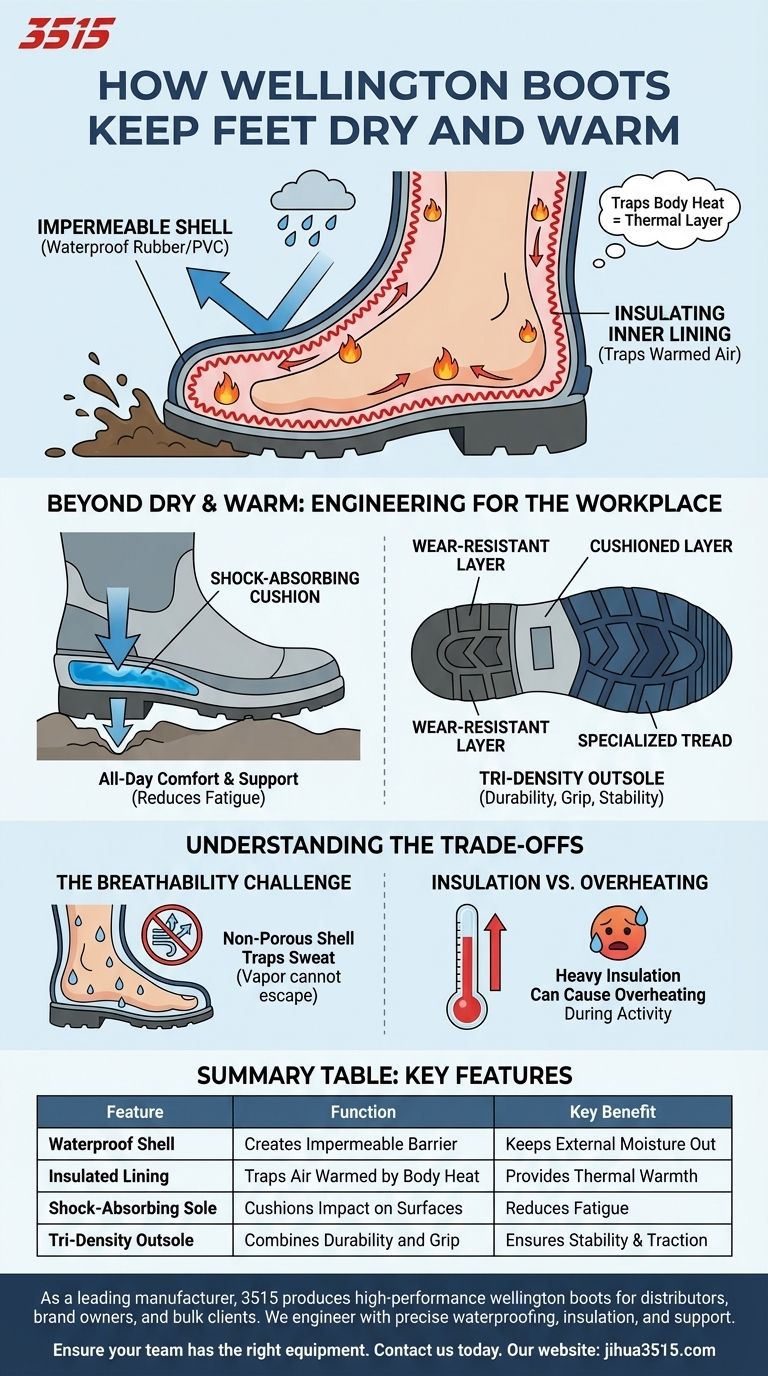
Wellington boots keep feet dry and warm by combining two fundamental principles: an impermeable outer barrier and an insulating inner lining. The waterproof material, typically rubber or PVC, creates a seamless shield against external moisture. Internally, a dedicated lining traps air, which is then warmed by your body heat to create a thermal layer against the cold.
The true effectiveness of a work-grade Wellington boot lies not just in its waterproofing, but in the engineered system of its shell, lining, and sole, which work together to provide dryness, warmth, and all-day structural support.
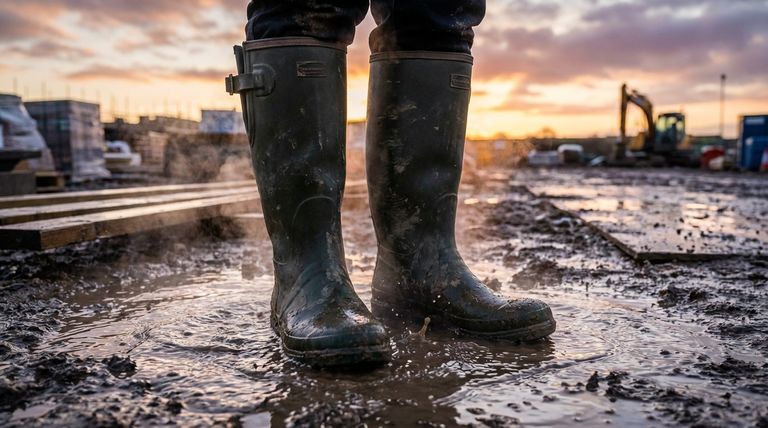
The Primary Defense: Waterproofing
The Impermeable Shell
The core of a Wellington boot's function is its non-porous shell. Materials like natural rubber or PVC are inherently waterproof, meaning they do not allow water to penetrate their structure.
This creates a continuous, reliable barrier that protects the foot from rain, mud, puddles, and other wet conditions common in outdoor work.
Construction Integrity
Unlike many other types of footwear, Wellington boots are often molded as a single piece. This seamless construction is a critical advantage, as it eliminates stitches and joints that are the most common points of failure for water entry in traditional boots.
The Mechanism of Warmth: Insulation
The Role of the Lining
The lining inside a Wellington boot is not just for comfort; it is the primary source of insulation. Its material is designed to trap a layer of air around your foot.
Your own body heat warms this trapped air, creating an effective thermal buffer that insulates you from the colder external temperature of the boot's shell.
Material Considerations
The type and thickness of the lining material directly dictate the boot's warmth. A simple cotton lining offers minimal insulation for cool conditions, while advanced materials like neoprene provide significant thermal protection for work in much colder weather.
Beyond Dry and Warm: Engineering for the Workplace
All-Day Comfort and Support
For professional use, keeping feet dry and warm is only part of the equation. Modern work Wellingtons incorporate features designed to combat fatigue.
A shock-absorbing cushion integrated into the midsole helps dissipate the impact of walking on hard or uneven ground, making long periods of standing or walking more manageable.
Durability and Traction
The outsole is engineered for performance and longevity. A tri-density rubber sole, for instance, uses different compounds of rubber in different zones.
This allows for a combination of a tough, wear-resistant layer for ground contact, a softer cushioned layer for comfort, and a specialized tread pattern for superior grip and stability.
Understanding the Trade-offs
The Breathability Challenge
The very quality that makes a Wellington boot waterproof—its non-porous shell—is also its biggest drawback. Rubber and PVC do not allow water vapor to escape.
This means that sweat produced by your feet can become trapped, leading to a damp internal environment even when no external water has entered. This is a critical factor to manage during long workdays.
Insulation vs. Overheating
A heavily insulated boot that is ideal for cold, stationary work can quickly cause overheating and excessive sweating during strenuous activity or in milder temperatures. Choosing the appropriate level of insulation for your specific activity level and climate is essential for comfort and foot health.
Making the Right Choice for Your Environment
To select the right boot, you must match its features to your specific work demands.
- If your primary focus is waterproofing in mild, wet conditions: Prioritize a simple, non-lined rubber boot for its effective and straightforward water barrier.
- If your primary focus is warmth for work in cold weather: Select a boot with a dedicated insulating lining, ensuring it is rated for your expected temperatures.
- If your primary focus is all-day wear and fatigue reduction: Look for critical comfort features like shock-absorbing cushions and multi-density soles.
Choosing the correct Wellington boot means treating it not as simple footwear, but as a piece of essential professional equipment designed for your specific task.
Summary Table:
| Feature | Function | Key Benefit |
|---|---|---|
| Waterproof Shell | Creates an impermeable barrier | Keeps external moisture out |
| Insulated Lining | Traps air warmed by body heat | Provides thermal warmth |
| Shock-Absorbing Sole | Cushions impact on hard surfaces | Reduces fatigue for all-day wear |
| Tri-Density Outsole | Combines durability and grip | Ensures stability and traction |
As a leading manufacturer, 3515 produces high-performance wellington boots for distributors, brand owners, and bulk clients. We engineer our boots with the precise combination of waterproofing, insulation, and support needed for your specific work environment.
Ensure your team has the right equipment for the job. Contact us today to discuss your requirements and benefit from our comprehensive production capabilities for all types of safety and work footwear.
Visual Guide
Related Products
- Durable Waterproof Rain Boots | Custom Manufacturer for Wholesale & Brands
- Durable Goodyear Welt Leather Work Boots for Wholesale & Private Label
- Wholesale Durable Leather Work Boots | 8-Inch Goodyear Welt Manufacturer
- High-Traction Suede Tactical Boots Wholesale & Custom Manufacturing
- Premium Wholesale Tactical Style Safety Shoes Boots with Quick Lacing
People Also Ask
- What are the main materials for waterproof rain boots? Choose the Right Material for Durability & Comfort
- What is the overall recommendation for choosing rain boot materials? A Guide to Rubber vs. PVC
- How does boot height affect waterproofing? Choose the Right Height for Ultimate Protection
- Why are rain boots more flexible and comfortable than snow boots? The Key Differences Explained
- What are the best types of shoes for different gardening conditions? Find Your Perfect Match.



















